
Internet of Things Smart Devices
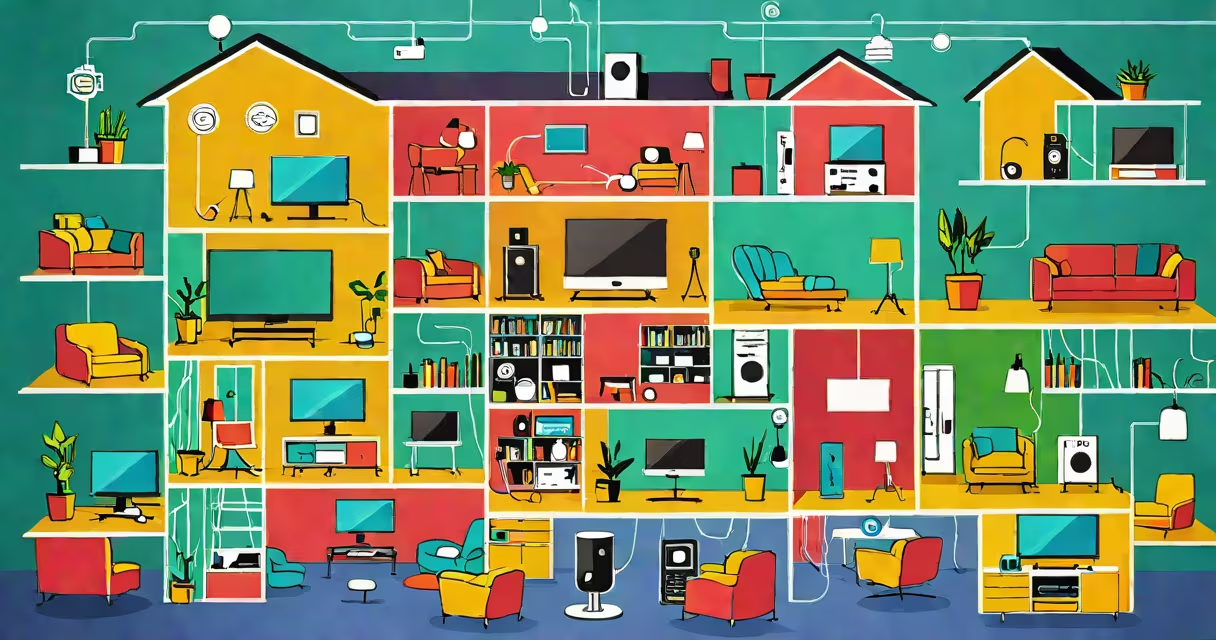
Internet of things smart devices are physical objects embedded with sensors, software, and network connectivity that allow them to collect, send, and act on data without human intervention. These devices range from household appliances to industrial machinery and operate within larger ecosystems governed by protocols like MQTT or CoAP.
Smart devices function by gathering environmental or operational data-such as temperature, motion, or energy usage-and transmitting it to a central system or cloud platform. The receiving system processes the input and triggers actions based on predefined rules or machine learning models. For example, a smart thermostat detects room temperature changes and adjusts heating automatically to maintain set conditions.
Core Components and How They Operate
Every internet of things smart device contains four essential elements: a sensor or actuator, a microcontroller, a communication module, and a power source. The sensor captures real-world inputs-like light levels or door status-while the microcontroller runs firmware that interprets data and decides whether to respond.
The communication module connects the device to a local network or the internet using one of several wireless standards. A smart door lock, for instance, uses a Wi-Fi module to receive commands from a mobile app. When the user unlocks the door remotely, the command travels through the internet to the device's gateway, which then activates the locking mechanism.
Power management is critical. Many consumer-grade IoT devices run on batteries and must minimize energy draw. This drives design choices such as low-duty-cycle operation, where the device wakes only to check for updates or report data. A smart smoke detector may transmit status every 15 minutes, conserving power while maintaining safety.
Types of Internet of Things Smart Devices
IoT smart devices fall into distinct categories based on function and deployment environment:
| Type | Use Case | Common Protocols | Example |
|---|---|---|---|
| Home Automation | Controlling lighting, climate, security | Zigbee, Wi-Fi, BLE | Philips Hue smart bulbs |
| Wearables | Health tracking, activity monitoring | BLE, NFC | Apple Watch with heart rate sensing |
| Industrial Sensors | Machinery monitoring, predictive maintenance | MQTT, LoRaWAN | Temperature sensors in factory HVAC systems |
| Smart Appliances | Refrigerators, ovens, washing machines | Wi-Fi, Ethernet | Samsung Family Hub refrigerator with touchscreen |
Some devices integrate edge computing capabilities, meaning they process data locally rather than sending everything to the cloud. A smart security camera with onboard facial recognition analyzes video streams on-device, reducing latency and improving privacy. According to the Gartner Group, over 50% of enterprise IoT data will be processed at the edge by 2025, up from 10% in 2020.
Common Misconceptions and Real-World Limitations
Many assume that all smart devices require constant internet access. That's false. While cloud-based services enable remote control and advanced analytics, local functionality often works offline. A smart thermostat can still regulate temperature during an internet outage if configured with local rules.
Another widespread error is equating "smart" with "secure." In reality, many early IoT devices shipped with weak default passwords and unpatched firmware. In 2016, the Mirai botnet exploited insecure webcams and routers to launch massive DDoS attacks. The U.S. Federal Trade Commission later cited this incident as evidence of inadequate security practices in consumer IoT products.
Even well-known brands aren't immune. During a 2022 test, researchers found that 37% of popular smart plugs failed basic authentication checks due to hardcoded credentials. This highlights that device certification doesn't guarantee safety. Always change default passwords and enable two-factor authentication where available.
Practical Example: Setting Up a Smart Home Lighting System
Consider a homeowner installing Philips Hue lights. The system includes a bridge-a small hub that acts as a central controller. The lights themselves contain LED drivers, microcontrollers, and BLE modules. When the user opens the Philips Hue app, the phone sends a command via Wi-Fi to the home router, which forwards it to the bridge.
The bridge translates the instruction into a signal sent over a proprietary protocol to the nearest light. The light receives the message, verifies it against its internal list of authorized devices, and dims accordingly. All this happens in under half a second.
For added automation, the user sets a rule: "Dim lights to 30% brightness at sunset." The system uses geolocation and a clock sync service to determine sunset time. As dusk approaches, the bridge triggers the command sequence. No manual input needed.
This setup demonstrates how internet of things smart devices combine hardware, software, and network logic to deliver smooth experiences. But it also shows dependency: if the bridge fails, the lights cannot be controlled remotely-even though they remain functional locally.
I built a similar system in my apartment using a Raspberry Pi as a local controller. It reduced reliance on cloud services and improved response speed. The key insight was that not every device needs to talk to the internet-local orchestration keeps performance high and privacy intact.
Where They're Used and Why They Matter
Residential applications dominate consumer awareness. Smart thermostats save average households 10-15% on heating and cooling costs annually, according to the U.S. Department of Energy. Smart irrigation controllers reduce outdoor water waste by up to 30% by adjusting schedules based on weather forecasts.
In business, internet of things smart devices drive efficiency. A warehouse using RFID-tagged pallets and automated inventory scanners reduces stock discrepancies by 90%. Manufacturing plants deploy vibration sensors on motors to predict failures before they occur, minimizing downtime.
Final Thoughts
Internet of things smart devices are physical objects enhanced with intelligence, connectivity, and automation. They improve daily life and business operations by responding to data in real time. Their success depends not on flashy features but on reliability, security, and thoughtful integration into existing workflows.