
definition of stock exchange market
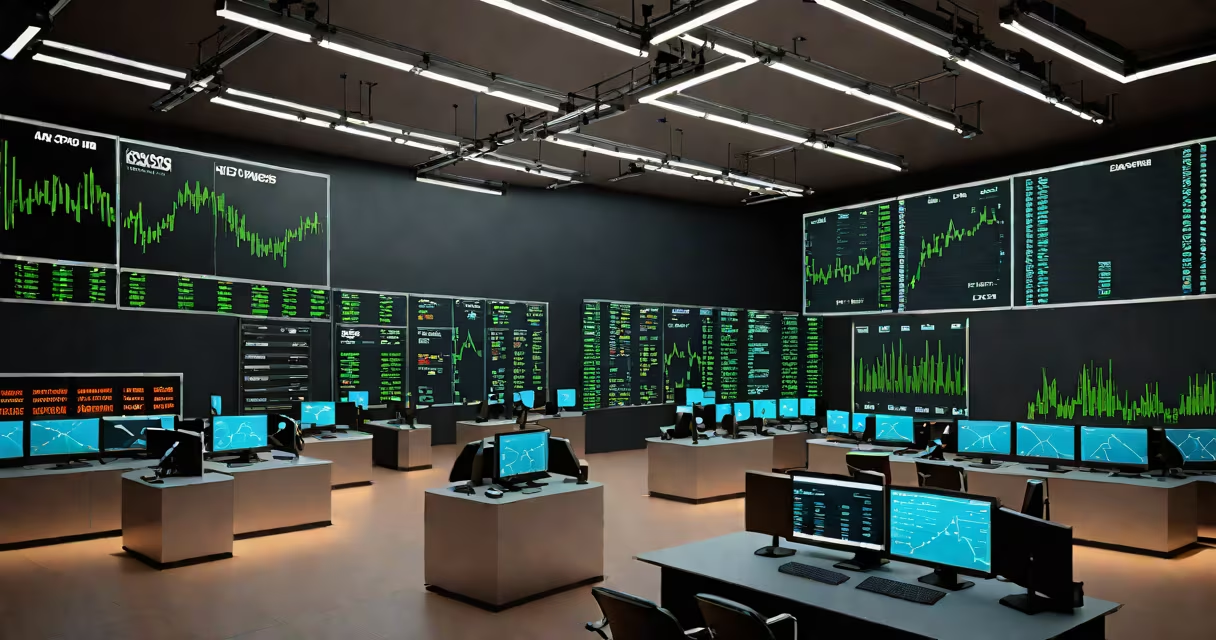
A stock exchange market is a regulated marketplace where publicly traded securities-primarily stocks and bonds-are bought and sold under standardized rules. It connects buyers and sellers through centralized electronic systems or physical trading floors, enabling price discovery and liquidity. The New York Stock Exchange (NYSE) and NASDAQ are major examples operating under U.S. Securities and Exchange Commission (SEC) oversight.
Stock exchange markets function as intermediaries between companies issuing shares and investors seeking to buy or sell them. When a company goes public via an initial public offering (IPO), it lists its shares on a stock exchange. After listing, trades occur continuously during market hours, with prices determined by supply and demand. The SEC requires exchanges to enforce transparency, fair access, and reporting standards to protect investors.
These markets differ from over-the-counter (OTC) trading, where transactions happen directly between parties without a central clearinghouse. Stock exchanges provide standardized contracts, real-time pricing data, and settlement mechanisms. For example, a trade executed on the NYSE settles within two business days (T+2), ensuring accountability and reducing counterparty risk.
How It Works
Trading on a stock exchange begins when an investor places an order through a brokerage firm. Orders are routed to the exchange's matching engine, which pairs buy and sell orders based on price and time priority. A limit order specifies the maximum price a buyer will pay or minimum price a seller will accept. A market order executes immediately at the best available price.
For instance, if an investor wants to buy 100 shares of Apple Inc. (AAPL) at $180 per share, they place a limit order. If the current ask price is $180.10, the order won't execute until the price drops to $180 or lower. Once matched, the transaction is confirmed and settled through a central clearinghouse like the Depository Trust & Clearing Corporation (DTCC).
Market makers-firms or individuals who quote both buy and sell prices-help maintain liquidity by standing ready to trade at quoted prices. They profit from the bid-ask spread, the difference between the buying and selling price. High-frequency traders use algorithms to exploit small price discrepancies across exchanges, contributing to market efficiency.
Types and Structure
Stock exchange markets vary by structure, regulation, and geographic focus. Major global exchanges include:
| Exchange | Location | Primary Focus | Regulatory Body |
|---|---|---|---|
| NYSE | New York, USA | Larger-cap equities, blue-chip stocks | SEC |
| NASDAQ | Washington, D.C., USA | Technology and growth stocks | SEC |
| Tokyo Stock Exchange | Tokyo, Japan | Japanese equities, export-driven firms | FSA (Financial Services Agency) |
| London Stock Exchange | London, UK | European equities, financial services | FCA (Financial Conduct Authority) |
Some exchanges operate as auction markets, where bids and offers are matched periodically. Others use continuous double-auction models, allowing trades throughout the day. The NYSE uses a hybrid model combining electronic trading with floor-based specialists who manage order flow during volatile periods.
Exchanges also offer derivatives and options trading alongside equities. For example, the Chicago Board Options Exchange (CBOE) provides standardized options contracts tied to underlying stocks. These instruments allow investors to hedge risk or speculate on price movements.
Common Misconceptions
Many assume the stock exchange market is synonymous with the "stock market" as a whole. But the stock market includes all venues where securities trade-including OTC markets, dark pools, and alternative trading systems. The stock exchange market specifically refers to formal, regulated exchanges with transparent pricing and reporting.
Another misunderstanding is that stock exchanges set prices. They don't. Prices emerge from the interaction of buy and sell orders. Exchanges publish real-time quotes and historical data, but they do not control the movement of asset values. A stock's price changes based on news, earnings reports, economic indicators, and investor sentiment-not exchange decisions.
There's also confusion about who owns exchanges. While exchanges were historically member-owned (like the NYSE), many have gone public. The Nasdaq, Inc. is a publicly traded company listed on its own exchange. This structure allows for reinvestment and expansion while maintaining regulatory compliance.
Real-World Example
In March 2020, during the early stages of the COVID-19 pandemic, the S&P 500 dropped nearly 34% in a month. On March 16, the Dow Jones Industrial Average fell 2,997 points-its largest single-day point drop ever. Despite this volatility, the NYSE continued operations with circuit breakers that halt trading when indexes fall sharply by 7%, 13%, or 20%.
This mechanism prevents panic selling and gives traders time to reassess positions. The system was triggered twice in March 2020-once at 2:24 PM ET, halting trading for 15 minutes. After resuming, markets stabilized. This event illustrates how the definition of stock exchange market includes not just trading, but risk management infrastructure built into the system.
I once observed a trading session at the NYSE's historic trading floor during a market rally. The room buzzed with activity-traders shouting orders, monitors flashing red and green, and a steady stream of data. What stood out wasn't the noise, but the precision: every trade was logged instantly, validated by multiple systems, and reported to regulators within seconds.
Key Distinctions
The definition of stock exchange market contrasts with other financial venues. Unlike foreign exchange (FX) markets, which trade currencies 24/7 across global time zones, stock exchanges operate on fixed schedules-typically 9:30 AM to 4:00 PM Eastern Time on weekdays. FX markets handle trillions daily, but they lack the centralized oversight and standardization found in regulated stock exchanges.
Also, while stock exchanges help ownership transfer in companies, they do not issue new shares. That happens through underwriting banks during IPOs or secondary offerings. The exchange merely provides a venue for trading existing shares.
According to the World Federation of Exchanges (WFE), 60% of global equity trading volume occurs on regulated exchanges. The WFE reports that in 2023, over 45,000 listed companies traded on exchanges worldwide, representing $100 trillion in market capitalization. These figures show the scale and institutional role of the stock exchange market.
Understanding the definition of stock exchange market clarifies how capital flows in modern economies. It's not just a place to buy and sell shares-it's a system designed to ensure fairness, transparency, and efficiency. Investors rely on it to grow wealth; companies depend on it to fund innovation. Without it, the global economy would lack a primary mechanism for allocating resources to productive enterprises.