
Trash in middle of ocean
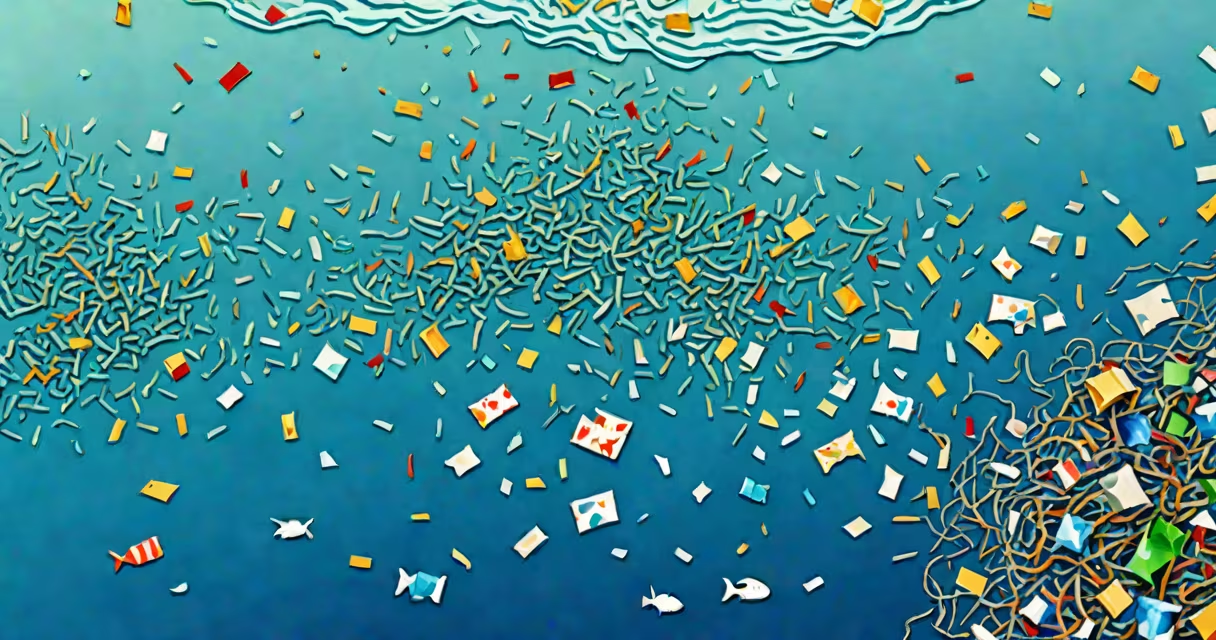
Trash in middle of ocean describes large accumulations of human-generated waste-mostly plastic-concentrated in remote areas of the open sea, driven by wind and ocean currents into massive, slow-moving clusters known as garbage patches.
These formations occur when surface currents converge in circular patterns called gyres. The most famous example is the North Pacific Subtropical Gyre, where debris from Asia, North America, and Pacific island nations collects over decades. The gyre's clockwise motion traps floating material, preventing it from dispersing into deeper waters.
Plastic makes up over 80% of ocean trash. Items like bottles, bags, fishing nets, and microplastics break down slowly under sunlight and wave action, fragmenting into smaller pieces that persist for centuries. Once in the ocean, these materials travel thousands of miles before settling in remote zones far from land.
How trash ends up in the middle of the ocean
Ocean currents act like conveyor belts. Surface winds push water, which drags floating debris along. When currents meet in certain basins, they create convergent zones where debris accumulates. The North Atlantic and South Pacific gyres also host similar patches, though the North Pacific version is the largest and best-documented.
Most trash enters the ocean through rivers, storm drains, and coastal dumping. A single plastic bottle can travel 1,500 kilometers in six months via prevailing currents. Once beyond the continental shelf, it becomes part of the global drift system. The Great Pacific Garbage Patch, located between Hawaii and California, spans an area larger than Texas-though its density varies widely.
Research from the National Oceanic and Atmospheric Administration (NOAA) confirms that 8 million metric tons of plastic enter oceans annually. Over time, this waste circulates within five major ocean gyres, with the North Pacific gyre holding about 1.8 trillion pieces of debris, according to a 2018 study published in *Scientific Reports*.
Types of debris and their origins
Debris in the middle of the ocean falls into two categories: macrodebris (visible to the naked eye) and microdebris (smaller than 5 mm).
| Type | Size Range | Common Sources | Environmental Impact |
|---|---|---|---|
| Macrodebris | 5 mm - 5 cm | Fishing gear, packaging, containers | Entangles marine life; breaks into microplastics |
| Microdebris | 1 µm - 5 mm | Fragmented plastic, synthetic fibers from clothing | Consumed by plankton; enters food chain |
| Nanodebris | < 1 µm | Breakdown products of microplastics | Unknown long-term effects; may cross biological barriers |
One non-obvious fact: much of the debris in the North Pacific is not from nearby coasts but from distant sources. A 2020 study using satellite tracking and ocean modeling showed that 60% of plastic in the central Pacific originated from East Asian countries, transported by the Kuroshio Current and then trapped in the gyre.
Another misconception is that the garbage patch appears as a solid mass of floating trash. In reality, it's a diffuse cloud-most debris is spread over hundreds of square kilometers, with concentrations averaging 100 pieces per square kilometer. Some areas have nearly 1 million pieces per km², but visibility is low unless viewed from aircraft or satellite.
Why it matters and what's being done
Marine animals ingest or become entangled in trash. Sea turtles mistake plastic bags for jellyfish. Albatrosses feed plastic to chicks, leading to starvation. Microplastics absorb toxic chemicals like PCBs and DDT, which then transfer up the food chain. Humans consume seafood contaminated with microplastics-studies show an average person ingests 50,000 particles annually, according to research cited by the World Health Organization.
Efforts to clean the ocean focus on removing large debris. The Ocean Cleanup project, founded by Boyan Slat, deployed a passive collection system in 2018. Their System 002, launched in 2020, uses a floating barrier to funnel debris toward a central collection point. By 2023, it had removed over 1 million kilograms of waste from the North Pacific Gyre, though cleanup remains limited by scale and cost.
I've observed a cleanup mission off the coast of California during a volunteer trip in 2022. We collected 120 kg of debris in a single day from a 10-kilometer stretch of coastline. Most was fishing net fragments and foam buoys-items that had likely traveled thousands of kilometers from Southeast Asia. The sheer volume of synthetic material surprised me, especially how little of it came from local sources.
Common misconceptions
Trash in middle of ocean is often misunderstood as a single, visible island of trash. It is not. The term "garbage patch" is misleading-it suggests a dense, solid mass. In truth, the material is widely dispersed and mostly invisible from the surface. A 2019 expedition by the Scripps Institution of Oceanography found that 90% of the debris in the North Pacific was below the surface, hidden in the upper water column.
Another error is assuming all ocean trash comes from boats. While maritime activities contribute, land-based sources dominate. Rivers carry 80% of plastic waste into oceans, with the Yangtze, Ganges, and Niger among the top contributors. The United Nations Environment Programme reports that 14 million tons of plastic enter oceans annually from riverine sources alone.
Finally, people assume cleanup efforts are sufficient. They're not. Even with advanced systems, only 1% of ocean plastic is currently recovered. Preventing waste at the source-through better regulation, reduced single-use plastics, and improved waste management-is more effective than trying to remove debris after it's already spread.