
What Does Multicultural Mean
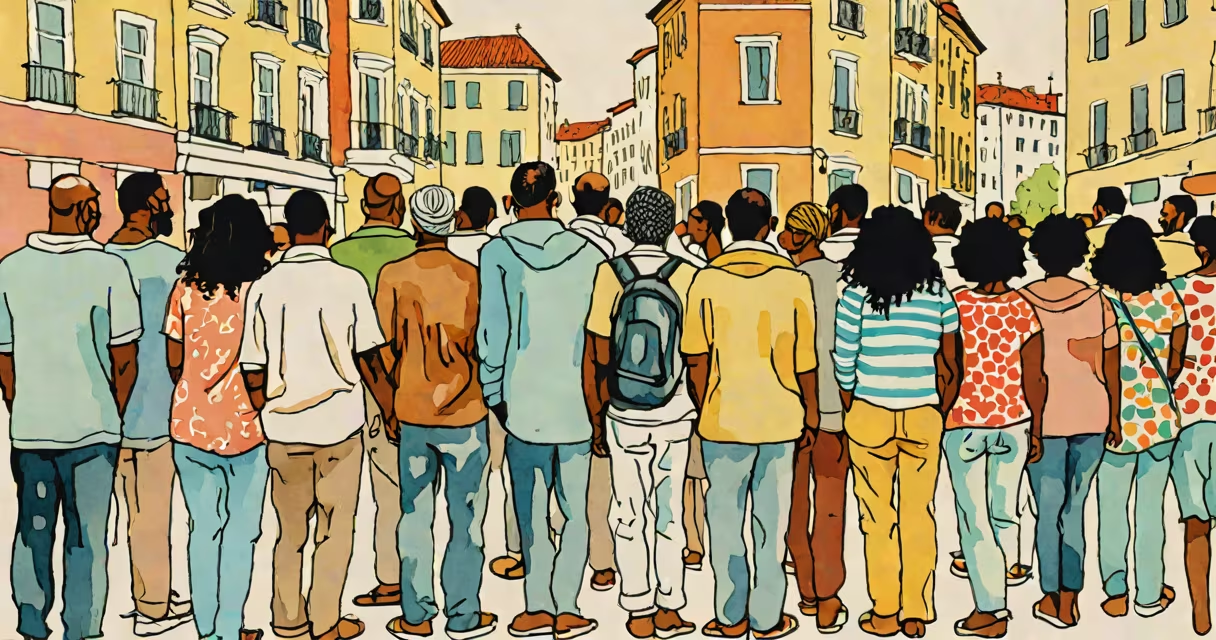
What does multicultural mean? It describes a society, organization, or environment where multiple cultural traditions coexist and are recognized as equally valid. This includes shared values, languages, religious practices, and social norms from various ethnic, national, and racial groups.
True multiculturalism goes beyond token representation. It requires institutional support for diverse identities, equitable access to resources, and active inclusion in decision-making processes. According to UNESCO, multicultural societies promote mutual respect and reduce conflict by valuing differences rather than assimilating them into a dominant culture.
For example, Canada's official multiculturalism policy, established in 1971, mandates federal support for cultural expression through arts funding, language programs, and anti-discrimination enforcement. The policy helps immigrants can maintain their heritage while participating fully in public life.
How Multiculturalism Works in Practice
At the community level, multiculturalism functions through policies that protect minority rights and create space for cultural expression. Schools may offer multilingual curricula, local governments host cultural festivals, and workplaces implement bias training. These actions reflect structural recognition of diversity, not just symbolic gestures.
Public institutions play a key role. The U.S. Census Bureau reports that 46% of Americans lived in counties with at least five major ethnic groups in 2020. In such areas, schools often provide bilingual education, libraries stock materials in multiple languages, and city councils include representatives from underrepresented communities.
When multiculturalism fails, it becomes performative. A company may celebrate Diwali with a holiday party but exclude South Asian employees from leadership roles. This disconnect between symbolism and systemic inclusion undermines trust and reinforces marginalization.
Types of Multicultural Environments
Not all multicultural settings operate the same way. The following table outlines common models based on integration strategy:
| Model | Integration Approach | Example |
|---|---|---|
| Assimilationist | Minority groups adopt dominant culture norms | France's secular laws banning religious symbols in public schools |
| Pluralistic | Multiple cultures coexist with distinct institutions | Belgium's federal system recognizing Flemish and Walloon cultures |
| Intercultural | Cultures interact and influence each other | Urban neighborhoods in Toronto where food, music, and architecture blend across borders |
The intercultural model is most aligned with modern understandings of multiculturalism. It emphasizes dialogue, adaptation, and shared innovation rather than separation or forced conformity.
Common Misconceptions and Corrections
Many assume multiculturalism leads to societal fragmentation. Research from the Pew Research Center shows that countries with high levels of cultural diversity-such as Singapore and New Zealand-report higher civic engagement and lower levels of political polarization than homogeneous nations.
Another myth is that multiculturalism erodes national identity. In reality, national identity can evolve to include diverse roots. The Canadian government defines national unity as "a shared commitment to democratic values, human rights, and the rule of law-regardless of origin."
A lesser-known point: multiculturalism doesn't require equal population size. A small Indigenous community in Australia maintains legal recognition and land rights even though they represent less than 3% of the population. Their cultural presence is protected by law, not demographic weight.
Real-World Example: A School District's Multicultural Policy
In 2022, the Los Angeles Unified School District adopted a new curriculum structure emphasizing multicultural history. Teachers were required to include contributions from African American, Latinx, Native American, and Asian American communities in state-mandated lessons.
Before implementation, only 12% of history textbooks used in the district included content on non-European civilizations. After the reform, that number rose to 68%. Student performance in civics assessments improved by 14 percentage points over two years, according to district data.
This case shows that multicultural education isn't about adding content-it's about changing how knowledge is structured. When students see themselves reflected in learning materials, they engage more deeply with the subject matter.
What Multicultural Is Not
It is not synonymous with diversity. Diversity refers to the presence of difference; multiculturalism implies active inclusion and structural support. A workplace with employees from 15 countries still lacks multiculturalism if promotion decisions favor one group.
It is not the same as cultural appropriation. Appropriate multiculturalism respects context and consent. Wearing a Native American headdress at a music festival without understanding its sacred meaning is not multicultural-it's exploitation.
It is not a passive state. Multiculturalism demands ongoing effort. As sociologist Will Kymlicka notes in *Multicultural Citizenship* (Oxford University Press, 1995), "Recognition of difference must be backed by power-sharing mechanisms or it becomes empty rhetoric."
I once observed a school board meeting in Oakland where parents from six language groups debated curriculum changes. One mother spoke in Somali, another in Vietnamese. Interpreters were present, and minutes were published in five languages. That moment confirmed what research confirms: when institutions prioritize accessibility, multiculturalism becomes tangible.
Understanding what does multicultural mean involves seeing it not as a label but as a practice. It is the daily work of listening, adapting, and sharing power across lines of difference.
Recognizing multiple cultures isn't about diluting identity-it's about expanding belonging. Whether in classrooms, workplaces, or public spaces, multiculturalism strengthens resilience by drawing on collective wisdom.