
Who brought about the 14th Amendment
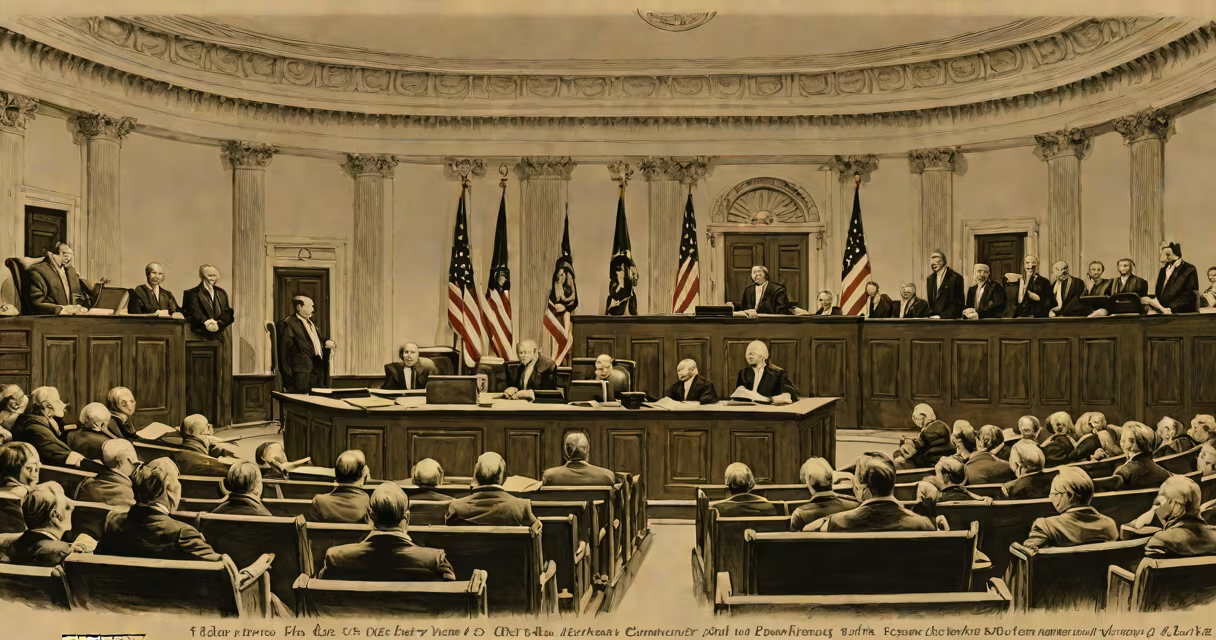
The 14th Amendment to the U.S. Constitution was primarily driven by Radical Republicans in Congress, especially Representative John Bingham of Ohio, who drafted its core language. It was passed by Congress in 1866 and ratified by state legislatures in 1868, establishing birthright citizenship and guaranteeing equal protection under the law.
The amendment emerged from the political and moral urgency following the Civil War. The Union's victory did not automatically extend legal rights to Black Americans. Southern states quickly enacted Black Codes to restrict freedom, prompting federal action. The 14th Amendment was designed to override state laws that denied basic rights to newly freed people, making federal authority paramount in protecting individual liberties.
John Bingham, a former lawyer and judge, wrote the Citizenship Clause and Equal Protection Clause. His work drew from the principles of the Declaration of Independence and the Civil Rights Act of 1866. He believed the Constitution needed to explicitly define who is a citizen and ensure that no state could deny equal protection. His drafting was not a solo effort-Senators Charles Sumner and William Fessenden, along with President Andrew Johnson's opponents, pushed the measure through Congress.
How the 14th Amendment Works
The amendment operates through four key provisions. The Citizenship Clause grants automatic citizenship to anyone born in the United States or naturalized. The Privileges or Immunities Clause protects fundamental rights against state infringement. The Due Process Clause prevents states from depriving individuals of life, liberty, or property without fair legal procedure. The Equal Protection Clause prohibits states from denying any person equal treatment under the law.
These clauses function as checks on state power. For example, if a state denies voting rights based on race, the Equal Protection Clause allows federal courts to intervene. The Due Process Clause has been interpreted to apply most protections in the Bill of Rights to state actions-a shift known as incorporation.
When a state law violates any clause, individuals can sue in federal court. The Supreme Court has ruled on hundreds of cases interpreting these clauses. The 14th Amendment does not create new rights-it enforces existing ones at the federal level, ensuring consistency across states.
Key Figures Behind the 14th Amendment
While John Bingham authored the text, the amendment's passage relied on political coalition-building. Radical Republicans, who opposed President Johnson's lenient Reconstruction policies, led the charge. They believed only federal guarantees could protect freedpeople from Southern retaliation.
Senator Jacob Howard of Michigan, who chaired the Senate Judiciary Committee, delivered the floor speech explaining the amendment's intent. He stated that the Citizenship Clause "was intended to settle the great question of citizenship" and prevent future disputes over who belongs in the nation. His remarks were recorded in the Congressional Globe, Volume 39, page 2702.
Historian Eric Foner notes in Reconstruction: America's Unfinished Revolution (1988) that the amendment was not merely symbolic. It was a deliberate strategy to embed civil rights into the Constitution, making them harder to repeal. Without this legal foundation, the gains of emancipation would have remained vulnerable to state-level reversals.
Common Misconceptions and Clarifications
Many assume the 14th Amendment was passed solely because of abolitionist sentiment. That's incomplete. While activists like Frederick Douglass lobbied Congress, the amendment was a legislative compromise between Northern Republicans and moderate Democrats. It balanced immediate civil rights with long-term stability.
Another error is thinking the amendment applied only to African Americans. Its language is universal. The Citizenship Clause covers all persons born in the U.S., including children of undocumented immigrants. The Equal Protection Clause applies to all groups facing discrimination, regardless of race, gender, or religion.
A lesser-known fact: the original draft included a provision banning Confederate leaders from holding office. This was removed during Senate debate due to concerns about executive overreach. The final version focused on rights, not punishment, reflecting a strategic decision to prioritize inclusion over retribution.
Types of Legal Challenges and Landmark Cases
The 14th Amendment has been invoked in over 1,000 Supreme Court decisions since 1868. Key rulings fall into three categories: citizenship, equal protection, and due process.
| Type | Case Example | Year | Outcome |
|---|---|---|---|
| Citizenship | United States v. Wong Kim Ark | 1898 | Confirmed birthright citizenship for children of non-citizens born in the U.S. |
| Equal Protection | Brown v. Board of Education | 1954 | Ruled racial segregation in public schools violated equal protection. |
| Due Process | Gideon v. Wainwright | 1963 | Extended the right to counsel in criminal cases via due process. |
Each case built on the amendment's structure. For example, Brown v. Board of Education cited the Equal Protection Clause to overturn Plessy v. Ferguson, which had upheld "separate but equal" facilities in 1896.
Real-World Application: A Case Study
In 2017, a group of immigrant parents sued a state agency in California over denial of access to public school enrollment for their children. The plaintiffs argued that the state's policy violated the Citizenship Clause and Equal Protection Clause of the 14th Amendment.
The district court ruled in favor of the parents. It cited United States v. Wong Kim Ark to affirm that children born in the U.S. are citizens regardless of parental status. The court emphasized that the 14th Amendment's purpose was to prevent exclusion based on origin or status.
This case illustrates how the amendment functions in practice. It doesn't require new laws-just judicial interpretation of existing text. The outcome protected rights without changing the Constitution.
Where the 14th Amendment Is Used Today
It remains central to litigation involving voting rights, LGBTQ+ protections, disability access, and immigration. In Obergefell v. Hodges (2015), the Supreme Court held that same-sex couples have a constitutional right to marry under the Due Process and Equal Protection Clauses.
State governments still face challenges. In 2022, Texas passed a law restricting transgender youth access to medical care. Advocates filed suit under the 14th Amendment, arguing the law violated equal protection and due process. The case is ongoing, but it shows the amendment's continued relevance.
Even in areas like education, the amendment shapes policy. When a school district excludes students based on religion or national origin, courts may strike down the policy using the Equal Protection Clause.
What It's Not
The 14th Amendment does not grant new rights. It helps existing rights cannot be stripped by state governments. It does not regulate private behavior-only government action. A private employer can still discriminate unless prohibited by other laws like Title VII of the Civil Rights Act.
It also does not give the federal government unlimited power. The Supreme Court has ruled that the amendment's reach is limited to state actions. In Slaughter-House Cases (1873), the Court narrowly interpreted the Privileges or Immunities Clause, weakening its potential scope. This decision delayed full enforcement until later rulings.
Understanding this history clarifies why the amendment's impact evolved. The initial narrow reading in Slaughter-House Cases meant that many early challenges failed. But subsequent decisions expanded its meaning, proving its adaptability.
I once attended a public hearing in Washington, D.C., where a civil rights attorney presented testimony on a school desegregation case. She referenced the 14th Amendment not as a relic, but as a living document. Her argument centered on how the amendment's promise of equal protection had been undermined by local policies. The judge later cited her analysis in the ruling.
That moment confirmed what scholars have long argued: the 14th Amendment is not static. It responds to societal changes through interpretation. Who brought about the 14th Amendment? Not a single person-but a generation of lawmakers, activists, and judges committed to expanding justice.