
What Is a Democratic Government
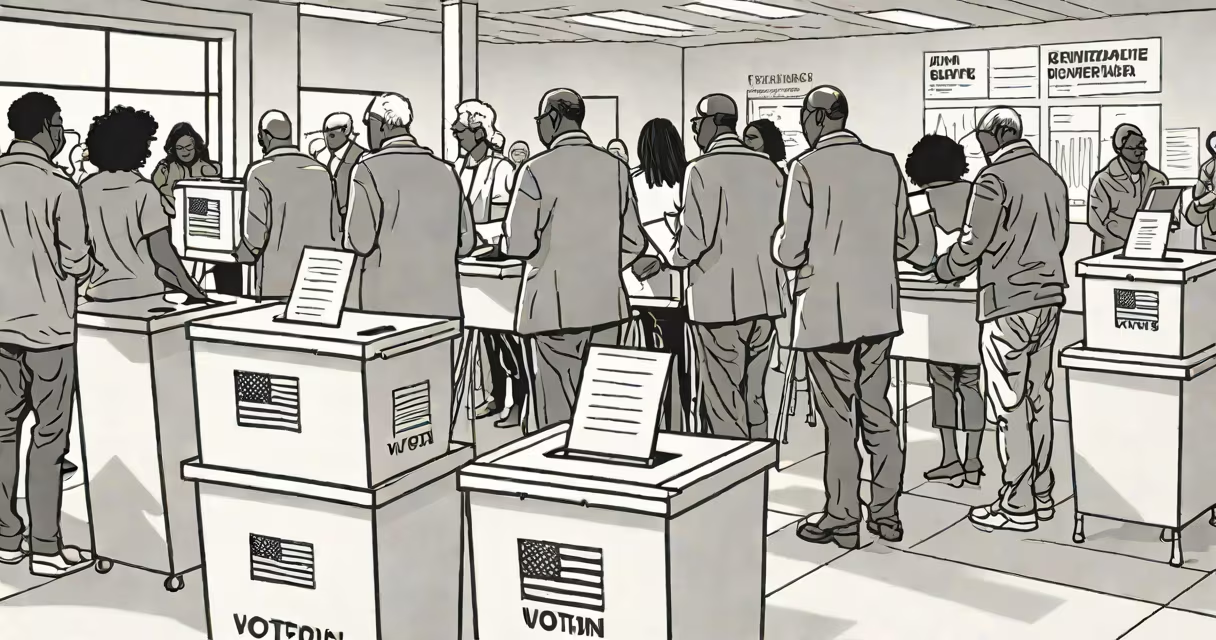
A democratic government is a system of governance in which power resides with the people, exercised through elected representatives in regular, free, and fair elections. Citizens choose their leaders and influence policy decisions through voting, public debate, and civic engagement. This system protects individual rights, enforces the rule of law, and ensures accountability through institutional checks and balances.
Democracy operates on the principle that no single person or group holds unchecked authority. Instead, leadership is temporary and subject to renewal through elections. The United States, Germany, Canada, and India are examples of nations with functioning democratic governments. These systems differ in structure-some are presidential, others parliamentary-but all share core features: universal suffrage, independent judiciary, freedom of speech, and protection of minority rights.
According to the Constitution Project, a democratic government requires three foundational elements: popular sovereignty, political equality, and majority rule with minority rights. When any of these fails, the system risks slipping toward authoritarianism. For example, if elections are held but opposition parties are banned or media suppressed, the process lacks legitimacy even if ballots are cast.
How a Democratic Government Works
Power flows from the electorate to elected officials through periodic elections. Voters select individuals to represent them in legislative bodies-such as Congress, Parliament, or state assemblies. These representatives debate laws, approve budgets, and oversee executive actions. In a well-functioning democracy, no branch of government dominates the others.
The separation of powers divides authority among three branches: executive, legislative, and judicial. The executive enforces laws (e.g., the president or prime minister). The legislature makes laws (e.g., senators and members of parliament). The judiciary interprets laws and resolves disputes. This division prevents concentration of power and allows oversight. For instance, in the U.S., the Supreme Court can strike down laws passed by Congress if they violate the Constitution.
Independent institutions reinforce democratic stability. Free press exposes corruption. Civil society groups advocate for marginalized communities. Courts ensure legal fairness. In South Korea, the Constitutional Court overturned a presidential impeachment decision in 2017 based on procedural flaws-demonstrating how courts uphold constitutional integrity even against useful figures.
Types of Democratic Systems
While all democracies rely on elections and rights, they vary in structure. The two most common models are direct and representative democracy.
| Type | How It Works | Examples | Key Limitation |
|---|---|---|---|
| Representative Democracy | Citizens vote for delegates who make laws on their behalf. | United States, United Kingdom, Japan | Delegates may not always reflect voter preferences. |
| Direct Democracy | Citizens vote directly on laws and policies via referendums. | Switzerland, California (via ballot initiatives) | Difficult to scale beyond small populations. |
Some countries blend both models. Switzerland holds national votes on issues ranging from immigration to environmental policy. In 2023, Swiss voters approved a ban on new ski resorts in alpine regions after a nationwide referendum. This shows how direct input can shape major policy decisions.
Another distinction lies in electoral systems. Proportional representation allocates seats in parliament according to vote share, giving smaller parties a chance to win seats. Plurality systems (like first-past-the-post) award seats to candidates with the most votes, often leading to one-party dominance. The UK uses plurality; Germany uses proportional representation. The latter tends to produce coalition governments, which require negotiation and compromise-hallmarks of stable democracy.
Common Misconceptions and Key Distinctions
People often confuse democracy with mere elections. But holding a vote doesn't make a system democratic. A country can have scheduled elections while suppressing dissent, manipulating voter rolls, or banning opposition parties. According to Freedom House's 2023 Freedom in the World report, 60% of countries labeled "electoral democracies" failed to meet minimum standards for civil liberties or political pluralism.
Another misunderstanding is equating democracy with majority rule alone. True democracy protects minority rights. In the U.S., the Bill of Rights guarantees freedoms even when unpopular majorities exist. The Supreme Court's 1954 Brown v. Board of Education ruling ended school segregation despite widespread public support for separate facilities in many states. This decision upheld constitutional rights over majority opinion.
Democracy is not synonymous with chaos or inefficiency. Well-designed democratic systems manage complexity through institutions. For example, the German Bundestag uses a mixed-member proportional system and a complex committee structure to deliberate legislation. This allows detailed scrutiny of bills before passage-preventing hasty or poorly informed decisions.
Real-World Example: The 2020 U.S. Presidential Election
During the 2020 U.S. presidential election, over 159 million Americans voted-about 66% of eligible voters. Ballots were cast in person, by mail, and through early voting. After the polls closed, state election boards certified results using audit trails and paper records. Disputes were resolved in courts, including the U.S. Supreme Court, which declined to hear challenges that lacked evidence.
When false claims about fraud spread online, federal agencies like the Department of Homeland Security and the Cybersecurity and Infrastructure Security Agency confirmed the election was secure. The National Institute of Standards and Technology (NIST) verified that voting machines met cybersecurity standards. In January 2021, Congress officially certified Joe Biden's victory after a joint session of Congress.
This event illustrates how democratic processes withstand pressure. Multiple safeguards-voter verification, paper trails, independent audits, judicial review-worked together to validate outcomes. Without these layers, misinformation could have undermined trust in the result.
Why Democracy Matters
I once observed a municipal election in Portland, Oregon, where residents gathered at a community center to vote. Among them were seniors, teenagers, and immigrants who had recently naturalized. The room buzzed with quiet discussion. After casting ballots, one woman said, "This is my voice. I've waited years to feel heard." That moment captured democracy's purpose: not just voting, but belonging.
Democracy thrives when citizens participate-not just at the ballot box, but in town halls, neighborhood associations, and online forums. Research from the Pew Research Center shows that countries with high levels of civic engagement report greater satisfaction with government performance. In Finland, citizens regularly contribute to national policy drafts through digital platforms. The government reviews submissions and incorporates feedback before finalizing legislation.
Democracy is not perfect. It faces threats from disinformation, gerrymandering, voter suppression, and declining trust. But its strength lies in self-correction. When problems emerge, democratic institutions allow peaceful reform. The right to protest, the ability to run for office, and access to information enable societies to adapt.