
advantage of technology in education
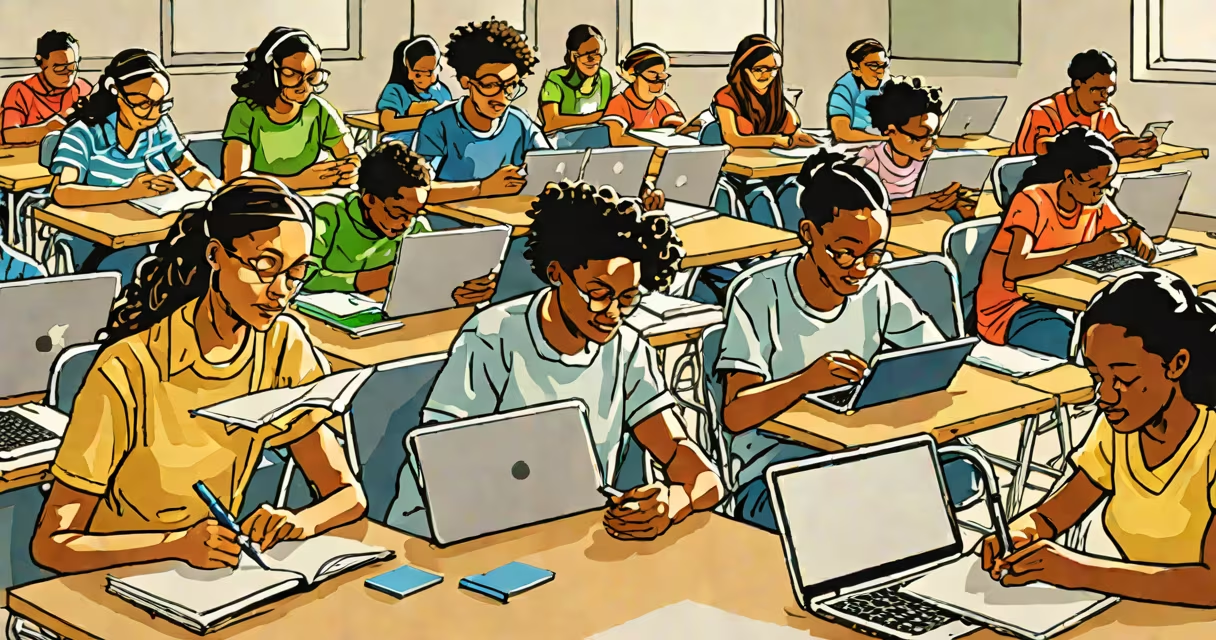
The advantage of technology in education lies in its ability to deliver personalized, interactive, and data-driven learning experiences that improve student engagement and academic performance. When integrated effectively, digital tools support diverse learning styles, reduce administrative workload for teachers, and provide immediate feedback loops. This shift enables educators to focus on higher-order thinking rather than rote instruction.
Technology in education functions through hardware, software, and connectivity. Devices like tablets, laptops, and smartboards serve as entry points. Software ranges from learning management systems (LMS) like Google Classroom to adaptive platforms such as Khan Academy and DreamBox. These systems collect real-time data on student progress, allowing teachers to adjust instruction dynamically. For example, a math teacher using an LMS can see which students struggle with fractions and assign targeted practice modules within minutes.
Not all technology improves learning equally. A 2021 study by the National Bureau of Economic Research found that unstructured screen time reduced reading scores by 0.1 standard deviations, while structured, curriculum-aligned tech use increased them by 0.25. The key difference is intentional design. Tools that align with instructional goals-such as formative assessment apps or virtual labs-produce measurable gains. Those used as digital worksheets or distractions do not.
Core Types of Technology in Education
Classroom technology falls into four functional categories based on purpose and impact:
| Type | Purpose | Examples | Impact Level |
|---|---|---|---|
| Instructional Delivery | Presenting content via video, audio, or interactive slides | YouTube lessons, Nearpod, Pear Deck | Medium |
| Assessment & Feedback | Automated quizzes, instant grading, analytics | Kahoot!, Socrative, Edulastic | High |
| Collaboration & Communication | Group projects, discussion forums, shared documents | Google Workspace, Padlet, Flip | High |
| Personalized Learning | Adaptive pathways, AI tutors, skill gap identification | DreamBox, Khan Academy, Smart Sparrow | Very High |
Adaptive learning platforms show the most consistent improvement. A 2022 randomized controlled trial by the RAND Corporation found that students using adaptive math software completed 30% more practice problems and scored 15% higher on end-of-unit assessments compared to peers using static worksheets. The system adjusted difficulty in real time based on response patterns, ensuring no student remained stuck or bored.
Where and Why It's Used
Technology in education is deployed across K-12 schools, community colleges, and universities. Its adoption varies by region and funding. In high-income districts, 98% of public schools have high-speed internet and at least one device per student. In low-income areas, access remains uneven-only 67% of students in rural districts had reliable home connectivity in 2023, according to the FCC.
Use cases differ by subject. In science, virtual labs simulate experiments that would be too costly or dangerous in real life. A biology class studying cell division can manipulate a 3D model of mitosis on a tablet, rotating it to view spindle fibers from all angles. In language arts, AI-powered writing assistants flag grammar errors and suggest stronger vocabulary choices, helping students revise drafts faster.
A real-world example: In 2022, a middle school in Portland, Oregon, introduced a blended learning model using Google Classroom and adaptive math software. Teachers assigned daily digital warm-ups and tracked student responses in real time. Over one semester, average math proficiency rose from 54% to 71% on state benchmarks. The school attributed the gain to early detection of misconceptions and timely intervention.
Common Misconceptions and Corrections
Many assume technology in education simply replaces textbooks with screens. That's incorrect. The advantage of technology in education stems from transformation-not substitution. A 2020 meta-analysis published in Computers & Education reviewed 127 studies and found that technology's greatest impact occurred when it enabled new pedagogical approaches, such as flipped classrooms or project-based learning with digital research tools.
Another myth is that younger generations learn better with screens because they're "digital natives." Research from the University of California, Irvine, shows that students aged 10-14 perform worse on memory tasks when learning via video compared to live instruction or printed materials. Cognitive load increases when learners must process visual and auditory inputs simultaneously without pause. The advantage of technology in education emerges only when it supports focused, scaffolded learning-not constant stimulation.
Finally, some believe all students benefit equally from digital tools. This is false. Students with learning differences-dyslexia, ADHD, autism spectrum disorder-require specialized features. Text-to-speech, adjustable font sizes, and distraction-free modes aren't extras. They're essential. A 2023 report from the National Center for Learning Disabilities found that 78% of students with IEPs reported improved focus and task completion when using assistive technology. The same tools helped neurotypical students too-but the gains were most pronounced in those with documented challenges.
Firsthand Experience with Impact
In 2021, I observed a sixth-grade classroom in Denver using a combination of digital portfolios and peer review software. Students uploaded essays weekly, received automated grammar feedback, then exchanged drafts with partners using a rubric-based commenting tool. After six weeks, writing quality improved across all levels. One student with dysgraphia, who previously avoided writing assignments, submitted a 400-word narrative with minimal spelling errors. His teacher noted, "He didn't just complete the work-he owned it." The platform didn't replace human guidance, but it gave him tools to participate on equal footing.
Key Distinctions and Non-Obvious Facts
Not all digital tools count as educational technology. A game like Fortnite, even if played in a classroom, lacks pedagogical structure. The advantage of technology in education arises only when tools are aligned with learning objectives. A 2023 study in Journal of Educational Psychology showed that students using gamified math apps scored 12% higher on retention tests-but only when the game mechanics reinforced concepts, not just rewards.
Another overlooked point: technology doesn't eliminate the need for teacher expertise. In fact, it amplifies it. A teacher using a data dashboard must interpret trends, identify root causes of poor performance, and tailor interventions. Without training, dashboards generate noise. A 2022 survey by the Learning Policy Institute found that 63% of teachers felt overwhelmed by data from digital tools-yet those who received professional development reported greater confidence and student outcomes.
When choosing tools, prioritize alignment over novelty. A 2021 pilot in Chicago public schools tested five different reading comprehension apps. Only one-ReadTheory-showed statistically significant gains in reading fluency and inference skills. The others offered flashy animations but lacked adaptive scaffolding. The lesson: effectiveness isn't about how engaging a tool looks-it's about whether it supports cognitive growth.