
What Is a Religious Missionary
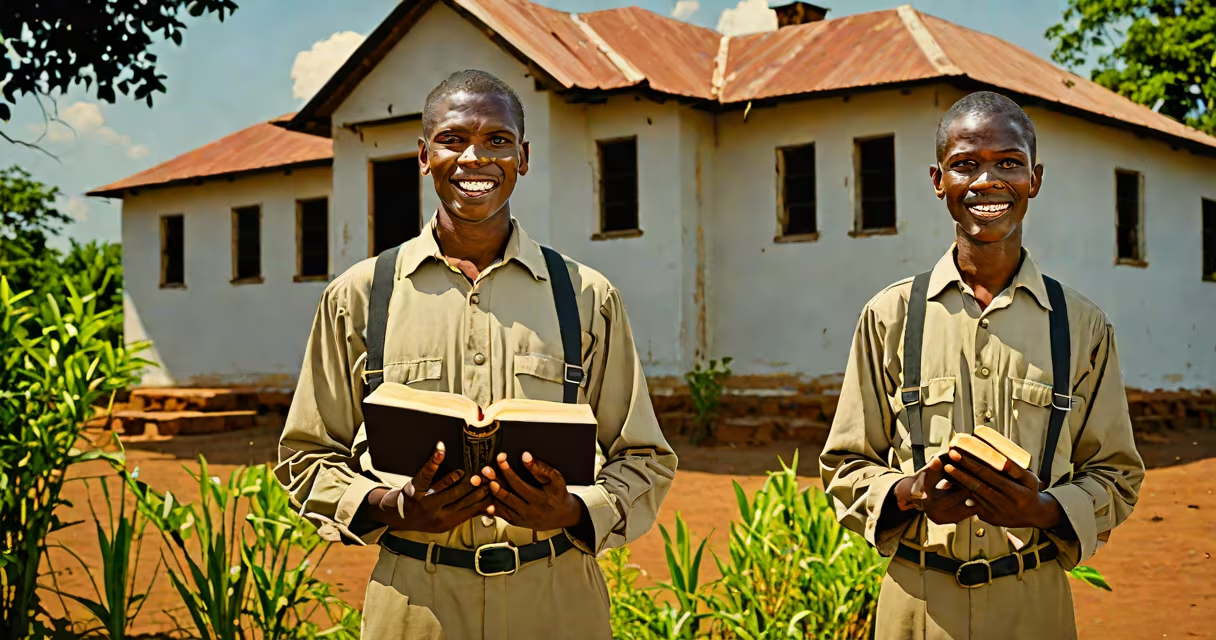
A religious missionary is a person commissioned by a faith community to share beliefs, teach doctrine, and establish religious institutions in regions where those beliefs are not widely known. This role historically involves travel to remote or underserved areas, often with long-term commitments to education, healthcare, and spiritual guidance.
Religious missionaries have operated for centuries across Christianity, Islam, Buddhism, Hinduism, and other traditions. While the term most commonly refers to Christian evangelists, especially in Western contexts, the practice exists in all major world religions. The core function remains consistent: to extend religious influence through direct engagement, service, and teaching.
According to the Pew Research Center, over 1.2 million Christian missionaries were active globally in 2020, with significant concentrations in Sub-Saharan Africa, Southeast Asia, and Latin America. These individuals serve as educators, medical providers, and cultural mediators.
How Religious Missionaries Work
Most religious missionaries operate under formal sponsorship by churches, religious orders, or nonprofit organizations. They undergo training in theology, language acquisition, cross-cultural communication, and sometimes medical or educational skills before deployment. Their work typically begins with establishing trust within local communities.
For example, the Catholic Missionaries of the Sacred Heart send members to Papua New Guinea to build schools and train teachers. These missionaries do not simply preach-they provide clean water systems, teach literacy, and support local governance. Their presence becomes part of the social infrastructure, not just a religious one.
Field reports from the World Evangelical Alliance show that 68% of Protestant missionaries in sub-Saharan Africa focus on education and health initiatives as primary entry points for spiritual engagement. This reflects a strategic shift from purely doctrinal outreach to complete community development.
Types of Religious Missionaries
While all missionaries aim to spread religious teachings, their methods and affiliations differ. The following table outlines common categories based on religious tradition, geographic focus, and operational model.
| Type | Religion | Focus Area | Example |
|---|---|---|---|
| Evangelical | Christianity | Conversion-focused outreach | Wycliffe Bible Translators in the Amazon |
| Service-Based | Christianity | Healthcare and education | Catholic Relief Services in Haiti |
| Sufi | Islam | Community-based spiritual guidance | Qadiriyya Sufi missionaries in West Africa |
| Mendicant | Buddhism | Monastic teaching and meditation | Tibetan Buddhist monks in Nepal |
| Volunteer | Various | Short-term humanitarian aid | International Christian Youth Mission in Ukraine |
One key distinction often missed is that not all missionaries seek conversion. Some, particularly in Islamic and Buddhist traditions, emphasize mutual learning and spiritual exchange rather than proselytization. The Islamic Da'wah movement, for instance, promotes understanding through dialogue, not forced belief change.
Common Misconceptions and Clarifications
Many people assume all religious missionaries are Westerners traveling to "primitive" regions. In reality, nearly half of all missionaries today come from the Global South. Data from the Center for the Study of Global Christianity shows that 47% of new missionaries in 2022 were from Africa, Asia, or Latin America.
Another misconception is that missionary work is inherently colonialist. While historical ties between European empires and Christian missions are well-documented-such as the Belgian Congo missions during the late 19th century-the modern context differs. Today's missionary organizations increasingly partner with local religious leaders and prioritize indigenous leadership. For example, the Church of the Nazarene requires all overseas missionaries to co-lead programs with national pastors.
A lesser-known fact: many religious missionaries are trained in secular universities. A 2021 study by the University of Oxford found that 34% of Christian missionaries in Europe hold degrees in anthropology, public health, or international relations. This reflects a growing trend toward interdisciplinary preparation.
Real-World Example: The Story of Maria and the School in Malawi
In 2016, Maria Thompson, a Methodist missionary from Ohio, arrived in a village near Lake Malawi. She had studied African history and Swahili at Duke University before joining the United Methodist Board of Global Ministries. Her assignment was to open a primary school and offer basic healthcare services.
She did not begin with sermons. Instead, she spent six months learning local customs, attending community meetings, and helping farmers harvest crops. Only after building trust did she propose a school. Within two years, the school enrolled 120 children, taught by local teachers trained by her team.
By year five, the community had elected a Christian-led council to manage the school. Maria left with no formal conversions recorded-but with a functioning institution that continues to serve the region. Her work illustrates how missionary impact often emerges indirectly, through sustained service rather than immediate preaching.
What It's Not
A religious missionary is not a tourist, volunteer, or aid worker acting independently. While some may perform similar tasks, missionaries are formally appointed, often undergo rigorous vetting, and commit to long-term goals aligned with a religious mission statement. They are not hired employees but volunteers or ordained personnel bound by spiritual vows.
Also, missionary work is not synonymous with religious extremism. Most missionaries avoid political activism and maintain neutrality in local conflicts. The United Nations High Commissioner for Refugees notes that religious missionaries are among the most trusted aid providers in conflict zones due to their consistent, non-partisan delivery of services.
Finally, being a missionary does not require physical travel. Digital missionaries-those who spread faith through online platforms, translation projects, or virtual education-are now recognized by major denominations. The Bible Society of India, for example, employs over 200 digital missionaries translating Scripture into 110 Indian languages via mobile apps.
Understanding what is a religious missionary requires moving beyond stereotypes. It is not about imposing beliefs, but about serving, learning, and building relationships across cultures. The role persists because it meets human needs-spiritual, educational, and material-through sustained commitment.