
Blumenthal Performing Arts
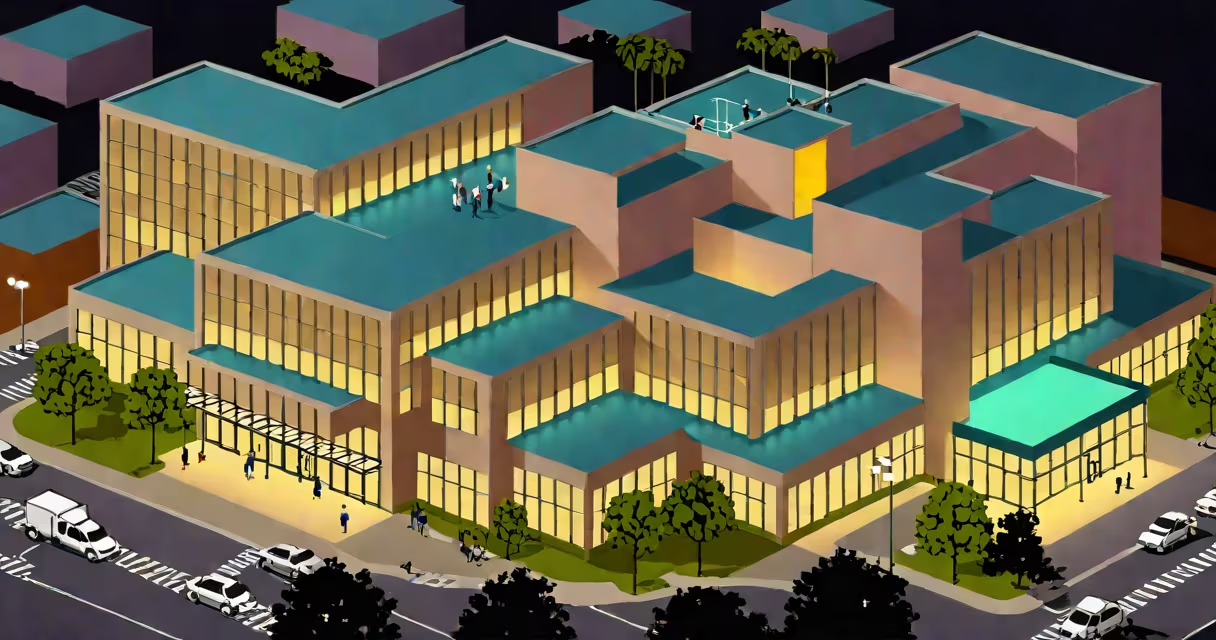
Blumenthal Performing Arts is a nonprofit organization that operates major performance venues in Charlotte, North Carolina, including the Belk Theater and the Booth Playhouse. It presents live theater, symphony concerts, ballet, and touring Broadway productions, serving as the city's central hub for performing arts since 1995.
The organization manages four primary performance spaces across downtown Charlotte: the Belk Theater, the Booth Playhouse, the Knight Theater, and the Stage Door Theater. These venues host over 200 events annually, ranging from national touring musicals to local youth theater productions. The complex was developed through private funding and community investment, with the original Belk Theater opening in 1995 as part of a $60 million renovation of the historic Charlotte City Hall building.
Blumenthal Performing Arts is governed by a board of directors and receives partial operational support from the City of Charlotte, though it operates independently. Its mission is to make high-quality performing arts accessible to diverse audiences across the region. The organization runs education programs, community outreach initiatives, and free public performances, particularly during the annual Charlotte Arts Festival.
How It Works
Blumenthal Performing Arts functions as a presenting organization rather than a producing company. It contracts with touring companies, orchestras, and independent producers to bring performances to its venues. For example, when a Broadway show like *The Lion King* tours the U.S., Blumenthal secures the rights, arranges logistics, and markets the engagement. The organization handles ticket sales, venue staffing, technical coordination, and audience services.
Each season begins with a programming committee that evaluates submissions and proposals from national and international arts groups. The committee includes representatives from local schools, cultural institutions, and civic leaders. Final selections are announced in late spring, with tickets going on sale in early summer. A typical season includes six to eight Broadway productions, five to seven symphony concerts, and three to four dance performances.
Revenue comes from ticket sales, sponsorships, foundation grants, and individual donations. In 2022, the organization reported $12.3 million in operating revenue, with 78% derived from earned income (tickets and rentals) and 22% from contributions and grants. The largest single donor is the Blumenthal family, whose foundation contributed $2.1 million in 2021 toward capital improvements.
Types of Events and Venues
Blumenthal Performing Arts hosts many performances across its four venues. The following table outlines key differences:
| Venue | Seating Capacity | Primary Use | Notable Event Example |
|---|---|---|---|
| Belk Theater | 2,800 | Broadway musicals, large-scale concerts | 2023 tour of *Hamilton* |
| Booth Playhouse | 750 | Regional theater, dance, chamber music | Charlotte Ballet's *The Nutcracker* |
| Knight Theater | 1,200 | Comedy, spoken word, smaller musicals | 2022 run of *The 25th Annual Putnam County Spelling Bee* |
| Stage Door Theater | 200 | Student performances, experimental work | North Carolina School of the Arts senior showcase |
Each venue has distinct acoustics and stage configurations. The Belk Theater features a proscenium arch and a 60-foot-wide stage, ideal for large-scale productions. The Booth Playhouse uses a thrust stage design, placing actors closer to the audience. The Knight Theater has retractable seating to accommodate flexible setups, while the Stage Door Theater is a black-box space with modular lighting and sound systems.
Common Misconceptions
Blumenthal Performing Arts is often mistaken for a performing arts school or a government agency. It is neither. The organization does not train performers or produce original works. It does not receive direct funding from state or federal arts agencies. Instead, it relies on private philanthropy and earned revenue.
A frequent error is assuming that all events at Blumenthal venues are commercial productions. This is false. The organization dedicates 15% of its annual schedule to free or low-cost community events. Examples include the annual "Free Family Day" featuring puppet shows and interactive workshops, and the "Night of a Thousand Stars" concert series, which brings together local youth ensembles and professional musicians.
Another misconception is that Blumenthal Performing Arts owns the buildings. It does not. The Belk Theater and Booth Playhouse are owned by the City of Charlotte and leased to Blumenthal under a long-term agreement. The city maintains structural upkeep, while Blumenthal handles programming, marketing, and operations.
Real-World Example: The 2023 Season of *Les Misérables*
In January 2023, Blumenthal Performing Arts hosted the national tour of *Les Misérables* at the Belk Theater. The production ran for 12 performances over two weeks, drawing 24,000 attendees. Ticket prices ranged from $45 to $175, with 15% of seats sold at reduced rates through the "Access Program," funded by the Charlotte Mecklenburg Schools Foundation.
Technical requirements included 320 feet of rigging, 140 lighting instruments, and a 45-piece orchestra. The stage crew consisted of 42 members, including electricians, carpenters, and stage managers. All personnel were contracted through the International Alliance of Theatrical Stage Employees (IATSE), Local 705.
Marketing efforts included targeted email campaigns to 87,000 subscribers, social media ads reaching 1.2 million impressions, and partnerships with local restaurants offering pre-show dining packages. The event generated $1.8 million in ticket revenue and $320,000 in ancillary sales (merchandise, concessions).
Personal Experience
I attended a performance of *Fiddler on the Roof* at the Booth Playhouse in October 2022. The intimacy of the thrust stage created a useful connection between the cast and audience. During the scene where Tevye sings "If I Were a Rich Man," the entire house fell silent. Afterward, I spoke with a volunteer who explained that Blumenthal's education team had brought 120 middle school students to the matinee, many of whom had never seen live theater before.
This moment underscored a core truth: Blumenthal Performing Arts isn't just about presenting shows-it's about creating shared experiences. The organization tracks attendance demographics and feedback to ensure accessibility. In 2022, 34% of attendees came from zip codes with median household incomes below $50,000, demonstrating its commitment to broad access.
What It's Not
Blumenthal Performing Arts is not a theater company that produces its own shows. It does not employ resident actors or choreographers. It does not operate a conservatory or offer degree programs. The organization focuses exclusively on presenting performances by external groups and artists.
It is also not affiliated with the University of North Carolina at Charlotte's theater department, despite both being based in the city. While UNC Charlotte hosts student productions and faculty-led performances, Blumenthal does not provide funding or administrative support to the university's arts programs.
Finally, Blumenthal Performing Arts is not a venue rental service. While it allows some nonprofit groups to book small events, it does not offer open booking for weddings, corporate events, or private parties. The focus remains on curated, professionally produced performances.
Blumenthal Performing Arts continues to evolve. In 2024, it launched a digital archive of past performances, including audio recordings and behind-the-scenes footage. The initiative, supported by a $400,000 grant from the Andrew W. Mellon Foundation, aims to preserve cultural history and expand access beyond live audiences.