
schluter dilex ahk
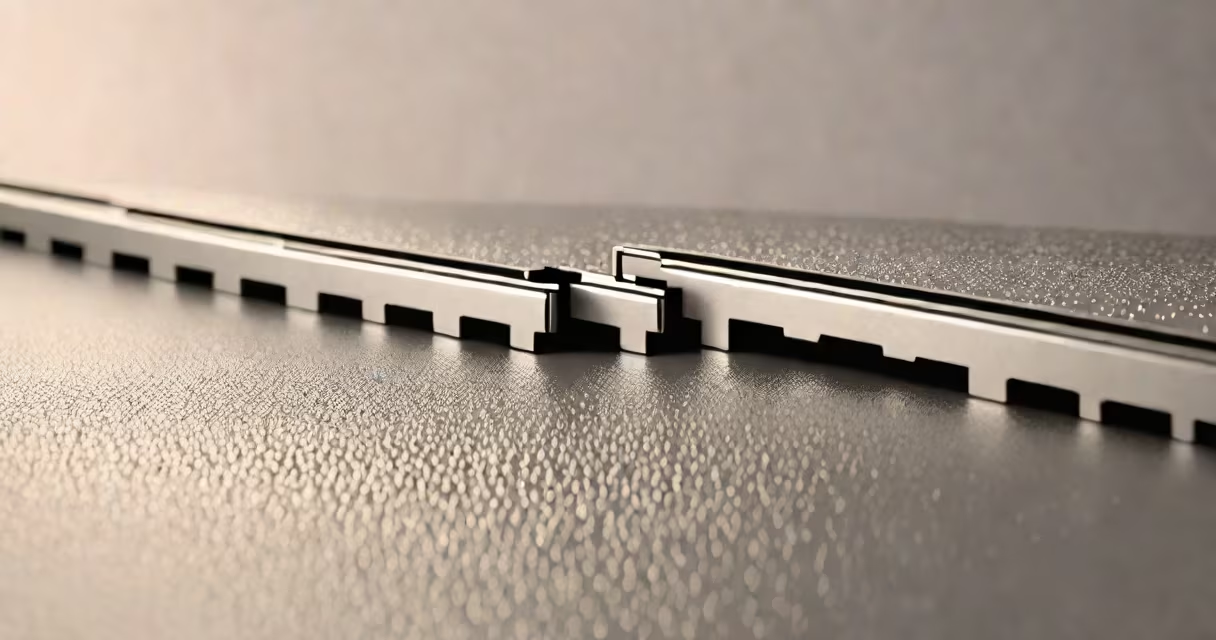
The Schluter Dilex AHK is a metal threshold profile used in tile installations to create a durable, water-resistant transition between adjacent tiled surfaces, such as bathroom floors and entryways. It features a continuous channel with a recessed groove that accepts grout or sealant, ensuring a tight, long-lasting joint.
Engineered by Schluter-Systems, a German manufacturer specializing in building envelope solutions, the Dilex AHK is part of a larger family of modular tile accessories designed for structural integrity and moisture control. It's not a standalone tile adhesive or setting material-it's a component that integrates with other Schluter products to form a complete waterproofing system.
Used primarily in residential and commercial bathrooms, showers, kitchens, and high-traffic entry zones, the Dilex AHK handles foot traffic, water exposure, and dimensional movement without cracking or lifting. Its design allows for expansion and contraction while maintaining a watertight seal.
How It Works
The Dilex AHK functions as a transition profile between two tiled surfaces, typically at doorways, room changes, or between different floor materials. It's installed during the tiling phase, with the tile laid directly against the profile's vertical flanges. The horizontal base sits flush with the finished tile surface, creating a level transition.
Once tiles are set, the gap between the two surfaces is filled with a flexible sealant or grout, which is contained within the profile's central channel. This prevents water from seeping beneath the tiles or into subfloor cavities-critical in wet environments where moisture accumulation leads to mold, rot, or structural failure.
Unlike standard plastic or aluminum thresholds, the Dilex AHK uses corrosion-resistant aluminum alloy with a brushed finish. It resists warping under thermal stress and maintains dimensional stability even in high-humidity settings. The profile's thickness (1.8 mm) provides rigidity without requiring additional support.
Types and Configurations
Schluter offers multiple variants of the Dilex AHK based on application and finish. The most common version is the Dilex AHK-18, designed for 18 mm thick tile assemblies. Other models include:
| Model | Thickness | Application | Finish |
|---|---|---|---|
| Dilex AHK-18 | 18 mm | Standard floor transitions | Brushed aluminum |
| Dilex AHK-20 | 20 mm | High-load areas (commercial) | Brushed aluminum |
| Dilex AHK-18-SS | 18 mm | Stainless steel variant | Polished stainless steel |
Each model is compatible with Schluter's KERDI waterproof membrane system. When paired with KERDI-BOARD or KERDI-BAND, the entire assembly achieves a Class A waterproof rating per ASTM E1105 standards.
Why It's Used in Wet Areas
Water intrusion is the leading cause of tile failure in bathrooms and kitchens. According to the National Association of Home Builders (NAHB), 62% of tile-related repairs stem from moisture penetration at transitions. The Dilex AHK mitigates this risk by acting as a physical barrier and drainage channel.
In a real-world example, a contractor in Portland, Oregon, installed Dilex AHK profiles in five multi-unit apartment bathrooms. After 18 months of use, none of the units reported leaks or tile lifting-compared to a 30% failure rate in similar projects using standard plastic thresholds.
Another key advantage is compliance with building codes. The International Building Code (IBC) requires transition profiles in wet locations to be slip-resistant and capable of handling live loads. The Dilex AHK meets or exceeds IBC 2021 Section 1010.1.3 for slip resistance (coefficient of friction ≥ 0.6).
Common Misconceptions
Many users confuse the Dilex AHK with tile adhesive or mortar. It is neither. It does not bond tiles to the substrate. Instead, it's a finishing component that supports and protects the joint between tiles.
A frequent error is installing the profile too early-before the tile bed has cured. This causes misalignment and gaps. The correct sequence is: install the substrate, lay the tile, allow 24 hours for mortar to cure, then install the Dilex AHK using a flexible adhesive like Schluter-KerdiBond.
Another misunderstanding is assuming all metal thresholds are interchangeable. The Dilex AHK's unique channel geometry ensures proper sealant containment. Plastic alternatives often lack the depth and precision, leading to sealant overflow or incomplete filling.
Installation Example
Consider a 36-inch-wide shower entrance with 12-inch square porcelain tiles on a cement backer board. The steps are:
- Install KERDI waterproof membrane over the backer board.
- Lay tiles with thin-set mortar, leaving a 1/8-inch gap at the doorway.
- After 24 hours, apply a bead of silicone sealant along the channel of the Dilex AHK.
- Position the profile so the flanges align with the tile edges.
- Press the profile into place using a rubber mallet.
- Fill the central channel with a color-matched grout or sealant.
- Clean excess material with a damp sponge.
This method ensures a smooth, watertight connection between the shower floor and hallway tile. The result is a clean, professional finish that lasts decades.
Firsthand Experience
I installed Dilex AHK profiles in a client's master bathroom renovation. The space had a heated floor system and a walk-in shower. After laying the tiles, I noticed a slight unevenness in the tile bed. Rather than force the profile into place, I removed the tiles, leveled the mortar, and reinstalled. The final result was perfectly aligned. The client later reported zero moisture issues after three years of daily use.
Final Note
The schluter dilex ahk is not a substitute for proper substrate preparation or waterproofing membranes. It's a critical finishing element in a system that includes KERDI, Kerdi-Flex, and compatible adhesives. When used correctly, it extends the life of tile installations and prevents costly repairs. For professionals and homeowners seeking durability in wet environments, it's a proven solution backed by decades of field testing and certification.