
How to Help Students with Comprehension
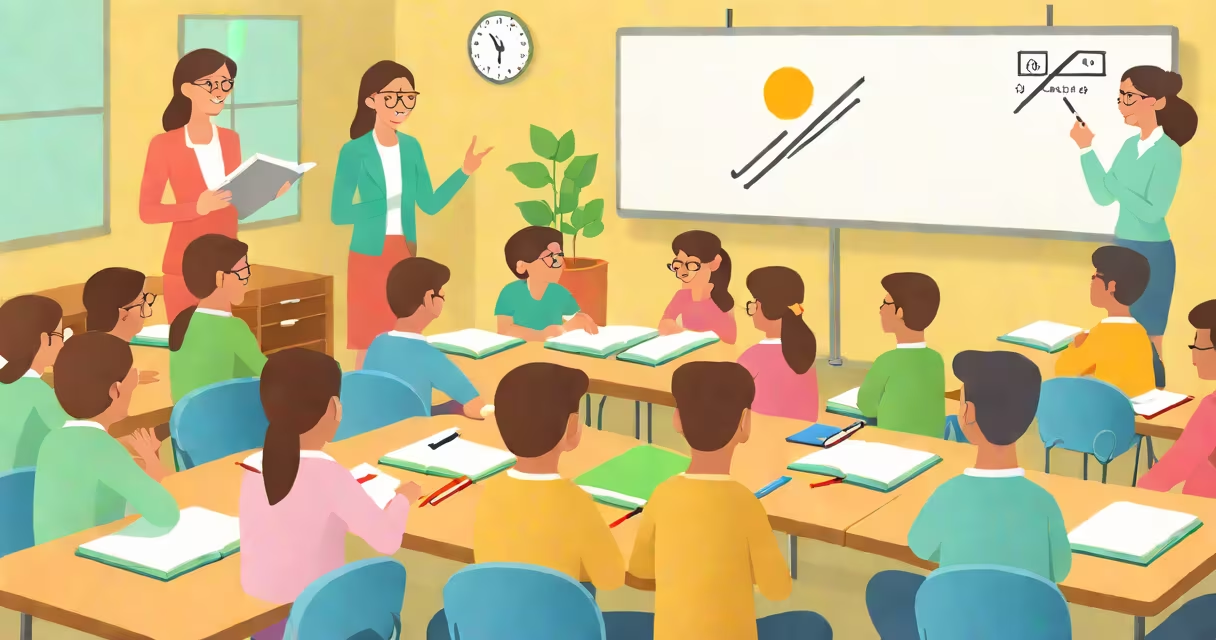
How to help students with comprehension involves teaching explicit strategies such as predicting, questioning, summarizing, and visualizing to improve understanding of written material. These techniques are backed by research from the National Reading Panel and the Institute of Education Sciences.
Comprehension is not passive absorption-it's an active process. When students read, they must connect new information to prior knowledge, identify key ideas, and monitor their understanding. Without instruction in these skills, many learners struggle to grasp meaning, especially with complex texts.
Effective comprehension instruction focuses on metacognition-the ability to think about one's own thinking. Students who can pause and ask, "Do I understand this?" or "What's the main idea?" are better equipped to learn independently.
How Comprehension Skills Work in Practice
Reading comprehension relies on four core components: vocabulary, fluency, background knowledge, and cognitive strategies. A student may decode words accurately but still fail to understand the passage if they lack domain-specific vocabulary or cultural context.
For example, a middle school student reading a passage about the American Civil War may recognize all the words but not grasp the significance of emancipation without knowing the historical role of slavery in the conflict. This gap reveals why comprehension is not just about decoding-but about making meaning.
Research from the National Reading Panel (2000) confirms that direct instruction in comprehension strategies improves outcomes across grade levels. Techniques like think-aloud modeling, graphic organizers, and guided questioning yield measurable gains in reading performance.
Key Strategies to Teach Explicitly
Not all comprehension strategies are equally effective. The most impactful ones are teachable, observable, and transferable across subjects. Here are the most proven approaches:
| Strategy | How It Works | Best For |
|---|---|---|
| Predicting | Students make guesses about what will happen based on titles, images, or early text. They revise predictions as they read. | Nonfiction, narrative texts, lower grades |
| Questioning | Students generate and answer questions about the text. Teachers model asking "why" and "how" questions. | Science, history, literature |
| Summarizing | Students retell the main idea in their own words. Focus on "who, what, where, when, why." | Longer passages, essays, textbooks |
| Visual Mapping | Using diagrams like mind maps or story webs to represent relationships between concepts. | Complex topics, multi-step processes |
These strategies are not optional extras-they are foundational. A study published in Reading Research Quarterly (2016) found that students taught with explicit strategy instruction outperformed peers in both immediate and delayed assessments.
One common mistake is assuming students will naturally develop these skills. They don't. A 2018 report from the Institute of Education Sciences emphasized that comprehension growth requires deliberate, daily practice-not just exposure to books.
Common Misconceptions and Corrections
Many educators and parents assume that reading aloud to students automatically builds comprehension. While it supports vocabulary and fluency, it doesn't teach students how to extract meaning independently.
Another error is equating comprehension with vocabulary size. A student may know 10,000 words but still misinterpret a metaphorical passage. Comprehension is not just word recognition-it's inference, analysis, and synthesis.
A lesser-known but critical insight: students often misunderstand the purpose of reading. They view it as a task to complete rather than a way to learn. Teaching them to set a purpose-"I'm reading this to find out how photosynthesis works"-improves focus and retention.
Real-World Example: A Middle School Science Lesson
In a seventh-grade science class, students were assigned a short article on climate change and ocean acidification. Before reading, the teacher asked them to predict the effects of increased carbon dioxide on marine life.
As they read, students underlined key facts and wrote one question per paragraph. After finishing, they used a T-chart to compare causes and effects. Finally, they summarized the main idea in three sentences.
Post-lesson assessment showed 78% of students correctly identified the link between CO₂ emissions and coral bleaching-up from 42% in a previous lesson without strategy instruction.
This example demonstrates that comprehension is not innate. It's built through structured, repeated practice with clear goals.
What to Avoid: Common Pitfalls
Teachers often assign reading and then ask, "What did you learn?" without teaching students how to extract or organize information. This leads to vague responses like "It was about nature" or "It was long."
Another trap is overusing multiple-choice questions. While useful for checking recall, they don't assess deeper understanding. Open-ended prompts like "Explain how the author supports their claim" are more revealing.
Parents also fall into the habit of asking "Did you understand?"-a yes/no question that offers no feedback. Instead, ask: "What part was hardest? What did you notice about the structure?"
Firsthand Observation: A Classroom That Worked
I observed a fifth-grade teacher using a "think-aloud" routine during a shared reading session. She modeled her internal dialogue: "Hmm, the character just slammed the door. That suggests anger. But why? Maybe he's scared too."
Afterward, students practiced the same technique in pairs. Within two weeks, their written summaries included more emotional and causal reasoning. The difference wasn't effort-it was modeling.
Where and Why These Methods Are Used
How to help students with comprehension is applied in K-12 classrooms, tutoring centers, and homeschool environments. It's especially important in inclusive education settings where students have diverse learning profiles.
Special education programs use these strategies to close achievement gaps. According to the U.S. Department of Education's Reading First initiative, students with learning disabilities improved comprehension scores by 30% when taught with explicit strategy instruction.
Even in higher education, instructors use these techniques in introductory courses. A biology professor at the University of Michigan reported that students who completed a pre-reading strategy worksheet scored 15% higher on concept exams.
Final Thoughts
How to help students with comprehension is not a single fix-it's a set of consistent, research-backed practices. It begins with teaching students to monitor their understanding, ask questions, and summarize what they've read.
When implemented with fidelity, these methods lead to lasting improvements in academic performance. Schools that embed strategy instruction into daily routines see gains across subjects, not just in reading.