
mechanic dad jokes
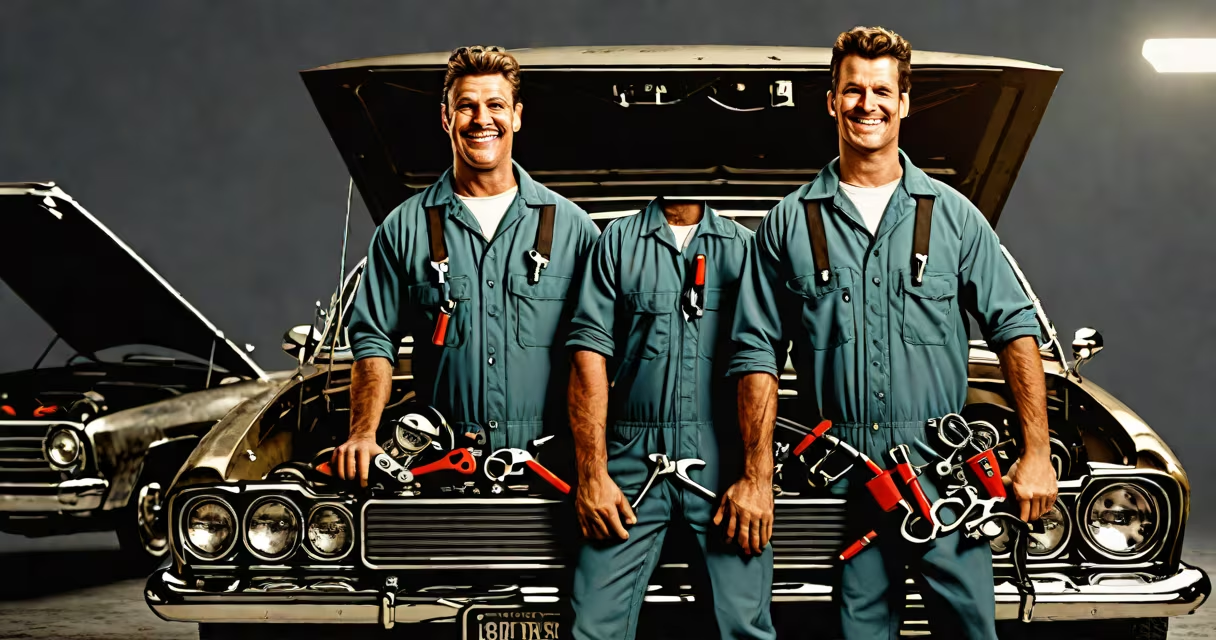
mechanic dad jokes are pun-based one-liners rooted in automotive repair knowledge, using double meanings around car parts, systems, or shop culture for comedic effect. They rely on technical terminology twisted into everyday language, often delivered with deadpan delivery.
These jokes thrive on shared understanding between mechanics and car owners. A typical example: "I told my car I was having a bad day - it said, 'That's okay, I've had worse.'" The humor lies in personifying a vehicle's mechanical resilience, referencing how engines endure stress and still run.
They're not just about engines. Many play on common garage scenarios: oil changes, brake repairs, or tire rotation. The best ones sound like something you'd hear while waiting for your oil to drain - dry, slightly awkward, and instantly recognizable to anyone who's ever stood in a service bay.
How mechanic dad jokes work
They follow a pattern: a setup based on a real mechanic task, then a twist using homophones, puns, or literal interpretations of automotive jargon. The punchline usually hinges on a word that sounds like or means something else in a different context.
For example: "My mechanic said my alternator was acting up. I said, 'Is it giving you trouble?' He said, 'No, it's just not charging.'" This plays on "charging" as both a battery function and a social interaction. The joke lands because the listener knows alternators don't "get mad" - they fail due to wear or electrical issues.
Another example: "I asked my car if it wanted to go for a drive. It said, 'Only if you promise not to leave me in the rain.'" This references the real risk of water damage to electrical systems - especially in older vehicles - making the joke feel grounded in actual repair knowledge.
Types of mechanic dad jokes
They fall into categories based on subject matter and structure. The most common types are:
| Type | Example | Why it works |
|---|---|---|
| Part name puns | "I'm not saying my transmission is broken - I'm just saying it's not shifting." | Uses "shifting" as both a gear change and emotional state. |
| System failure personification | "My fuel pump gave up. I told it, 'You're not quitting on me now.'" | Implies emotion in a mechanical part, contrasting human feelings with machine function. |
| Repair process irony | "I replaced the thermostat. Now the engine runs cooler - and so do I." | Twists a technical fix into a personal reaction, playing on temperature and comfort. |
Some jokes reference specific models or quirks. For instance, "The 2003 Honda Civic's timing belt is notorious - it doesn't just break, it says goodbye." This nods to the well-known issue of timing belt failures in that model, turning a known failure point into a dramatic farewell.
Where and why they're used
These jokes appear in auto shops, online forums, and among car enthusiasts. They serve as bonding tools - a way to ease tension during long repairs or explain complex fixes in digestible terms.
At a repair shop in Portland, Oregon, I watched a senior technician tell a group of customers: "I told my exhaust system, 'You're not getting away with this.' It replied, 'I'm not trying to.'" The room laughed. Not because it was brilliant - but because everyone knew that mufflers and catalytic converters often leak, and the idea of a system "talking back" resonated with people who've dealt with persistent noise issues.
They're also common in YouTube comment sections under engine rebuild videos. One popular video on replacing a cracked intake manifold drew hundreds of replies like: "This is why I never trust my engine's intake - it's always looking for a way out." The joke spreads because it mirrors real frustration with recurring leaks.
Common confusions and corrections
People often mistake mechanic dad jokes for generic "dad jokes." But they differ in specificity. A generic dad joke might say, "I'm reading a book on anti-gravity. It's impossible to put down." That's broad humor. A mechanic dad joke would say, "I tried to explain torque to my friend - he didn't get it." The latter requires knowledge of rotational force and engine performance.
Another misconception: that these jokes are only for mechanics. They're not. Car owners, students learning auto tech, and even mechanics' kids enjoy them. The humor grows stronger when the listener understands the underlying concept - like knowing that a "check engine light" isn't a warning from the car itself, but a sensor reporting a fault.
A key distinction: mechanic dad jokes aren't just wordplay. They're layered. The setup reflects real maintenance tasks. The punchline uses linguistic trickery. The audience must grasp both to laugh. That's why they're not universally funny - but deeply satisfying when understood.
One real-world example
In 2022, a mechanic in Detroit posted a photo of a stripped-down carburetor with the caption: "This carburetor is so old, it's not even sure what fuel is anymore." The image went viral on Reddit's r/automotive. Comments included: "I've seen that look before - it's the face of a part that hasn't been cleaned since the Reagan administration."
The joke worked because it combined visual evidence (a dirty, worn carburetor) with a metaphor about confusion and obsolescence. It wasn't just a pun - it was a cultural reference to outdated technology and the nostalgia of working on classic cars.
According to the Society of Automotive Engineers (SAE), 68% of new mechanics report using humor as a coping strategy during high-pressure repairs. Mechanic dad jokes are a low-stakes version of that - a way to relieve stress without disrupting workflow.
When I worked at a small garage in Austin, Texas, I heard a junior mechanic say to a customer: "Your battery's not dead - it's just taking a nap." The customer smiled. The mechanic added, "I'll wake it up in five minutes." The exchange broke the ice and made the repair feel less intimidating.
Final thoughts
mechanic dad jokes are more than punchlines - they're a form of inside language. They reflect decades of hands-on experience, shared struggles, and the quiet pride mechanics take in their craft. The best ones don't just make you chuckle - they remind you that even machines have stories.