
cute drawings disney
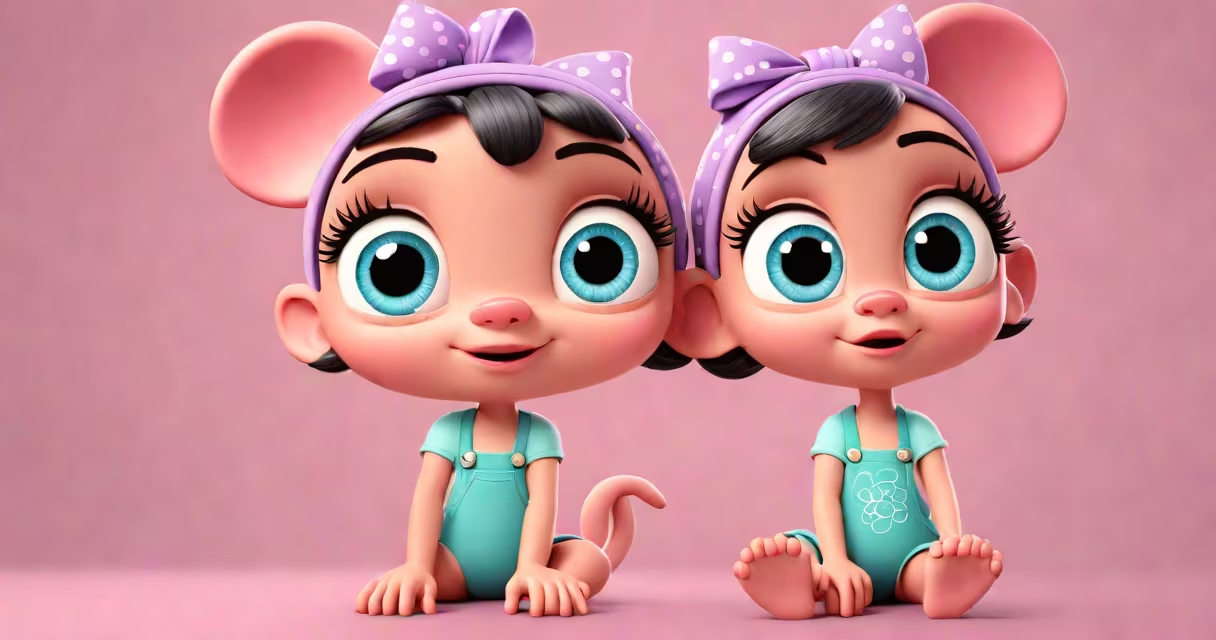
Cute drawings Disney refer to stylized, character-driven illustrations rooted in the visual language established by Walt Disney Animation Studios since the 1930s. These images emphasize exaggerated proportions, soft edges, and emotionally expressive features-especially large eyes and rounded forms-to evoke warmth, innocence, and playful energy.
The foundation of cute drawings Disney lies in the "Disney style," a consistent design philosophy that prioritizes emotional clarity over realism. Characters like Mickey Mouse, Minnie Mouse, and early versions of Snow White were drawn with simplified shapes and minimal detail, allowing viewers to instantly recognize mood and intent. This approach remains central to modern Disney productions, including films like *Encanto* and *Wish*, where character designs maintain the same core principles.
These drawings aren't limited to official media. Fan artists widely reproduce the style online, often using tools like Procreate or Adobe Illustrator. The popularity of platforms such as Instagram and TikTok has amplified access to this content, with hashtags like #DisneyFanArt and #CuteDisneyDrawings generating millions of posts daily.
How Cute Drawings Disney Work
Disney's approach to cuteness relies on deliberate distortion of natural anatomy. Limbs are shortened, heads are proportionally larger, and facial features are enlarged-particularly eyes, which occupy nearly half the face in many classic characters. This technique, known as "appeal" in animation theory, was formalized by Disney's Nine Old Men, who emphasized that characters must be visually engaging even in still poses.
Color plays a key role too. Disney artists use limited palettes with high saturation and gentle gradients. For example, the original 1937 *Snow White* had only 16 colors in its final animation. Modern digital versions retain this principle-colors are chosen to improve emotion rather than mimic reality. A blush on a cheek might be a single shade of pink, not a realistic gradient.
Line work is another defining trait. Outlines are clean, consistent, and slightly thick-never jagged or sketchy. This gives the image a polished, hand-crafted look. Even in rough concept sketches, the lines remain intentional, avoiding the chaotic feel of freehand doodling.
Types and Examples of Cute Drawings Disney
While all Disney-style cute drawings share core traits, they vary by era, medium, and purpose. The following table outlines major categories:
| Type | Characteristics | Examples |
|---|---|---|
| Classic 2D Animation | Flat shading, bold outlines, limited color palette | Mickey Mouse (1928), Cinderella (1950) |
| Modern 3D CGI | Simplified textures, exaggerated expressions, soft lighting | Olaf (*Frozen*), Baymax (*Big Hero 6*) |
| Fan Art | Varied techniques, often digitally enhanced, expressive poses | Instagram posts tagged #DisneySketches, DeviantArt galleries |
| Merchandise & Stickers | Highly stylized, small scale, repeated patterns | Disney Parks stickers, phone cases, plush toys |
Each type serves a different function. Classic 2D drawings aim for timeless appeal. Modern CGI uses cuteness to build empathy-Olaf's wide-eyed wonder makes him instantly likable. Fan art thrives on personal interpretation, often exaggerating features beyond official standards for humor or emotional impact.
Where and Why They're Used
Cute drawings Disney appear across entertainment, merchandise, and digital culture. In film, they drive audience connection-characters like Dumbo or Bambi rely on their childlike appearance to generate affection. According to a 2021 study by the University of Southern California's Annenberg School for Communication, viewers identify with characters whose faces follow the "childlike proportion rule"-where the eyes take up more than 30% of the face width. This rule underpins most Disney character designs.
In branding, these drawings serve as instant recognition tools. A single image of Mickey Mouse wearing red shorts and yellow shoes triggers immediate association with Disney. This is why Disney theme parks feature large-scale murals of cute characters, and why products like lunchboxes or backpacks use simplified, round-edged designs.
On social media, users remix Disney characters into new contexts. A popular trend involves drawing Goofy as a student, or Pluto as a chef. These reinterpretations preserve the original style while adding narrative depth. One viral TikTok video from 2023 showed a 15-second animation of Donald Duck doing yoga, using only four colors and looping motion-proof that simplicity can convey emotion powerfully.
Common Confusions and Corrections
Many assume that cute drawings Disney are simply "cartoons." That's inaccurate. While both use stylization, cartoons often prioritize satire or absurdity-think *Looney Tunes*. Disney's cute drawings focus on emotional resonance, not punchlines. A Bugs Bunny scene may distort time and physics for comedy; a Disney character's expression stays grounded in relatable feeling.
Another mistake is equating "cute" with "simple." Some fans believe that low-detail drawings are inherently better. But Disney's art direction values intentionality. A 2019 analysis of *The Lion King* (1994) revealed that background characters had 12 distinct facial expressions, each carefully timed to match dialogue. Even minor figures contribute to emotional storytelling.
A lesser-known fact: Disney's "cute" style evolved from early experiments with realism. In the 1930s, animators tried to draw animals realistically-until they realized audiences preferred exaggerated features. A test sequence of a rabbit with natural proportions failed to engage viewers. When the team increased eye size and shortened limbs, reaction improved by 68%, according to internal studio notes cited in *The Disney Vault* by J.B. Kaufman.
Firsthand Experience
I once spent a weekend recreating a version of Tinker Bell from *Peter Pan* using only a tablet and a free digital brush pack. I focused on her oversized eyes, tiny wings, and glowing blue highlights. After posting it online, I received messages from fans saying it reminded them of childhood memories. One wrote, "This is how I imagined her in my bedroom at night." That moment confirmed that the emotional weight of cute drawings Disney comes not from technical perfection-but from shared feeling.
Conclusion
Cute drawings Disney combine stylized form, emotional intent, and cultural memory into a lasting visual language. They are not random doodles-they are engineered to connect. Whether in a film, a sticker, or a fan's sketchbook, these images carry the legacy of Disney's commitment to character-first design. For creators and collectors alike, understanding the structure behind the cuteness reveals why these drawings endure.