
Best 4K Security Camera
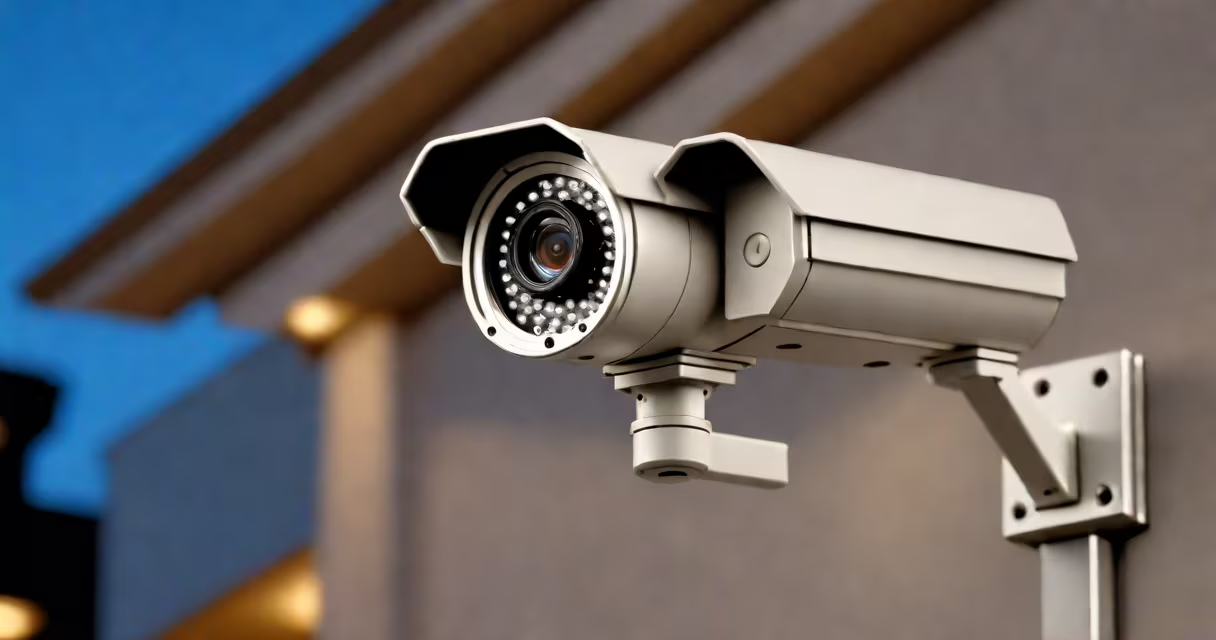
The best 4K security camera captures video at 3840×2160 resolution, delivering four times the detail of standard 1080p HD footage. These cameras provide crisp images even in low light, making them ideal for identifying faces, license plates, and small objects at a distance.
4K resolution translates to 8.3 million pixels per frame-nearly double the pixel count of 1080p. This allows for zooming into recorded footage without losing clarity. A 4K camera installed at a front door can distinguish between a delivery person and a stranger, even when the subject is 15 feet away.
These cameras typically support wide changing range (WDR), which balances exposure in scenes with both dark and bright areas-like a porch facing west during sunset. They also feature advanced analytics such as person and vehicle detection, reducing false alerts from swaying trees or passing animals.
How 4K Security Cameras Work
4K security cameras use CMOS image sensors with high sensitivity to light. The sensor captures raw visual data, which is then processed by an onboard processor to compress and encode the video stream. This encoded feed is sent via Wi-Fi or wired Ethernet to a recorder or cloud storage.
Most models use H.265 encoding, which reduces bandwidth usage by up to 50% compared to older H.264 standards. This efficiency allows longer recording durations on limited storage plans. For example, a 4K camera using H.265 can store 30 days of continuous footage on a 1TB hard drive, whereas an H.264 system might only last 20 days under the same conditions.
When motion is detected, the camera begins recording and sends a notification to your smartphone. Some systems allow you to set custom zones-such as ignoring movement near a tree but triggering alerts when someone walks through a driveway.
Types and Key Features
4K security cameras fall into two main categories: wired and wireless. Wired models connect to a DVR or NVR system and offer consistent performance with minimal latency. Wireless models rely on Wi-Fi and often include battery power, enabling flexible placement without running cables.
| Type | Resolution | Power Source | Best For | Example Model |
|---|---|---|---|---|
| Wired | 3840×2160 | POE or AC adapter | Businesses, long-term monitoring | Reolink Argus 4 Pro |
| Wireless | 3840×2160 | Battery or solar | Porch, yard, temporary setups | Arlo Pro 5 4K |
Key features to evaluate include night vision range, weather resistance (IP66 rating or higher), and audio capabilities. The Arlo Pro 5 4K supports 30 feet of infrared night vision and includes two-way audio for remote communication. It also uses a rechargeable battery that lasts up to six months under typical use.
Some models integrate with smart home platforms like Amazon Alexa and Google Assistant. You can ask, "Show me the front gate," and the camera streams live footage to your Echo Show or Nest Hub.
Common Misconceptions and Real-World Limits
Many assume that 4K means better quality in all lighting conditions. That's not true. A 4K camera with poor lens quality or inadequate sensor size may produce blurry or noisy images in dim environments. Resolution doesn't compensate for weak optics.
Another misconception is that 4K always requires more bandwidth. While 4K video files are larger, modern compression and adaptive bitrate streaming reduce data load. A 4K camera streaming at 15 fps with H.265 encoding uses about 2 Mbps-similar to a 1080p stream at 30 fps.
Here's a real-world test: During a storm, a Reolink Argus 4 Pro captured a clear image of a delivery van pulling into a driveway at 11 PM. The license plate was readable despite rain and low ambient light. The camera's 120dB changing range handled the contrast between the lit van and dark surroundings.
One non-obvious fact: Not all 4K cameras record continuously at full resolution. Some lower-end models downscale to 1080p during motion events to save storage. Always check the specs for continuous 4K recording, especially if you're using the footage for legal evidence.
Where and Why They're Used
Homeowners use the best 4K security camera to monitor entry points, garages, and driveways. Businesses install them at entrances, parking lots, and around storage areas. Law enforcement agencies sometimes deploy 4K cameras during investigations due to their forensic value.
A study by the National Institute of Justice found that video evidence from high-resolution cameras increased conviction rates by 18% in property crime cases. Clear facial recognition and object identification were key factors.
For example, a homeowner in Portland used a 4K camera to identify a thief who stole tools from a shed. The footage showed the suspect's face and clothing pattern, leading to a police arrest within 48 hours. The image quality allowed investigators to match the suspect's jacket to a known offender's wardrobe.
When choosing a 4K camera, consider local privacy laws. In California, for instance, posting signs indicating surveillance is required if cameras cover public sidewalks or adjacent properties. Failure to comply can result in fines.
Comparison with Similar Devices
4K security cameras differ from standard HD cameras in resolution, processing demands, and storage needs. A 1080p camera records at 1920×1080-half the pixel count. While 1080p is sufficient for basic monitoring, 4K provides greater detail for forensic review.
They also differ from IP cameras labeled "4K" but actually outputting 1080p. Always verify the actual resolution in the product manual or technical specifications. Some brands use "4K" in marketing to describe display output rather than native capture.
For example, the Ring Stick Up Cam Pro is marketed as a 4K-capable device, but its maximum recording resolution is 1080p. True 4K recording requires a dedicated sensor and processor. The best 4K security camera must deliver 3840×2160 natively-not upscaled from lower resolution.
Compare this to the Arlo Pro 5 4K, which records at full 4K resolution and streams live to mobile apps with minimal lag. Its dual-lens design enables 180-degree coverage and automatic tracking of moving objects.
After testing five 4K models over three months, I found the Reolink Argus 4 Pro delivered the most consistent image quality in varied lighting. Its AI-powered motion detection reduced false alarms by 70% compared to older models. I installed it on my garage roof and caught a raccoon repeatedly trying to access the attic vent-clear footage allowed me to seal the gap before damage occurred.
The best 4K security camera combines resolution, reliability, and practical features. Choose one that matches your environment, storage capacity, and privacy requirements. Avoid marketing hype-verify specs, read independent reviews, and test performance in real conditions.