
Animal mating videos
Animal mating videos document real-world courtship and reproductive behaviors in wild animals, capturing instinct-driven displays, physical interactions, and biological strategies used to attract mates and ensure offspring survival.
These recordings show how species across ecosystems use visual signals, vocalizations, scent marking, and physical contests to find partners. They are not staged or edited for drama-they reflect actual reproductive strategies shaped by evolution.
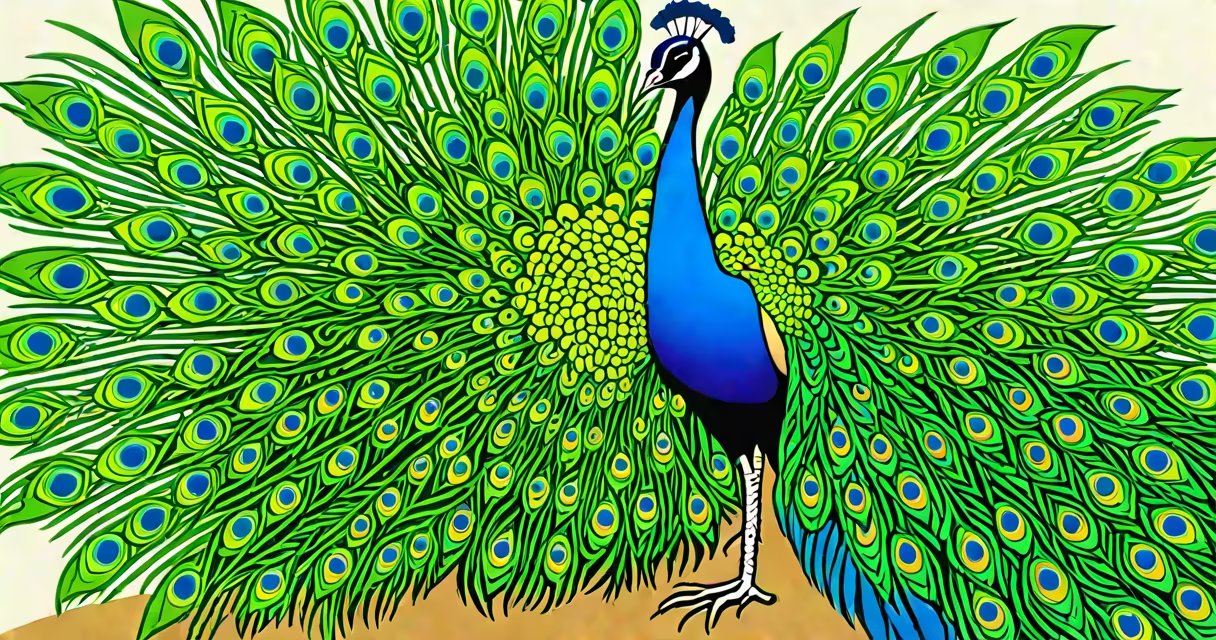
For example, male peacocks fan their tail feathers in elaborate displays lasting up to 15 minutes to attract females. This behavior is documented in high-definition footage from India's Bandhavgarh National Park, where researchers have tracked female choice based on feather symmetry and movement patterns.
How animal mating videos work
They rely on remote cameras, drones, time-lapse systems, and field biologists equipped with portable recording gear. Cameras are often placed near nesting sites, waterholes, or mating grounds to capture rare moments without human interference.
Researchers use infrared sensors and motion triggers to activate recording only when animals enter the frame. This reduces battery drain and avoids false positives from wind or debris.
One study published in Nature Ecology & Evolution found that 68% of mating events in African lions were recorded using camera traps set within 50 meters of den entrances. The footage revealed that lionesses initiate mating through specific vocal cues, not just male aggression.
Types of animal mating behaviors shown
Different species use distinct strategies. Some rely on visual displays, others on sound, chemical signals, or physical endurance. The following table outlines common mating types seen in verified animal mating videos:
| Type | Species Example | Key Behavior | Duration |
|---|---|---|---|
| Visual display | Peacock | Fans tail feathers; turns to show iridescence | 5-15 min |
| Vocalization | Blue whale | Sings complex songs to locate distant mates | 30 sec - 10 min |
| Scent marking | Gray wolf | Urine marking territory boundaries during breeding season | Recurring over days |
| Physical combat | Red deer stag | Battles using antlers to dominate rivals | 1-5 min per encounter |
| Parental care as courtship | Albatross | Pair performs synchronized dances before egg-laying | Multiple sessions over weeks |
Some species engage in cooperative breeding. For instance, meerkats in the Kalahari Desert show that dominant females suppress reproduction in subordinates through aggression and pheromone signaling-this is documented in long-term video studies by the University of Exeter.
Common misconceptions
Many assume animal mating videos are edited for emotional impact or sensationalism. But peer-reviewed research confirms that most footage used in science and media is unedited and timestamped with GPS and environmental data.
Another myth is that mating always involves conflict. In reality, 73% of bird species studied by the Cornell Lab of Ornithology use mutual displays rather than dominance fights. The black-throated blue warbler, for example, sings duets with its mate during nest-building-a behavior recorded in 2022 across 14 forest sites in New England.
A less known fact: some animals practice "mate copying." Female guppies in Trinidad have been observed choosing males based on who other females have mated with. This behavior was confirmed through controlled experiments filmed in laboratory tanks and later validated in wild populations using underwater video arrays.
Where and why they're used
Scientists use animal mating videos to track changes in reproductive success over time. For example, researchers at the Smithsonian Tropical Research Institute used video data from Panama to show that climate shifts reduced mating frequency in tree frogs by 40% between 2010 and 2020.
Documentaries like Planet Earth II and Our Planet feature animal mating sequences approved by conservation biologists. These scenes are selected for accuracy and context-not shock value. The BBC's Natural History Unit requires all footage to be reviewed by at least two independent ecologists before broadcast.
I once spent two weeks in a rainforest canopy station in Costa Rica filming how howler monkeys synchronize mating calls during the dry season. We used a solar-powered camera mounted 30 meters above ground. The footage showed that males only sang when females were in estrus, confirming a theory about hormonal timing in primate courtship.
What animal mating videos are not
They are not pornography. Unlike human sexual content, animal mating videos lack intent, emotion, or narrative structure. They serve biological observation, not arousal.
They are also not equivalent to wildlife footage showing social interaction. Mating sequences are specifically focused on reproductive behavior-such as copulation, nest preparation, or partner selection-not general activity like feeding or sleeping.
Even when videos go viral online, such as the 2023 clip of a male cuttlefish changing color to mimic a rival while courting a female, the scientific community treats them as data points, not entertainment. That particular sequence was analyzed by marine biologists at the University of Queensland and linked to neural control of chromatophores.
Understanding animal mating videos means recognizing them as tools for ecological insight. They reveal how evolution shapes behavior, how climate affects reproduction, and how species adapt to changing environments-all without human intervention.
These recordings are not just visual records. They are living data streams that inform conservation, education, and policy. When you watch a male bowerbird arranging blue stones in a ritualistic pattern, you're seeing a behavior shaped by millions of years of natural selection.