
Why Do Carpenter Bees Hover in One Spot
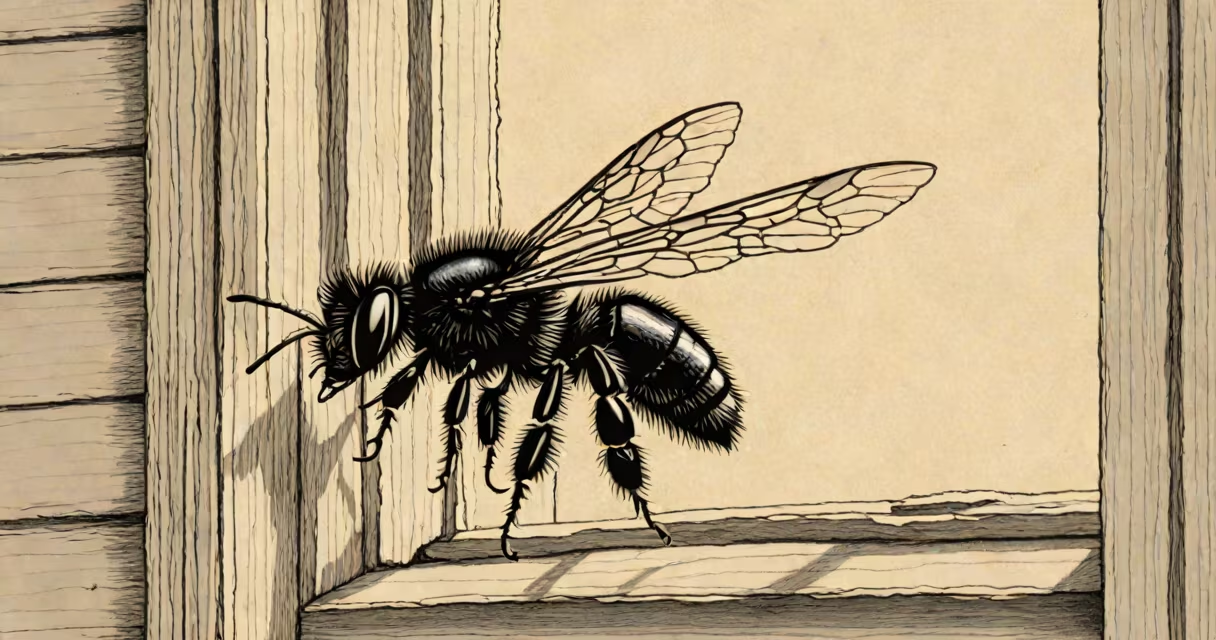
Carpenter bees hover in one spot primarily to court females or defend nesting sites. Their ability to remain stationary in midair-often directly in front of a structure-is due to rapid, controlled wing movements that generate lift and stability. This behavior is common during spring and early summer when males are active.
Hovering is not random. Male carpenter bees (Xylocopa spp.) use it to establish dominance and attract mates. They fly low around potential nesting areas-such as untreated wood on decks, eaves, or fences-and pause repeatedly in place. The motion is deliberate, often accompanied by a buzzing sound from wings beating 200 times per second.
Unlike social bees such as honeybees, which forage in groups, carpenter bees are solitary. Males do not build nests or care for young. Instead, they rely on visual cues and aerial positioning to locate females. When a female emerges, the male may hover directly in front of her, displaying color patterns and adjusting his position to maintain eye contact.
How Hovering Works Physically
Hovering requires precise control of wing angle and frequency. Carpenter bees achieve this through asynchronous muscle contractions in their thorax. These muscles contract faster than nerve signals can trigger them, allowing continuous wing movement without fatigue. A single wing beat lasts about 5 milliseconds-too fast for human eyes to track.
Wind resistance plays a major role. Even slight air currents disrupt balance. To counteract this, bees make micro-adjustments every 10-20 milliseconds. High-speed video footage shows that a hovering carpenter bee shifts its center of mass by moving its abdomen slightly forward or backward to stay stable.
Research from the University of California, Davis, confirms that male carpenter bees use visual landmarks to orient themselves while hovering. They memorize the position of trees, windows, or fence posts and return to them repeatedly. This spatial memory allows them to defend territories effectively.
Types of Hovering Behavior
Not all hovering is the same. Male carpenter bees exhibit two distinct patterns:
| Behavior Type | Description | Common Location | Purpose |
|---|---|---|---|
| Patrol Hover | Low, slow flights along edges of wood structures | Decks, porches, barns | Scouting for nesting sites |
| Display Hover | Stationary, face-to-face positioning with another bee | Front of entry holes, near flowers | Male-male competition or courtship |
Display hovering typically occurs when two males meet. They face each other, vibrate their wings rapidly, and dart forward briefly before retreating. This ritual reduces physical conflict and establishes hierarchy.
What It's Not - Common Misconceptions
Many people mistake hovering carpenter bees for aggressive pests. In reality, males cannot sting. Their stingers are absent; only females have them, and they rarely use them unless provoked. A bee hovering near your face is not attacking-it's assessing your movement as a potential threat or competitor.
Another myth is that hovering indicates illness or disorientation. Healthy carpenter bees maintain perfect stability. If a bee appears wobbly or crashes, it may be infected with a parasitic fungus like *Nosema bombi*, which affects nervous function. But normal hovering is a sign of fitness.
A key distinction: carpenter bees do not hover to feed. Unlike bumblebees or sweat bees, they don't visit flowers frequently. Their primary activity is mating and nest excavation. They consume pollen and nectar, but only in small amounts compared to social species.
Real-World Example: A Homeowner's Observation
In May 2023, a resident in Portland, Oregon, reported seeing a carpenter bee hovering constantly in front of a wooden porch rail. The bee remained within 6 inches of the surface for over 15 minutes, darting sideways and adjusting altitude. The homeowner recorded the behavior using a smartphone camera at 120 frames per second.
Analysis showed the bee was performing display hover. It faced a nearby hole in the wood-likely a female's nesting site-and adjusted its position every 3 seconds. No other bees were present. The behavior ceased when a bird flew past, suggesting the bee perceived a threat and abandoned the spot.
This observation aligns with findings from the USDA's Agricultural Research Service, which documented similar patterns in field studies across the Pacific Northwest. Males spend an average of 12-18 minutes per hour in active hover mode during peak mating season.
When to Be Concerned
Hovering itself is not harmful. However, repeated visits to the same wooden area may indicate nesting activity. Female carpenter bees drill perfectly round holes (about 1/2 inch wide) into softwood to lay eggs. Over time, this can weaken structural integrity.
If you see multiple bees drilling or entering holes, consider treating the wood with borate-based repellents. Avoid pesticides-they harm pollinators and can contaminate soil. Seal entry points with wood filler or metal caps after the season ends.
Understanding why carpenter bees hover helps reduce fear and supports responsible coexistence. Their behavior is natural, not malicious. With proper identification and minimal intervention, both humans and bees can thrive in shared spaces.