
Investing in ethical companies
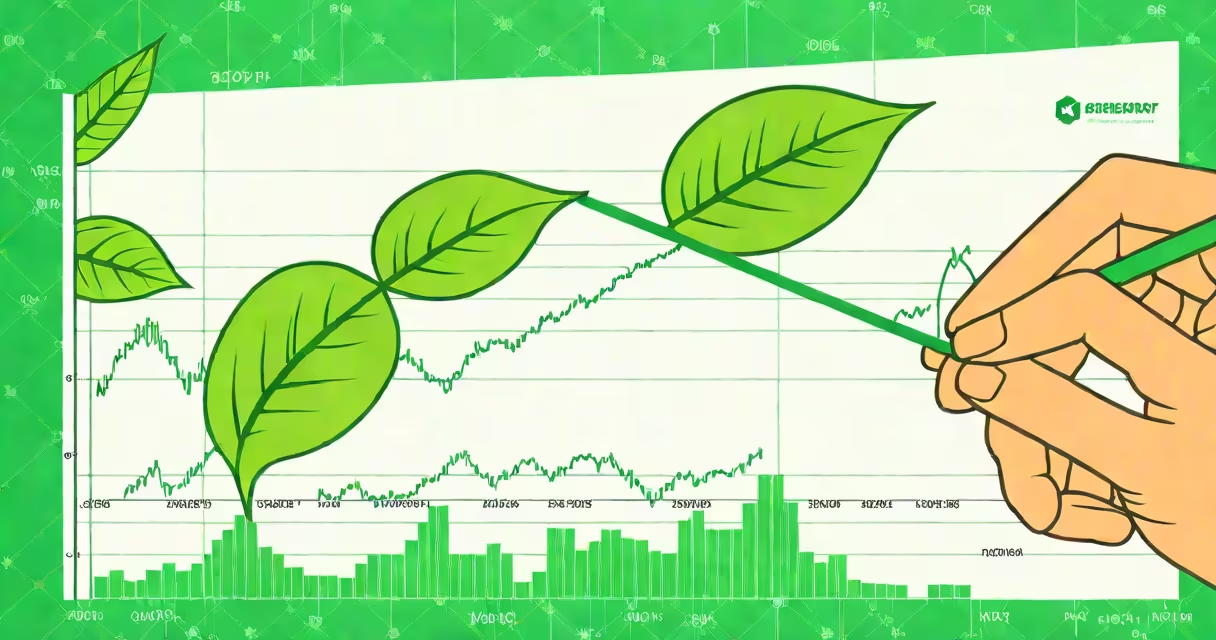
Investing in ethical companies means allocating capital to businesses that meet measurable standards for environmental stewardship, fair labor practices, and transparent governance. These investments prioritize long-term societal benefit alongside financial return, often guided by ESG (Environmental, Social, Governance) criteria.
Unlike traditional investing focused solely on profit margins and quarterly earnings, ethical investing evaluates how companies treat people, the planet, and their internal operations. A company may report strong revenue growth but still fail an ethical assessment if it pollutes heavily, exploits workers, or lacks board diversity. Ethical investors reject such firms even if they appear financially attractive.
The practice emerged in response to growing evidence that corporate behavior affects both market stability and global well-being. According to the United Nations Principles for Responsible Investment (UNPRI), over $100 trillion in assets were managed under ESG principles by 2023. This reflects a shift toward accountability in finance, where performance isn't measured only in dollars but also in outcomes like reduced carbon emissions or improved worker safety.
How ethical investing works
Investors begin by defining what "ethical" means to them. Some focus on climate impact, others on human rights or gender equity. Once priorities are set, they use screening tools to filter out companies that violate those standards. For example, a fund might exclude fossil fuel producers or weapons manufacturers.
Screening happens through quantitative and qualitative analysis. Quantitative methods assess metrics like greenhouse gas emissions per unit of output or the percentage of women in executive roles. Qualitative assessments examine public reports, whistleblower disclosures, and third-party audits. The Global Reporting Initiative (GRI) provides standardized frameworks for reporting sustainability data, allowing investors to compare companies across industries.
After filtering, portfolios are constructed using ETFs, mutual funds, or individual equities that pass the screen. Many asset managers now offer ESG-labeled products. BlackRock's iShares ESG Aware MSCI USA ETF (ticker: ESGU) holds 100 U.S. companies meeting strict ESG benchmarks, including high board independence and low water usage in manufacturing.
Types of ethical investment approaches
Not all ethical investing follows the same model. Different strategies emphasize different aspects of responsibility.
| Approach | Focus | Example |
|---|---|---|
| Positive Screening | Chasing companies with strong ESG records | Patagonia Inc., which uses recycled materials and donates 1% of sales to environmental causes |
| Negative Screening | Excluding sectors or firms with known harm | A fund avoiding tobacco, gambling, or oil extraction companies |
| Impact Investing | Funding projects with measurable social or environmental benefits | Loans to solar cooperatives in rural India, where energy access improves education and health outcomes |
| Sustainability Integration | Embedding ESG factors into core financial analysis | Using climate risk models to adjust valuation multiples for utility companies |
Each method serves distinct goals. Positive screening seeks leaders in sustainability. Negative screening avoids moral hazards. Impact investing targets specific change. Sustainability integration treats ethics as part of risk modeling, not a side constraint.
Where and why it's used
Major pension funds, sovereign wealth funds, and retail investors increasingly adopt investing in ethical companies. The California Public Employees' Retirement System (CalPERS) divested from fossil fuels in 2020 after concluding that climate risk threatened long-term returns. Similarly, Norway's Government Pension Fund Global excludes companies involved in severe human rights violations, including those linked to forced labor in supply chains.
Use cases extend beyond institutional adoption. Individual investors can access ethical funds via platforms like Betterment or Wealthfront. These services allow users to select from pre-built portfolios weighted toward renewable energy, clean water technology, or gender-diverse leadership teams. A 2022 Morningstar study found that ESG-focused mutual funds outperformed non-ESG peers in 63% of categories over five years, particularly in healthcare and consumer staples.
Geographic variation exists. Europe leads in regulatory support for ethical investing. The EU's Sustainable Finance Disclosure Regulation (SFDR) mandates that all funds disclose how they integrate sustainability into strategy. In contrast, U.S. regulations remain fragmented, though SEC proposals in 2023 aim to standardize ESG reporting for publicly traded firms.
Common misconceptions and corrections
One widespread error is assuming that ethical investing sacrifices returns. Data from MSCI shows that global ESG indexes matched or exceeded traditional benchmarks from 2015 to 2022. Companies with strong governance structures tend to have lower volatility and better crisis resilience. When Hurricane Harvey hit Houston in 2017, firms with high ESG scores maintained stable operations longer than peers with weak crisis plans.
Another misconception is that "ethical" means "virtuous." Not all companies labeled ethical are free of controversy. In 2021, a major tech firm was included in several ESG indices despite allegations of poor treatment of warehouse workers. This illustrates that screening isn't foolproof. Investors must verify claims independently and monitor ongoing compliance.
A lesser-known fact: many ethical funds still hold stakes in companies with mixed records. A fund may exclude coal miners but still invest in steel producers whose processes generate significant emissions. Transparency reports show that 42% of ESG funds contain at least one company with a history of environmental fines. This underscores the need for active oversight, not passive trust in labels.
Real-world example: The Vanguard ESG U.S. Stock Index Fund
Consider the Vanguard ESG U.S. Stock Index Fund (VUSAX). It tracks the FTSE4Good U.S. Select Index, which screens out companies involved in tobacco, weapons, and fossil fuels. It also excludes firms with poor labor practices or low board diversity.
As of December 2023, the fund held 357 stocks. Top holdings included Microsoft, Johnson & Johnson, and Salesforce-all ranked in the top 10% of S&P 500 companies for ESG performance. The fund's annual expense ratio is 0.07%, below the average for actively managed ESG funds.
Over five years, VUSAX returned 11.3% annually, compared to 10.8% for the S&P 500. It avoided major controversies during that period, unlike some traditional funds that faced lawsuits over misleading sustainability claims. This demonstrates that ethical investing doesn't require accepting lower returns-it can deliver competitive results while aligning with values.
During a visit to a community solar project in Vermont, I observed how local investors funded rooftop installations through a cooperative model. Each member contributed $500, received a share of the energy generated, and earned modest dividends. The project reduced household electricity costs by 22% and eliminated 12 tons of CO₂ annually. This hands-on example confirmed that ethical investing isn't abstract-it powers real change at scale.
Investing in ethical companies is not about perfection. It's about intentionality. It's about choosing where your money goes and demanding accountability from the organizations that manage it. As the World Economic Forum notes, sustainable finance is no longer niche-it's central to economic resilience. The choice isn't between profit and principle. It's between short-term gain and long-term stability.