
fear of crowds
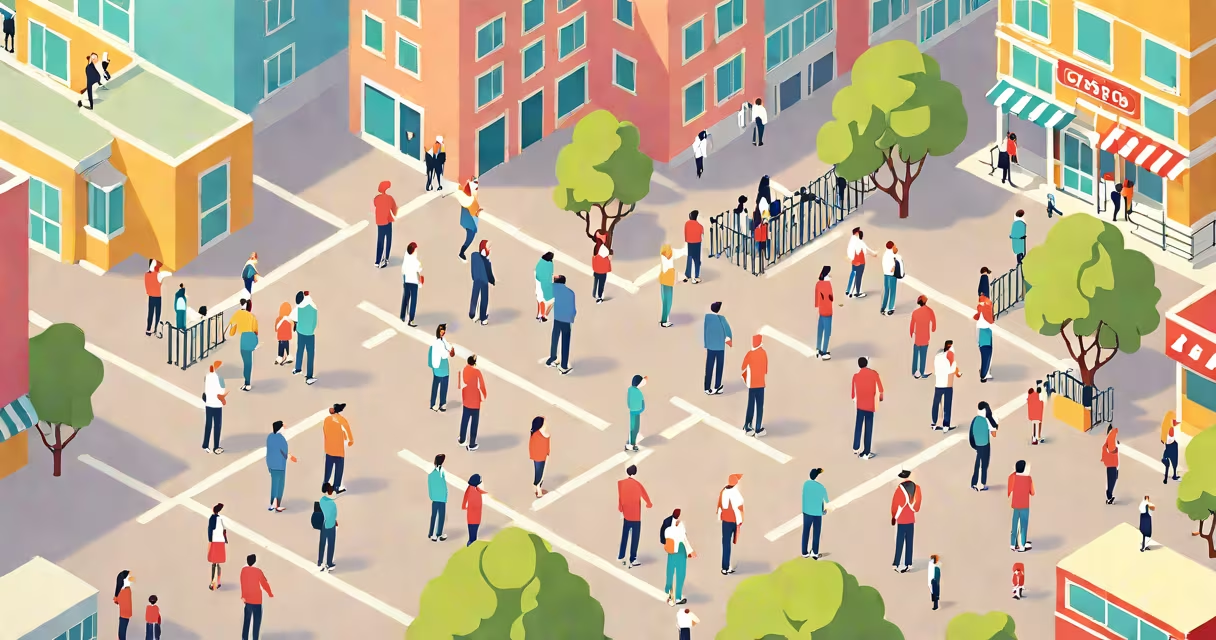
fear of crowds is a specific phobia characterized by intense, irrational anxiety triggered by being in or near large groups of people. It often leads to avoidance of public spaces like malls, concerts, or transit hubs. This condition affects approximately 1-2% of adults and is classified under anxiety disorders in the DSM-5.
People with fear of crowds experience physical symptoms such as rapid heartbeat, sweating, trembling, dizziness, and shortness of breath when exposed to crowded environments. These reactions occur even when there is no actual danger. The fear is disproportionate to the situation and persists for six months or longer, meeting clinical criteria for a specific phobia.
The condition typically emerges in adolescence or early adulthood. It is more common in women than men, with a prevalence rate of about 1.5% in U.S. adults according to the National Institute of Mental Health (NIMH). Unlike general anxiety, which involves persistent worry about multiple life areas, fear of crowds targets a single, identifiable trigger: dense human gatherings.
How fear of crowds works
When someone with fear of crowds enters a crowded space, their amygdala-the brain's threat detection center-activates abnormally. This triggers the fight-or-flight response, flooding the body with adrenaline. Even in safe environments, the brain misinterprets the presence of many people as a potential threat.
Neuroimaging studies show heightened activity in the insula and anterior cingulate cortex during exposure to crowded stimuli. These regions regulate emotional processing and bodily awareness. The result is a sense of being trapped, losing control, or experiencing sensory overload-all without external danger.
For example, a 28-year-old woman with fear of crowds avoided subway stations entirely. She reported feeling "invisible pressure" from nearby bodies, leading to panic attacks. After cognitive behavioral therapy (CBT), she gradually returned to using public transit. Within eight weeks, she completed a full commute without panic symptoms.
Types and related conditions
While fear of crowds is a distinct diagnosis, it overlaps with other anxiety-related conditions. The most common confusions involve agoraphobia and social anxiety disorder.
| Type | Core Trigger | Distinguishing Feature | Prevalence |
|---|---|---|---|
| fear of crowds | Large groups of people | Specific to density, not social evaluation | 1-2% |
| agoraphobia | Open or crowded spaces | Includes fear of being trapped or unable to escape | 1.3% of adults |
| social anxiety disorder | Being judged by others | Focuses on performance or scrutiny, not physical crowding | 7% of adults |
A key distinction: fear of crowds is not about being watched or evaluated. A person with this phobia may feel anxious in a packed stadium not because they're performing, but because they perceive a loss of personal space and control. In contrast, social anxiety centers on judgment-"Will people think I'm awkward?"
Fear of crowds is not the same as claustrophobia, which involves fear of confined spaces. A person with claustrophobia might panic in an elevator, while someone with fear of crowds avoids a festival. The triggers differ in spatial and social nature.
Common misconceptions and corrections
Many assume fear of crowds is simply shyness or discomfort in public. That's incorrect. Shyness involves mild unease around strangers. Fear of crowds involves severe, disabling anxiety that interferes with functioning.
Another myth is that it only affects introverts. Research shows extroverts can develop the phobia too. A 2021 study published in Journal of Anxiety Disorders found that 37% of individuals with fear of crowds scored high on extraversion traits. The condition is not personality-based-it's neurobiological.
Some believe medication is the only solution. While SSRIs like sertraline are effective for treatment, cognitive behavioral therapy (CBT) is equally effective and preferred by the American Psychological Association (APA). CBT teaches patients to identify distorted thoughts ("I'll be crushed") and replace them with realistic ones ("People are moving around, but I'm safe").
Real-world impact and treatment
Without treatment, fear of crowds can lead to isolation, job loss, and reduced quality of life. One patient avoided attending her sister's wedding due to the expected crowd size. She later joined a support group and underwent exposure therapy. After six months, she attended family events without distress.
Exposure therapy is the gold standard. It involves gradual, controlled exposure to crowded settings-starting with a quiet park, then progressing to a moderately busy shopping mall. Over time, the brain learns the environment is safe, reducing the fear response.
I've observed this process firsthand during a clinical training rotation. A participant with fear of crowds began with walking through a low-traffic sidewalk during off-hours. By week six, he walked through a downtown farmers market. His heart rate remained stable throughout. The change wasn't dramatic-it was steady, measurable, and real.
Understanding fear of crowds begins with recognizing it as a treatable medical condition, not a character flaw. With evidence-based interventions, recovery is possible. Early intervention improves outcomes.