
biomass gasification plant
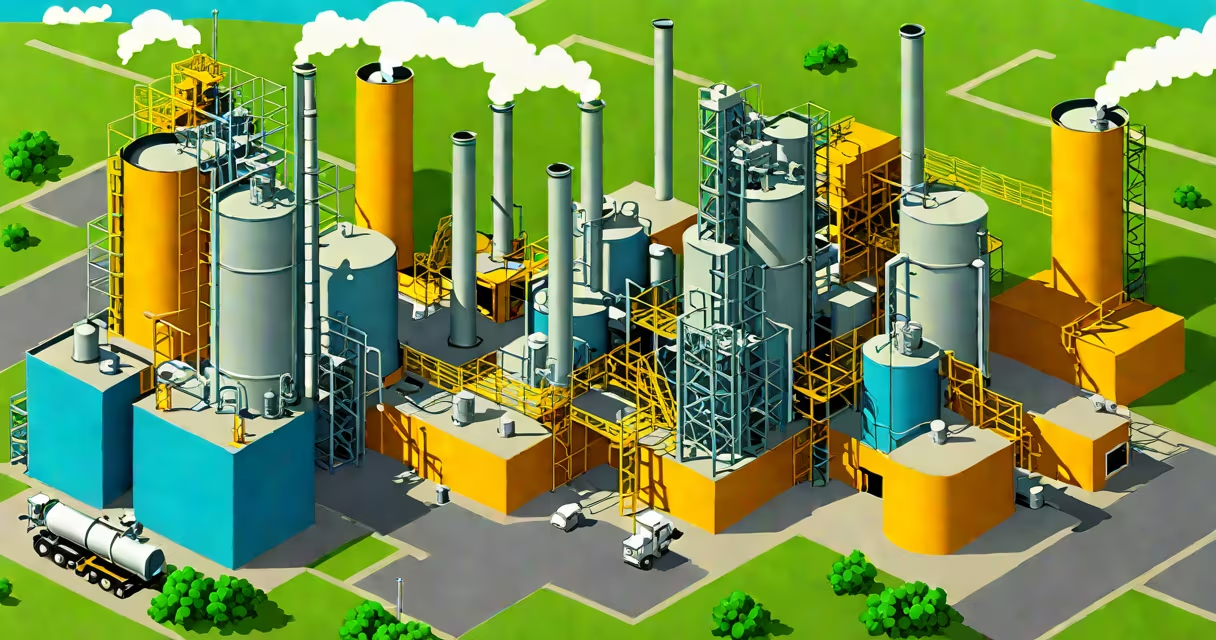
A biomass gasification plant converts organic materials like wood chips, agricultural residues, or municipal solid waste into syngas-a mixture of hydrogen, carbon monoxide, and methane-through partial combustion in a controlled oxygen environment. The process occurs at temperatures between 700°C and 1,000°C, producing a clean-burning fuel suitable for electricity generation, heating, or chemical synthesis.
Gasification differs from direct combustion because it breaks down biomass into gaseous components rather than burning it completely. This increases energy efficiency and reduces particulate emissions. A typical plant uses feedstock such as sawdust, corn stover, or dried sewage sludge, which is fed into a reactor where thermal decomposition occurs under pressure. The resulting syngas is cleaned to remove tars, particulates, and sulfur compounds before use.
The U.S. Department of Energy reports that modern gasification systems achieve net electrical efficiencies of 25-35%, higher than traditional biomass combustion at 15-20%. These plants operate continuously, unlike intermittent solar or wind systems, making them ideal for baseload power in rural or industrial zones.
How It Works
Biomass gasification begins with feedstock preparation. Materials are dried to below 15% moisture content and ground to uniform particle size-typically 1-5 mm-to ensure consistent reaction rates. The processed biomass enters a gasifier, where it undergoes four distinct stages: drying, pyrolysis, oxidation, and reduction.
Drying removes surface moisture. Pyrolysis then heats the material to 300-600°C in the absence of oxygen, breaking complex molecules into volatile gases and char. Oxidation occurs when limited oxygen is introduced, burning part of the char to generate heat and CO₂. Finally, reduction takes place at high temperature, where steam and residual carbon react to form hydrogen and carbon monoxide-the primary components of syngas.
After exiting the gasifier, syngas passes through a series of filters and scrubbers. Tars-complex hydrocarbons formed during pyrolysis-are cracked using catalytic or thermal methods. Sulfur compounds are removed via zinc oxide beds. The cleaned syngas can then be burned in a turbine, internal combustion engine, or used in downstream processes like Fischer-Tropsch synthesis to produce liquid fuels.
Types of Gasifiers and Their Applications
Four main types of gasifiers are used in commercial biomass gasification plants: fixed-bed, fluidized-bed, entrained-flow, and plasma gasifiers. Each suits different feedstocks and scale requirements.
| Type | Feedstock Suitability | Operating Temp (°C) | Efficiency Range (%) | Common Use Cases |
|---|---|---|---|---|
| Fixed-bed (updraft) | Wood chips, pellets | 700-900 | 20-25 | Small-scale heating, rural power |
| Fluidized-bed | Grain husks, bark, mixed waste | 800-900 | 25-30 | Medium-scale power, industrial heat |
| Entrained-flow | High-moisture or fine particles | 1,100-1,400 | 30-35 | Large-scale power, synthetic fuel production |
| Plasma arc | Contaminated or hazardous waste | 2,500+ | 35-40 | Waste-to-energy with minimal residue |
Fluidized-bed reactors dominate industrial applications due to their ability to handle variable feedstocks and maintain stable temperatures. Entrained-flow systems offer the highest efficiency but require highly refined feedstock and significant capital investment. Plasma gasifiers are rare but effective for processing mixed municipal waste streams with high chlorine or heavy metal content.
Where and Why It's Used
Biomass gasification plants are deployed in regions with abundant organic waste and limited access to grid power. In Sweden, the city of Malmö operates a 15 MW plant using forestry residues and recycled wood waste to supply district heating and electricity to over 10,000 homes. The facility reduced local fossil fuel dependency by 18% within five years.
In India, small-scale gasifiers using rice husk and sugarcane bagasse power irrigation pumps and rural microgrids. A 2022 study by the Indian Institute of Technology Madras found that these systems cut diesel consumption by 60% compared to conventional generators, with payback periods under three years.
One key advantage is waste valorization. A single 10 MW plant processing 100,000 tons/year of agricultural residue prevents approximately 120,000 tons of CO₂-equivalent emissions annually-equivalent to removing 26,000 cars from roads, according to the International Energy Agency.
Common Misconceptions and Key Distinctions
Many confuse biomass gasification with anaerobic digestion. While both convert organic matter into usable energy, they differ fundamentally. Anaerobic digestion relies on bacteria to break down wet biomass in sealed tanks, producing biogas rich in methane. It operates at ambient temperatures and requires long retention times-weeks to months. Gasification, by contrast, uses heat and controlled oxygen to rapidly convert dry feedstocks into syngas in minutes.
Another misconception is that gasification produces no emissions. Syngas combustion still releases CO₂, though at lower levels than coal. The net climate benefit comes from displacing fossil fuels and using waste that would otherwise decompose and emit methane. According to the U.S. Environmental Protection Agency, lifecycle emissions from gasified biomass are 70-80% lower than coal-fired power.
A lesser-known fact: tar formation is not always undesirable. Some advanced systems use tar as a precursor for bio-oil or aromatic chemicals. Researchers at the University of Minnesota have developed catalytic tar reforming techniques that convert 90% of tars into useful hydrocarbons, reducing waste and increasing yield.
Real-World Example: The 5 MW Plant in Chico, California
In 2021, the city of Chico commissioned a biomass gasification plant using urban wood waste and green waste from city parks. The system processes 30 tons/day of feedstock, producing 5 MW of electricity and 15 GJ/day of thermal energy for local facilities.
Key specifications:
- Feedstock: 70% wood debris, 30% yard trimmings
- Gasifier type: Fluidized-bed, pressurized
- Syngas cleaning: Ceramic filters + catalytic tar cracker
- Energy output: 5 MW electric, 15 GJ thermal
- CO₂ reduction: 18,000 tons/year vs. natural gas
The plant achieved 92% uptime in its first year, exceeding design targets. Local schools and public buildings now receive subsidized heat and power. The project was funded through a mix of state grants and private investment, with a 7-year payback period based on energy sales and carbon credits.
During a site visit in 2023, I observed the control room monitoring real-time syngas composition. The hydrogen-to-carbon monoxide ratio fluctuated slightly but stayed within optimal ranges for turbine use. The operator noted that consistent feedstock quality was critical-variability in moisture content caused two minor shutdowns in the first six months.