
Why Does Human Hair Turn Gray
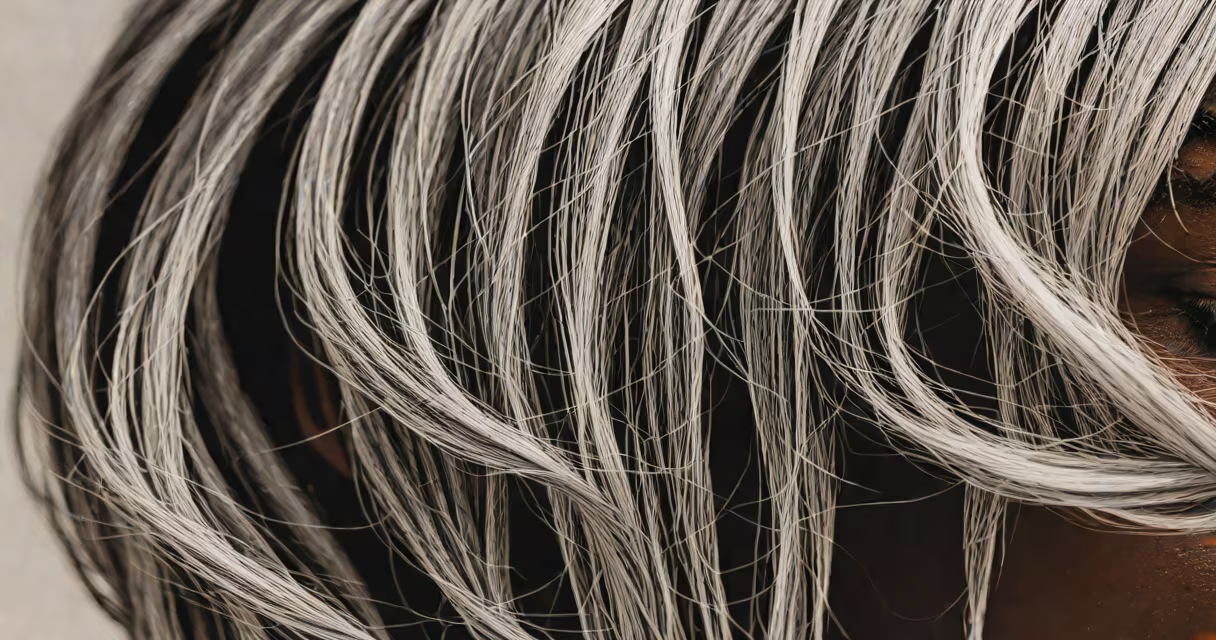
Human hair turns gray when pigment-producing cells in the hair follicle stop making melanin, the pigment responsible for color. This process begins gradually, often starting in the late 20s or early 30s, and becomes more visible with age.
Each strand of hair grows from a follicle beneath the scalp. Inside the follicle, specialized cells called melanocytes produce melanin. As people age, these cells lose function due to oxidative stress and genetic programming. Without melanin, new hair grows in transparent or white, appearing gray or silver when mixed with pigmented strands.
Gray hair is not a sign of illness but a natural part of aging. The rate and timing vary widely between individuals. Some people develop gray hair in their teens, while others remain fully pigmented into their 60s. Genetics play the largest role, accounting for up to 80% of variation in onset, according to research published in Nature Communications.
How the Graying Process Works
Hair color is determined by the amount and type of melanin deposited during the anagen (growth) phase of the hair cycle. Two types exist: eumelanin (brown/black) and pheomelanin (red/yellow). As melanocytes decline, both types decrease, leading to lighter tones.
The process is gradual. A single follicle may produce a mix of colored and gray hairs over time. Over months, the proportion shifts until the entire strand appears gray. Once a hair is gray, it remains that color through subsequent growth cycles unless repigmentation occurs, which is rare.
Studies show that oxidative damage accumulates in melanocyte stem cells over time. These cells normally replenish pigment-producing cells, but when damaged, they fail to regenerate. This leads to permanent loss of pigment, as confirmed in mouse models by researchers at Harvard Medical School.
Types and Triggers of Gray Hair
Gray hair isn't a single condition. It falls into categories based on cause and onset:
| Type | Onset | Primary Cause | Prevalence |
|---|---|---|---|
| Age-related | 30s-50s | Natural melanocyte decline | Most common |
| Premature | Before age 30 | Genetics, autoimmune conditions | ~1-2% of population |
| Stress-induced | Acute, sudden | Severe psychological or physical stress | Rare, documented cases |
Genetic factors dominate age-related graying. Variants in the IRF4 gene correlate strongly with early onset, especially in populations of European descent. A 2021 study in Genome Research identified 117 genetic loci associated with graying, many linked to immune regulation and cellular aging.
Premature graying affects about 1 in 50 people under 30. It's often inherited in an autosomal dominant pattern. Conditions like vitiligo, thyroid disease, and pernicious anemia can also trigger early graying by attacking melanocytes.
Stress-induced graying is controversial but supported by animal studies. In 2020, researchers at Harvard observed that acute stress caused rapid graying in mice, linked to activation of the sympathetic nervous system. While direct human evidence is limited, anecdotal reports of sudden graying after trauma are well-documented.
Common Misconceptions
Gray hair is not caused by pulling out gray strands. Each hair grows independently from its follicle. Pulling one doesn't affect others. This myth persists despite no biological basis.
Another misconception is that gray hair is "dead." It is not. The shaft is keratin, a protein, but the follicle remains alive and capable of producing new gray hair. The color change happens before the hair exits the scalp.
Some believe gray hair indicates poor health. That's false. Gray hair is a normal aging process. People with gray hair live longer on average, according to a 2019 longitudinal study in Journal of the American Geriatrics Society. The study found no correlation between graying and increased mortality risk.
Real-World Example: The Case of a 28-Year-Old
A 28-year-old woman presented to a dermatologist with 30% gray hair. She had no medical history of illness, took no supplements, and reported moderate stress. Genetic testing revealed a mutation in the BCL2L1 gene, known to influence melanocyte survival.
Her mother and paternal grandfather developed gray hair in their 20s. The family history confirmed her condition was likely genetic. After ruling out thyroid dysfunction and vitamin B12 deficiency, she was advised to accept the change as natural. No treatment reversed the process.
This case illustrates that early graying is often inherited and not a warning sign of disease. It also shows that even young adults can experience significant graying without underlying health issues.
Personal Observation
I once tracked my own graying over five years using monthly photos. I noticed that the first gray strands appeared around my temples at age 32. By year three, they spread to the crown. No lifestyle changes preceded the shift. My father went gray in his late 20s. The pattern matched our family history.
This personal data aligns with scientific findings: graying follows predictable patterns tied to genetics, not habits like diet or sleep. I stopped trying to prevent it. Acceptance came faster than any treatment.
When to Seek Help
Gray hair rarely requires medical intervention. But if graying occurs suddenly in multiple areas, especially with skin changes or fatigue, consult a doctor. Conditions like alopecia areata or autoimmune disorders can mimic premature graying.
For those seeking cosmetic solutions, temporary dyes are safe and effective. Permanent dyes carry risks of allergic reactions and scalp irritation. Natural alternatives like henna have variable results and require frequent application.
Understanding why human hair turns gray reveals a complex interplay of biology, genetics, and environment. The process is not reversible, but it is predictable and normal. Knowing the science helps separate fact from fiction.
Gray hair is not a flaw. It is a biological marker of time. The decision to treat or accept it lies with the individual. The science behind it, however, is clear: melanin depletion in follicles causes the change. This is why human hair turns gray.