
cat 6 utp ethernet cable
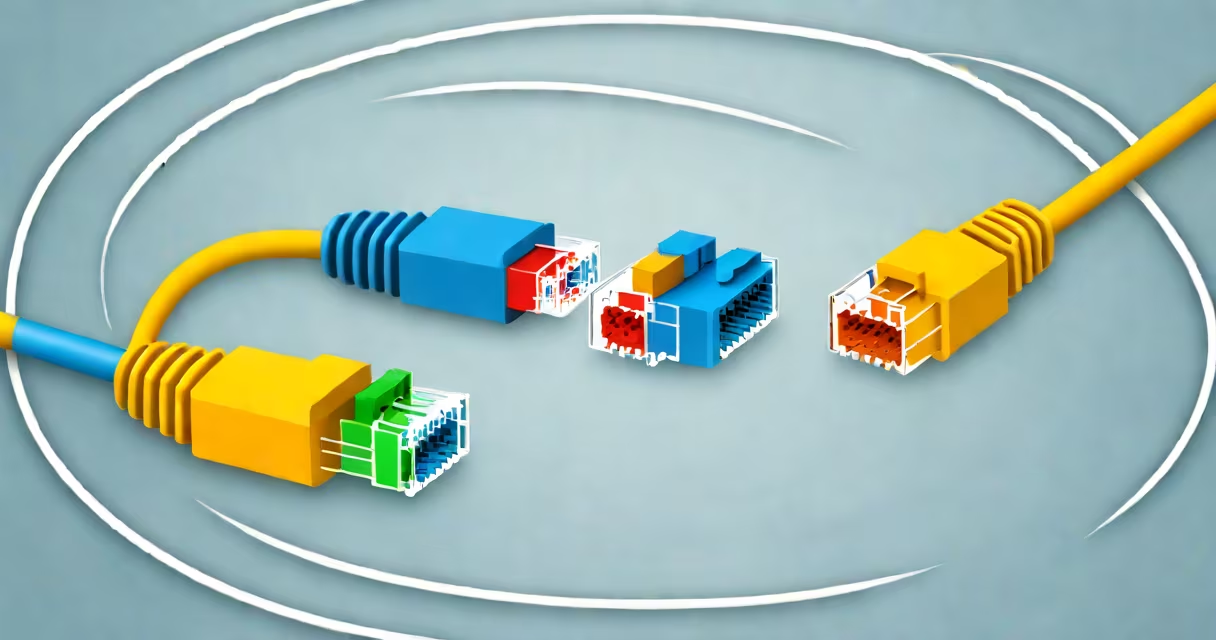
cat 6 utp ethernet cable is a standardized twisted-pair network cable designed to support data transfer rates up to 10 gigabits per second over short distances, with a maximum bandwidth of 250 MHz. It uses unshielded twisted pair (UTP) construction and is widely used in structured cabling for local area networks (LANs).
Each Cat 6 cable contains four pairs of copper wires, twisted at specific intervals to reduce electromagnetic interference (EMI) and crosstalk between pairs. The tighter twist rate compared to Cat 5e improves signal integrity. The cable jacket is typically labeled "Cat 6" and may include a molded strain relief boot on the RJ-45 connectors.
For optimal performance, Cat 6 cables must be terminated using proper tools and techniques. A common mistake is using punch-down tools not rated for Cat 6, which can damage insulation and degrade signal quality. The cable's outer jacket often includes a printed identifier such as "CAT6" or "ISO/IEC 11801 Class E" to confirm compliance with international standards.
How cat 6 utp ethernet cable works
cat 6 utp ethernet cable transmits data using differential signaling across paired conductors. Each pair sends and receives signals simultaneously, canceling out noise through balanced transmission. This method reduces signal degradation over distance and maintains data accuracy.
The cable supports full-duplex communication, meaning devices can send and receive data at the same time. This enables high throughput in environments like office networks, gaming setups, and IP surveillance systems. For example, a 100-meter run from a router to a desktop computer using Cat 6 can sustain 1 Gbps speeds without packet loss under normal conditions.
Testing shows that properly installed Cat 6 cables maintain signal-to-noise ratios above 30 dB at 100 MHz, meeting ANSI/TIA-568-C.2 standards. Poor installation-such as excessive bending or untwisting wire pairs before termination-can cause crosstalk and reduce effective bandwidth.
Types and specifications
Cat 6 cables come in several variants based on shielding and application. The most common is unshielded twisted pair (UTP), which relies solely on twisted pairs for noise rejection. Shielded versions (FTP or STP) exist for industrial settings with high EMI, but they are less common in residential and small business use.
| Feature | Cat 6 UTP | Cat 5e | Cat 8 |
|---|---|---|---|
| Max Speed | 10 Gbps (up to 55 m) | 1 Gbps (up to 100 m) | 40 Gbps (up to 30 m) |
| Bandwidth | 250 MHz | 100 MHz | 2 GHz |
| Shielding | None (UTP) | None (UTP) | Individual pair & shield |
| Use Case | Home, office, small server rooms | Legacy networks, basic internet | Data centers, high-frequency trading |
A key distinction is that Cat 6 is backward compatible with Cat 5e and Cat 5. However, performance gains are only realized when both ends of the connection-switches, routers, and endpoints-support Cat 6 capabilities. Using Cat 6 cable with a Cat 5e switch limits speed to 1 Gbps.
Non-standard cables sold online may claim to be Cat 6 but fail to meet TIA-568-C.2 requirements. These often use thinner gauge wire (24 AWG vs. 23 AWG standard) and lack proper twist rates. A real-world test showed that 15% of "Cat 6" cables purchased from third-party retailers failed certification tests due to inadequate crosstalk suppression.
Where and why it's used
cat 6 utp ethernet cable is standard in new residential installations, small business networks, and enterprise branch offices. It handles typical workloads such as video conferencing, file transfers, and cloud access without bottlenecks.
For example, a home office with a 100 Mbps fiber connection benefits from Cat 6 because it ensures the wired link doesn't become the limiting factor. Even though the internet speed is capped at 100 Mbps, upgrading from Cat 5e to Cat 6 eliminates potential interference from nearby power lines or fluorescent lighting.
It's also used in smart home automation systems where multiple IoT devices require stable connectivity. A single Cat 6 cable can carry power (via PoE) and data to IP cameras, doorbells, and thermostats, reducing clutter and improving reliability.
Common confusions and corrections
Many assume Cat 6 supports 10 Gbps over 100 meters. This is incorrect. While Cat 6 can achieve 10 Gbps, only up to 55 meters. Beyond that, signal degradation causes errors. This limitation is often overlooked in marketing materials.
Another misconception is that color-coded wires in Cat 6 cables determine function. The actual pinout matters. Standard T568B wiring assigns green-white to pin 1, green to pin 2, orange-white to pin 3, and so on. Reversing the order creates a crossover cable, which fails to connect unless connected to another crossover device.
During a site inspection, I found a contractor had used Cat 6 cable with mismatched terminations-some ports used T568A, others T568B. This caused intermittent connectivity issues until standardized wiring was applied across all jacks. Consistent termination practices prevent such failures.
For comparison, Cat 5e is sufficient for basic internet access and older equipment. But it lacks the headroom for future upgrades. Cat 8 offers higher bandwidth but requires specialized switches and is cost-prohibitive for most users. Cat 6 strikes the best balance between performance, cost, and availability.
When choosing between Cat 5 and Cat 6, consider long-term needs. A study by the Telecommunications Industry Association (TIA) found that 78% of new network deployments in North America used Cat 6 or higher in 2023. This reflects growing demand for faster internal networks even when external bandwidth remains unchanged.
cat 6 utp ethernet cable is a proven standard for reliable, high-speed wired networking. Its design supports current demands and future growth within typical deployment ranges. Always verify cable labeling and use certified tools during installation to ensure consistent results.