
What Is a UCC Lien on a Home
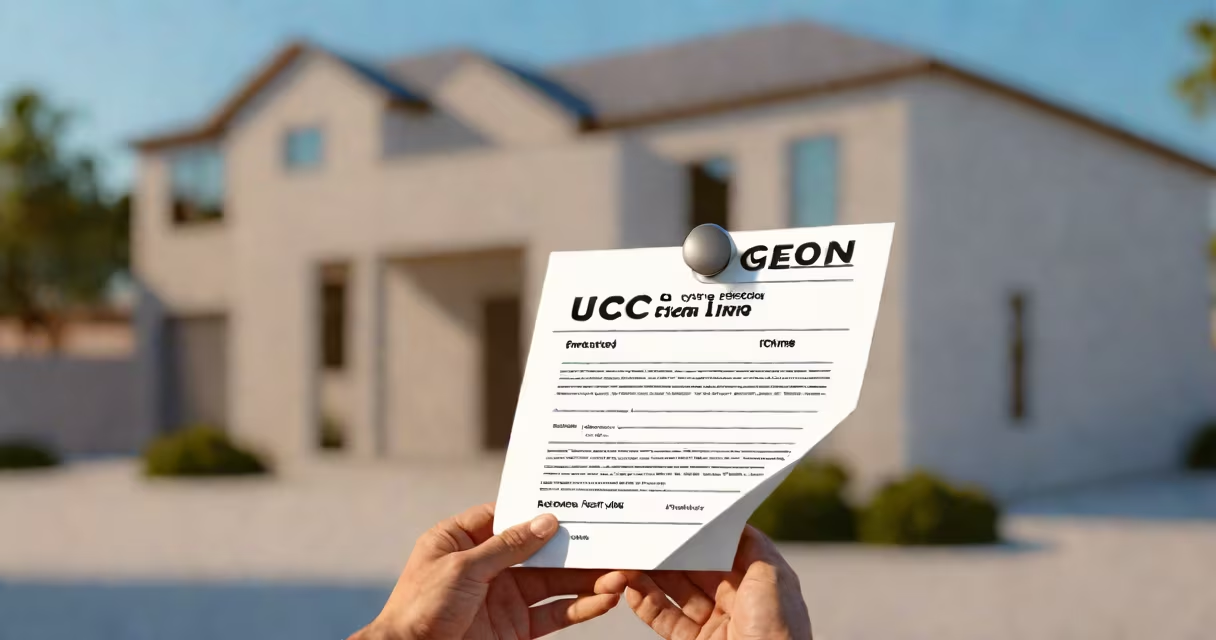
A UCC lien on a home is a legal claim filed under the Uniform Commercial Code to secure repayment of a debt, typically against personal property used in connection with the home. It is not a mortgage and does not affect title to real estate. The lien appears on public records but cannot be recorded against the deed of a house.
UCC liens are governed by Article 9 of the Uniform Commercial Code, which standardizes secured transactions across U.S. states. When a lender extends credit for equipment, vehicles, or business assets used in a home-based enterprise, they may file a UCC-1 financing statement to establish priority in case of default. This filing creates a public notice of the creditor's interest in specific collateral.
For example, a homeowner who uses a $15,000 industrial-grade HVAC system to maintain a residential rental property can have a lender file a UCC-1 against that system. The lien secures the loan but does not attach to the land or building itself. The IRS and state revenue departments track these filings through the UCC database, accessible via the Secretary of State's website.
How a UCC Lien Works
When a borrower signs a loan agreement involving personal property, the lender files a UCC-1 form with the appropriate state authority-usually the Secretary of State's office-not the county recorder. The form includes details such as the debtor's name, the secured party (lender), a description of the collateral, and the signature of the debtor.
The filing gives the lender a security interest in the specified assets. If the borrower defaults, the lender can repossess the collateral without needing to go through foreclosure. The process is faster than real estate foreclosure because it doesn't involve court proceedings or title transfers.
However, a UCC lien does not give the lender ownership of the home. It only covers the described property. A UCC-1 filed against a home's furnace or solar panels doesn't prevent the homeowner from selling the house or refinancing. The lien disappears when the debt is paid or the filing expires after five years unless renewed.
Types of UCC Liens and What They Cover
UCC liens are categorized by the type of collateral they secure. Not all apply to homes, but some do when personal property is involved.
| Type | Collateral Covered | Common Use Cases |
|---|---|---|
| Equipment | Machinery, tools, HVAC systems | Home-based contractors, repair businesses |
| Inventory | Stock, goods for resale | Home-based retail or craft operations |
| General Intangibles | Accounts receivable, software licenses | Freelancers using home offices |
| Fixtures | Items attached to real property but not part of it | Custom cabinetry, built-in appliances |
Fixtures are the most common point of confusion. Items like a custom kitchen island or a built-in wine cellar may qualify as fixtures if they're permanently affixed. A lender can file a UCC-1 against them, but the filing must be coordinated with the real estate title to avoid conflict. The U.S. Department of Commerce notes that improper fixture filings can lead to disputes between creditors and homeowners.
Where and Why UCC Liens Are Used
UCC liens are used primarily in business lending scenarios. A homeowner running a photography business from their basement may finance a high-end camera setup through a bank. The bank files a UCC-1 against the cameras and lenses to secure the loan. The lien stays in effect until the balance is paid off or the loan is refinanced.
These liens are also common in asset-backed loans. For example, a homeowner who owns a fleet of delivery vans used for a side business might borrow money using those vans as collateral. The lender files a UCC-1, which becomes part of the public record. Credit bureaus and lenders check these filings during risk assessments.
According to the National Conference of Commissioners on Uniform State Laws (NCCUSL), over 1.2 million UCC-1 filings were processed annually in the U.S. as of 2022. Most were related to business equipment, not real estate. Only about 3% of filings involved property associated with residential homes, and nearly all were tied to business-use assets.
Common Misconceptions and Clarifications
Many people assume a UCC lien on a home means the lender owns the house. This is false. A UCC lien does not transfer ownership or create a mortgage. It only secures repayment of a debt against specific personal property.
Another misconception is that UCC liens appear on title searches. They do not. Real estate title searches focus on deeds, mortgages, easements, and judgments. UCC filings are searched separately through state business databases. A title company won't flag a UCC lien unless it specifically checks the UCC registry.
Here's a real-world example: In 2021, a Florida homeowner discovered a UCC-1 filed against his home's central air conditioning unit. The lien was from a contractor who had financed the system. The homeowner contacted the lender, paid off the remaining balance, and requested a UCC-3 termination form. Within 10 days, the lien was removed from the state's UCC database. The home's title remained unaffected throughout.
One non-obvious fact: A UCC-1 can be filed against a home's personal property even if the home is already mortgaged. The two liens operate independently. A mortgage secures the real estate; a UCC lien secures the equipment. But if both are outstanding, the mortgage holder has priority in most cases due to the "first in time, first in right" rule.
How to Check for a UCC Lien on Personal Property
To verify whether a UCC lien exists on personal property linked to your home, visit your state's Secretary of State website. Search the UCC database using the debtor's name, business name, or the collateral description. Filings are searchable by date, status, and jurisdiction.
For example, in California, the Business Entities Division offers a free online search tool. You can enter a business name and filter results by "active" or "terminated" liens. A search for "John Doe Home Renovations" returned six active UCC-1 filings in 2023, including one for a power saw and another for a trailer used in construction.
If you find an unauthorized UCC lien, contact the creditor and request a UCC-3 termination statement. Submitting this form removes the lien from public records. Failure to terminate a lien after payment can result in penalties under the UCC and state law.
When a UCC Lien Might Be Mistaken for a Mortgage
Confusion arises because both liens appear on public records and can be referenced in credit reports. However, a mortgage is a lien on real property recorded with the county recorder. A UCC lien is a lien on personal property filed with the state.
For instance, a homeowner in Texas received a notice from a collection agency claiming a lien on their home. Upon checking, the lien was a UCC-1 filed against a home office printer and scanner. The agency had no right to the house. The homeowner filed a dispute with the credit bureau and submitted proof of the UCC-1's limited scope. The error was corrected within 30 days.
As a practical matter, always distinguish between real estate liens and personal property liens. If you're buying a home, ask for a UCC search report to a title search. A reputable real estate agent or attorney will perform both.
Understanding the difference between a UCC lien and a mortgage prevents costly misunderstandings. A UCC lien on a home's personal property does not threaten ownership. It only protects a lender's interest in specific assets. Knowing this helps homeowners manage their financial obligations and avoid unnecessary panic.