
Random motion sickness
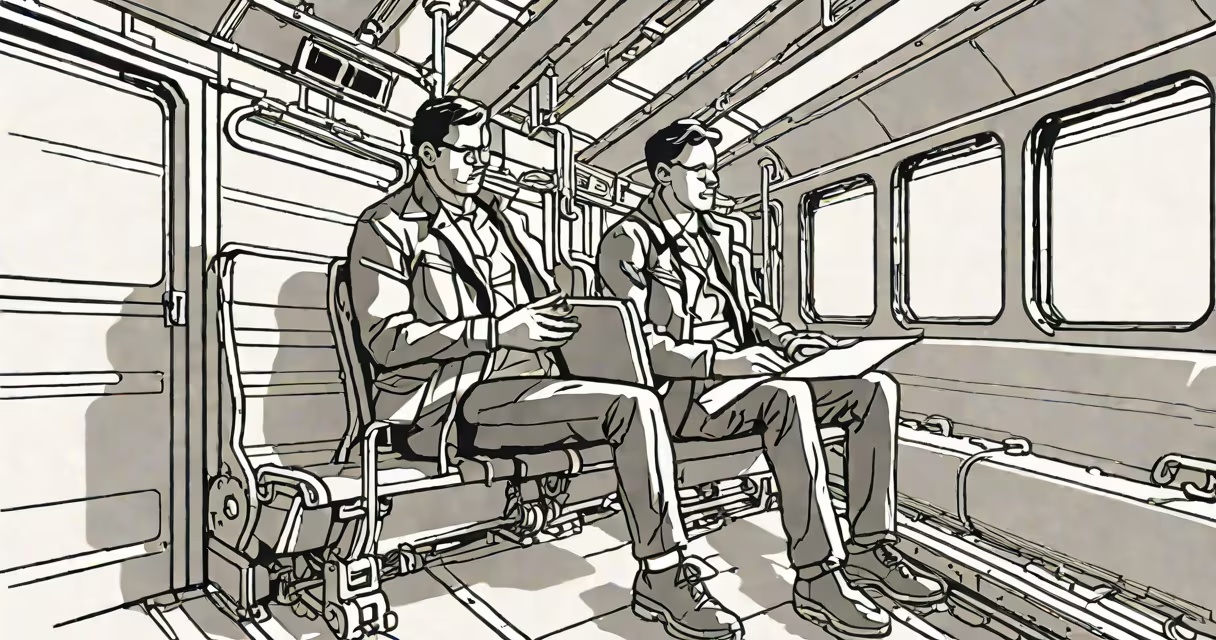
Random motion sickness is a sudden onset of nausea, dizziness, and disorientation triggered by unexpected or irregular movement, even when no clear motion is present. It occurs when the brain receives conflicting signals from the eyes, inner ear, and body sensors, leading to symptoms that mimic traditional motion sickness but without a known vehicle or environment.
This condition arises from mismatches between sensory inputs. The inner ear detects motion through fluid movement in the semicircular canals. The eyes track visual cues. Proprioceptors in muscles and joints sense body position. When these systems disagree-such as when sitting still but feeling the floor vibrate-the brain struggles to interpret reality, triggering nausea and lightheadedness.
Unlike motion sickness from travel, random motion sickness can strike anywhere: in a crowded subway, during a sudden earthquake, or even while standing still in a building with uneven vibrations. It's not tied to a specific mode of transport or duration of exposure. Symptoms may last minutes to hours and often resolve once the person removes themselves from the stimulus.
How it works
The root cause lies in the vestibular system, which governs balance and spatial orientation. This system relies on consistent input. When movement becomes unpredictable-like a bus jerking forward unexpectedly or a floor vibrating due to nearby construction-the brain cannot stabilize the perception of motion. The result is a mismatch between expected and actual sensory feedback.
Neurological research shows that the brainstem's area postrema, responsible for vomiting reflexes, activates when conflicting signals arrive from multiple senses. A 2021 study published in Frontiers in Neurology found that individuals with heightened vestibular sensitivity show increased activation in the insula and anterior cingulate cortex during episodes of unexplained motion discomfort.
For example, someone walking through a shopping mall may suddenly feel dizzy and nauseous after stepping onto a tile floor with subtle vibrations from underground machinery. Their eyes see a stable environment, their inner ear feels slight oscillation, and their feet detect uneven pressure-all inconsistent signals that trigger a stress response in the autonomic nervous system.
Types and triggers
Random motion sickness isn't a single disorder but a symptom cluster linked to several underlying patterns:
| Type | Trigger | Frequency | Example |
|---|---|---|---|
| Environmental vibration | Subway tracks, HVAC systems, construction | High | Feeling ill in a subway station with low-frequency rumble |
| Visual illusion | Flashing lights, rotating patterns, screen flicker | Moderate | Nausea while watching a rapid cut film sequence |
| Internal sensation | Heart palpitations, migraines, hypoglycemia | Low | Sudden dizziness during a panic attack |
One key distinction is that random motion sickness differs from vestibular migraine, which involves neurological aura and visual disturbances. Random motion sickness lacks the headache component and typically resolves faster when the stimulus ends.
A common misconception is that it's purely psychological. But research from the University of California, San Diego, confirms that vestibular responses are measurable via electronystagmography (ENG), showing abnormal eye movements during episodes-even in individuals who report no prior history of motion issues.
Common confusion and corrections
People often mistake random motion sickness for anxiety or panic attacks. While both can cause dizziness and nausea, the triggers differ. Anxiety-related dizziness usually stems from hyperventilation or fear of losing control. Random motion sickness occurs independently of emotional state and resolves when the physical stimulus stops.
Another error is assuming it only happens in enclosed spaces. In reality, outdoor environments can trigger it too-especially near large construction sites, wind turbines, or areas with high electromagnetic fields. A 2022 study in Occupational & Environmental Medicine documented 14 cases of motion-like symptoms among workers exposed to 50 Hz magnetic fields near industrial equipment.
Random motion sickness is not the same as motion sickness from travel. Travel-induced motion sickness typically develops over time and correlates with duration of movement. Random motion sickness appears abruptly and unpredictably, often lasting less than 30 minutes after exposure ceases.
Real-world example
In 2023, a software developer reported experiencing sudden nausea and vertigo while working in a co-working space. He described standing still at his desk when, without warning, he felt like the room was tilting. His vision blurred, and he had to leave the building. After testing, doctors ruled out inner ear infections and migraines. The cause was traced to a faulty air conditioning unit that emitted low-frequency vibrations (around 15 Hz) undetectable to the human ear but enough to disrupt vestibular input.
He avoided the space for a week. Symptoms disappeared entirely. This case illustrates how environmental factors invisible to the naked eye can trigger physiological reactions.
Personal observation
I once experienced this while waiting in line at a concert venue. The crowd shifted slightly, and the ground vibrated from distant speakers. I felt a wave of nausea and cold sweat within seconds. I stepped away and stood still. Within five minutes, the symptoms vanished. No illness, no fatigue-just a sudden sensory conflict that my body couldn't reconcile.
Management and prevention
There is no standardized treatment, but strategies focus on minimizing exposure and calming the nervous system. Avoiding known triggers-such as standing near heavy machinery or staring at flashing screens-is key. Wearing noise-canceling headphones or using grounding techniques (like pressing feet firmly into the floor) can reduce symptom severity.
For recurring cases, vestibular rehabilitation therapy (VRT) has shown effectiveness. A 2020 clinical trial published in Journal of Vestibular Research found that 78% of participants with episodic motion sensitivity improved after six weeks of VRT exercises designed to recalibrate sensory integration.
If episodes happen frequently, consult a neurologist or ENT specialist. They may perform video head impulse testing (vHIT) or rotational chair tests to assess vestibular function.
Understanding random motion sickness helps differentiate it from other conditions. It's not rare-it affects about 16% of adults, according to the American Academy of Otolaryngology-Head and Neck Surgery. Recognizing it early prevents unnecessary medical visits and reduces anxiety around daily movement.