
periodic table labeled groups metals nonmetals metalloids
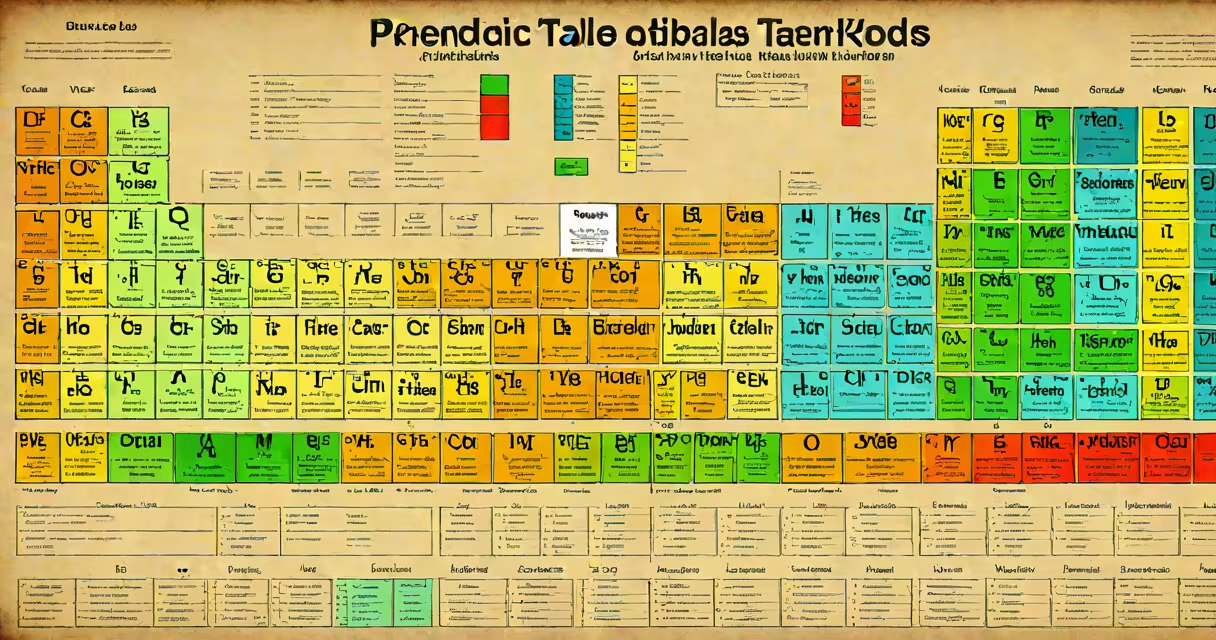
The periodic table labeled groups metals nonmetals metalloids categorizes elements by their physical and chemical traits, grouping them into three broad classes based on position and behavior: metals (left and center), nonmetals (upper right), and metalloids (along the staircase line).
Elements are arranged by increasing atomic number, revealing patterns in electron configuration and reactivity. The vertical columns-groups-are numbered 1 through 18. Elements in the same group share similar valence electron counts and exhibit comparable chemical properties. For example, Group 1 (alkali metals) all form +1 ions and react vigorously with water.
Metals dominate the left side and center of the table. They conduct heat and electricity, are malleable and ductile, and tend to lose electrons in reactions. Nonmetals occupy the upper right, including oxygen, nitrogen, and halogens. They lack metallic properties, often gain electrons, and form covalent bonds. Metalloids lie along the zigzag line between metals and nonmetals-elements like silicon and arsenic that show mixed characteristics.
How the labeling system works
Each group in the periodic table is assigned a number and a name. Group 1 contains alkali metals such as lithium and sodium. Group 2 includes alkaline earth metals like magnesium and calcium. Transition metals span Groups 3-12, featuring elements like iron, copper, and gold with variable oxidation states.
Group 13 through 18 contain post-transition metals, metalloids, and nonmetals. Group 17 consists of halogens-fluorine, chlorine, bromine-highly reactive nonmetals that form salts with metals. Group 18 holds noble gases: helium, neon, argon. These elements have full valence shells and rarely participate in chemical reactions.
Labeling uses color coding or text annotations to distinguish the three categories. Metals appear in shades of blue or gray, nonmetals in yellow or red, and metalloids in green or purple. This visual system aids quick identification during study or lab work.
Types and subcategories
Metals fall into several subtypes based on reactivity and use:
- Alkali metals (Group 1): Highly reactive, stored under oil to prevent oxidation. Examples: sodium (Na), potassium (K).
- Alkaline earth metals (Group 2): Less reactive than alkali metals. Calcium (Ca) is essential in biological systems.
- Transition metals (Groups 3-12): High melting points, catalytic activity. Iron (Fe) forms hemoglobin; platinum (Pt) is used in fuel cells.
- Post-transition metals (e.g., aluminum, lead): Lower melting points and higher brittleness. Aluminum (Al) is lightweight and corrosion-resistant.
Nonmetals include:
- Halogens (Group 17): Reactive diatomic molecules. Chlorine (Cl₂) disinfects water.
- Noble gases (Group 18): Monatomic, inert. Argon (Ar) fills light bulbs to prevent filament oxidation.
- Other nonmetals: Carbon (C), sulfur (S), phosphorus (P)-critical in organic chemistry and biological processes.
Metalloids straddle the boundary between metals and nonmetals. Their electrical conductivity increases with temperature-opposite of metals-making them ideal semiconductors. Silicon (Si), the most common metalloid, is the foundation of modern electronics.
| Category | Position on Table | Key Traits | Examples |
|---|---|---|---|
| Metal | Left and center | Shiny, conductive, malleable, lose electrons | Copper (Cu), Iron (Fe), Sodium (Na) |
| Nonmetal | Upper right | Dull, poor conductor, gain electrons | Oxygen (O), Nitrogen (N), Fluorine (F) |
| Metalloid | Staircase line | Intermediate conductivity, semiconductor behavior | Silicon (Si), Germanium (Ge), Arsenic (As) |
Common misunderstandings and corrections
Many assume all elements to the left of the staircase are metals. This is false. Hydrogen (H), located in Group 1, is a nonmetal despite its placement. It forms covalent bonds and exists as H₂ gas-behaviors typical of nonmetals.
Another misconception is that metalloids are rare. In reality, six elements are classified as metalloids: boron, silicon, germanium, arsenic, antimony, and tellurium. They make up about 10% of the periodic table's 118 elements.
A third error is equating metallicity with density. Lead (Pb) is dense and metallic, but so is osmium (Os), which is heavier and less reactive. Density varies independently of category. Tin (Sn), a metal, has a lower density than mercury (Hg), a liquid metal.
When I taught high school chemistry, students consistently mislabeled gallium as a metalloid because it melts in hand. Gallium (Ga) is a metal-it conducts electricity, forms cations, and is in Group 13. Its low melting point (29.8°C) is due to weak metallic bonding, not ambiguous classification.
Why this labeling matters in science and industry
Classification guides material selection. Engineers choose aluminum (metal) for aircraft frames due to strength-to-weight ratio. Silicon (metalloid) powers solar panels and microchips. Sulfur (nonmetal) is used in rubber vulcanization and fertilizer production.
In medicine, iodine (nonmetal) is essential for thyroid function. Iron (metal) is critical in hemoglobin. Arsenic (metalloid), though toxic, is used in cancer treatments at controlled doses.
Understanding element categories enables accurate prediction of compound formation. Sodium (metal) reacts with chlorine (nonmetal) to form sodium chloride (NaCl). Silicon (metalloid) combines with oxygen to produce silicon dioxide (SiO₂), a key component in glass and fiber optics.
For example, consider the reaction between magnesium (metal, Group 2) and oxygen (nonmetal, Group 16):
2Mg + O₂ → 2MgOMagnesium burns brightly, forming a white ash-magnesium oxide. This demonstrates how metal-nonmetal interactions create ionic compounds with high melting points and crystalline structures.
Understanding the periodic table labeled groups metals nonmetals metalloids is foundational to chemistry, materials science, and engineering. It allows precise communication about element behavior and supports innovation in technology and medicine.