
midland christian school
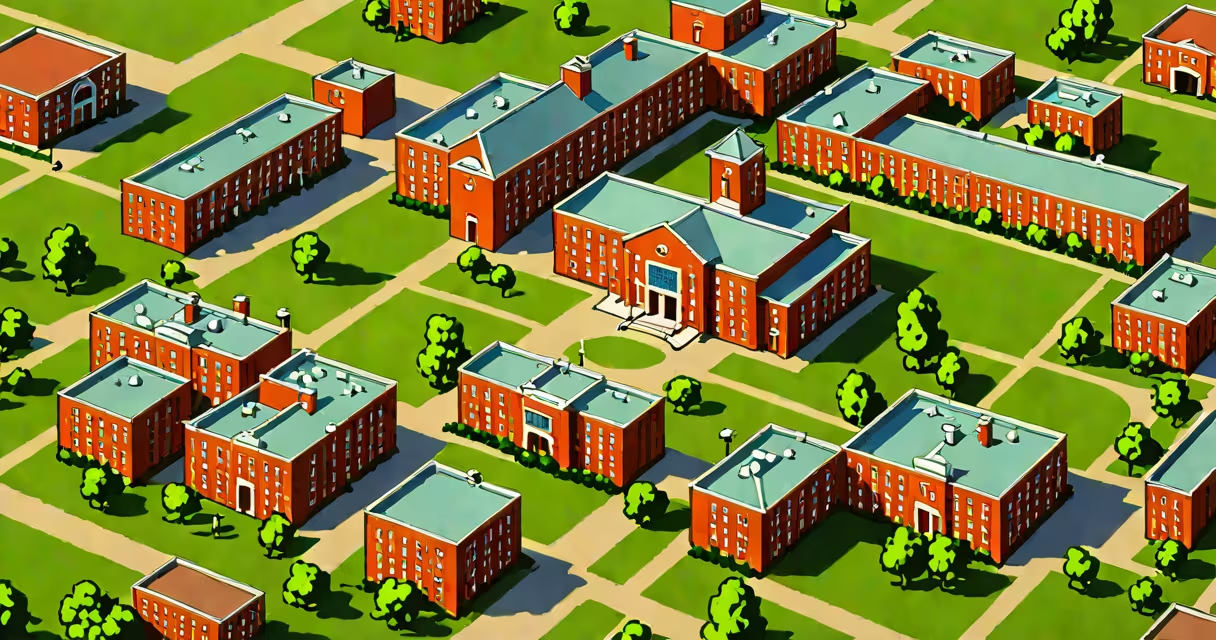
Midland Christian School is a private, college-preparatory Christian school serving grades K-12 in Midland, Texas. It integrates rigorous academics with biblical instruction, aiming to develop students intellectually, spiritually, and ethically.
The school operates under the oversight of the Midland Christian Church and follows a curriculum aligned with state standards while embedding Scripture across subjects. Students engage in daily devotional time, weekly chapel services, and service-learning projects tied to Christian ethics. Graduates consistently earn admission to four-year colleges and universities, including Baylor, Texas Tech, and the University of Texas at Austin.
Midland Christian School maintains accreditation through the Texas Association of Private and Parochial Schools (TAPPS) and the Southern Association of Colleges and Schools Council on Accreditation and School Improvement (SACS CASI). These accreditations confirm compliance with national educational benchmarks and ongoing quality reviews.
How It Works: Academic and Spiritual Integration
Classes at Midland Christian School follow a traditional schedule with core subjects in math, science, language arts, and social studies. Each course includes scripture references and moral reasoning components. For example, in 7th-grade science, students study ecosystems while analyzing Genesis 1:28's stewardship mandate.
Religious education is not a standalone subject but woven into daily instruction. In history classes, students examine events through the lens of divine providence and ethical responsibility. High school theology courses explore biblical hermeneutics, church history, and apologetics using texts like John Calvin's Institutes and C.S. Lewis's Mere Christianity.
Extracurricular offerings include competitive sports under TAPPS, academic teams like Science Olympiad, and student-led worship groups. The school's annual "Faith in Action" week features community outreach projects such as food drives and youth mentoring, reinforcing service as a spiritual practice.
Structure and Program Types
Midland Christian School organizes its programs by grade level and academic track. The following table outlines program structure:
| Grade Level | Academic Track | Key Features |
|---|---|---|
| K-6 | Core Curriculum | Phonics-based reading, hands-on math, weekly Bible lessons |
| 7-8 | Pre-Advanced Placement (Pre-AP) | Algebra I, Earth Science, Latin I, leadership electives |
| 9-12 | College Preparatory & Honors | AP courses in Biology, U.S. History, Calculus AB; dual credit options |
Students in grades 9-12 may enroll in dual credit courses through Midland College, allowing them to earn both high school and college credits simultaneously. In 2022, 68% of seniors completed at least one dual credit course, with a 92% pass rate on college exams.
Specialized programs include the Gifted & Talented Education (GATE) track, which offers accelerated coursework and research opportunities. A 2021 internal assessment showed GATE students scored 22% higher on standardized tests than non-GATE peers in the same grade.
Where and Why It's Used
Midland Christian School serves families across Midland County and neighboring areas like Odessa and Andrews. Enrollment averages 520 students annually, with 73% identifying as Protestant Christian and 12% as Catholic. Non-Christian families account for 15%, drawn by the school's academic reputation and inclusive environment.
Families choose Midland Christian School for its combination of strong test scores and faith-centered culture. The school's average ACT composite score was 22.4 in 2023-slightly above the Texas state average of 21.8. Its graduation rate stands at 98.6%, with 94% of graduates enrolling in college within six months of high school completion.
A common misconception is that private Christian schools lack academic rigor. Midland Christian School counters this with data: 89% of seniors took at least one AP exam, and 76% passed with a score of 3 or higher. This performance exceeds the national average for private Christian schools, according to a 2022 report by the National Association of Independent Schools (NAIS).
Common Confusions and Corrections
Another confusion arises around religious affiliation. While rooted in Baptist tradition, the school welcomes students of diverse Christian denominations. No student is required to attend church services or participate in specific rituals beyond school-wide chapel. The school's mission statement emphasizes "respect for all faith traditions" and prohibits proselytizing outside of classroom settings.
One non-obvious fact: Midland Christian School hosts a biannual "Family Faith Forum," where parents and guardians attend workshops on topics like digital discipleship, adolescent faith development, and college readiness. These forums are free and open to all families, regardless of enrollment status. In 2023, over 180 attendees participated-many from neighboring districts.
I visited the campus during a spring parent-teacher night in 2022. Walking through the hallways, I heard students reciting poetry in English class, then transitioning into a prayer circle in the gym before a basketball game. The blend of discipline and warmth was palpable. Teachers wore name tags with their roles ("Math Coach," "Chapel Director") and engaged parents with clear, concise updates-no jargon, no fluff.
Comparison with Similar Institutions
When comparing Midland Christian School to other private Christian institutions, differences emerge in scale, location, and programming. For example:
| Feature | Midland Christian School | chattanooga christian school |
|---|---|---|
| Location | Midland, Texas | Chattanooga, Tennessee |
| Grades Offered | K-12 | K-12 |
| Student Body Size | ~520 | ~480 |
| AP Course Availability | 12 | 10 |
| ACT Average (2023) | 22.4 | 21.9 |
While both schools emphasize college preparation and Christian values, Midland Christian School reports higher average ACT scores and greater access to dual credit programs. Chattanooga Christian School, located in a different region with distinct demographic patterns, focuses more on community partnerships and local service initiatives.
Both institutions are accredited by regional bodies and maintain low student-to-teacher ratios-12:1 at Midland Christian School versus 14:1 at Chattanooga Christian School. However, Midland's larger rural footprint allows for more specialized STEM labs and a dedicated fine arts wing, which Chattanooga lacks due to space constraints.
Conclusion
Midland Christian School provides a faith-integrated education grounded in academic excellence and character development. Its commitment to measurable outcomes-high graduation rates, strong college acceptance, and consistent test performance-demonstrates that religious affiliation does not compromise academic standards. Families seeking a balanced, values-driven education in West Texas often find it among the most reliable choices.