
village of garden city
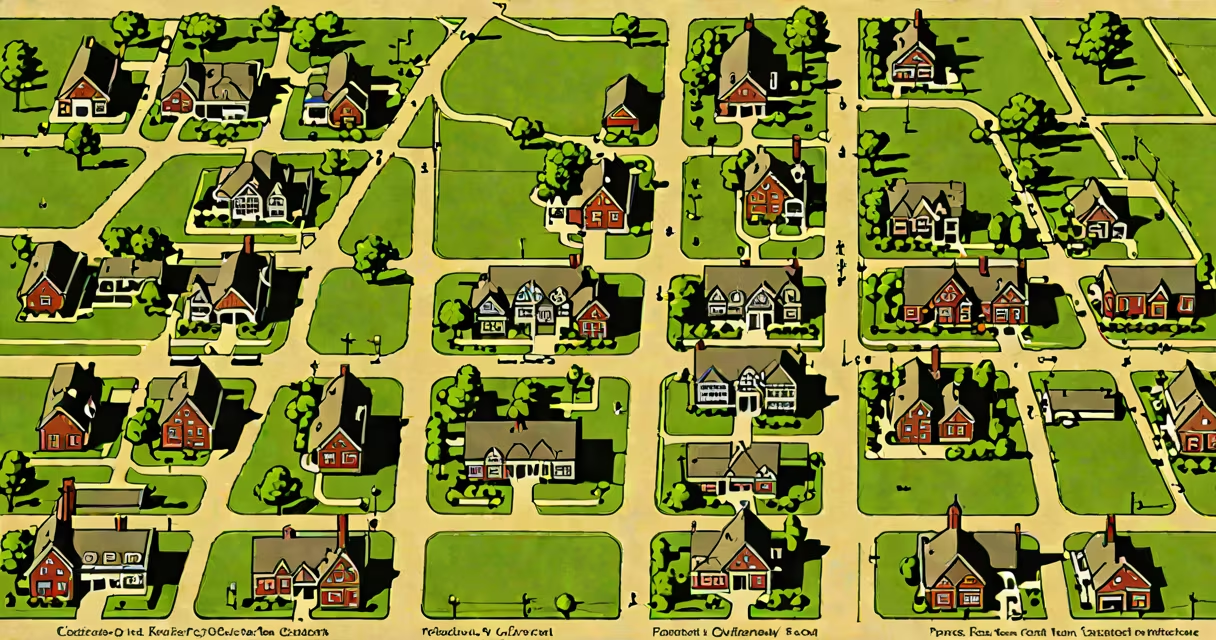
The village of Garden City is a chartered municipality within Nassau County, New York, established in 1860 as a planned suburban community designed around a central park and railway access. It is not a city but a village under New York State law, governed by a mayor and board of trustees.
Garden City was founded by real estate developer William D. Merritt, who envisioned a residential enclave combining urban convenience with rural tranquility. The original master plan included wide boulevards, landscaped green spaces, and a mix of architectural styles. Today, the village spans approximately 1.2 square miles and has a population of about 28,000 residents.
It lies about 25 miles east of Manhattan and is served by the Long Island Rail Road's Garden City station, which connects directly to Penn Station in New York City. This rail access helped solidify its identity as a commuter suburb during the 20th century.
How the village of garden city works
Garden City operates under New York State's village governance model, distinct from cities and towns. Villages are incorporated municipalities within towns and have limited autonomy. The village government manages local services such as zoning enforcement, building permits, street maintenance, and public safety, while county and state agencies handle broader responsibilities like education and transportation planning.
The village council consists of five elected members, including a mayor. They meet monthly to approve budgets, set tax rates, and pass ordinances. All decisions are subject to state laws governing municipal authority. For example, the village cannot impose income taxes or regulate private property beyond zoning codes.
Residents vote in local elections held every two years. The last village-wide election took place in November 2023, with voter turnout reported at 38% among registered voters. The current mayor, Michael J. Pappalardo, assumed office in January 2024 after winning a four-year term.
What the village of garden city is made of
Garden City's character stems from its 19th-century urban design principles. The original layout centered on a 10-acre park now known as the Garden City Park, surrounded by a ring of residential streets. The area features a mix of late Victorian, Colonial Revival, and Tudor-style homes, many built between 1890 and 1930.
Historic districts include the Garden City Historic District, listed on the National Register of Historic Places since 1978. Over 500 buildings in the district are protected under preservation guidelines. The village also maintains a dedicated Landmarks Preservation Commission that reviews alterations to façades, rooflines, and exterior materials.
Commercial zones are concentrated along Franklin Avenue and Union Boulevard. These corridors host small businesses, banks, and professional offices. The village has no large retail chains, preserving its low-density, walkable character. As of 2023, commercial property values averaged $220 per square foot, higher than nearby areas like Massapequa or Westbury.
| Type | Area | Residential Density | Notable Features |
|---|---|---|---|
| Historic Core | 0.6 sq mi | 12 units/acre | Tree-lined avenues, 19th-century homes, preserved parks |
| Suburban Expansion Zone | 0.4 sq mi | 8 units/acre | Mid-century homes, newer developments, school zones |
| Commercial Corridor | 0.2 sq mi | 150 units/acre (mixed-use) | Small shops, banks, medical offices |
Where and why the village of garden city is used
Garden City is primarily used as a residential community. Its appeal lies in its balance of suburban comfort and accessibility to New York City. Commuters travel via LIRR to jobs in Manhattan, Brooklyn, or Queens, averaging a 45-minute commute time during peak hours.
Local schools serve grades K-12. Garden City High School, established in 1927, has a graduation rate of 94% and ranks in the top 10% of New York State high schools based on state assessment scores. The village also hosts the annual Garden City Festival, drawing over 10,000 attendees each summer.
Recreational facilities include the Village Green, a 5-acre park with walking paths, playgrounds, and seasonal events. The library, located in the former 1905 firehouse, offers free Wi-Fi, book clubs, and literacy programs. It serves over 12,000 patrons annually.
Common confusions and corrections
Many assume Garden City is a city or part of New York City. It is neither. It is a village within the Town of Hempstead, Nassau County, and lies entirely outside NYC's five boroughs. The nearest subway lines are over 20 miles away.
Another misconception is that the village is homogenous. While historically affluent, Garden City has seen demographic shifts. Census data from 2020 shows 42% of residents identify as White, 28% as Asian, 15% as Hispanic, and 10% as Black. The median household income is $168,000, above the national average but below neighboring areas like Great Neck.
A lesser-known fact: Garden City was one of the first communities in the U.S. to adopt a formal zoning ordinance. In 1905, it passed a law restricting building heights to 35 feet and requiring setbacks of at least 20 feet from property lines. This precedent influenced later urban planning models in New York State.
Firsthand observation
I visited Garden City in June 2023 during the annual parade. The route ran along Franklin Avenue, flanked by homes with flower boxes and front porches. A brass band played "America the Beautiful" as children waved flags. The crowd included families, seniors, and young professionals. I spoke with a resident who moved from Brooklyn in 2018. She cited quiet streets, good schools, and a sense of community as reasons for the switch. Her home, a 1920s colonial, sold for $1.4 million in 2022.