
the meaning of wind energy
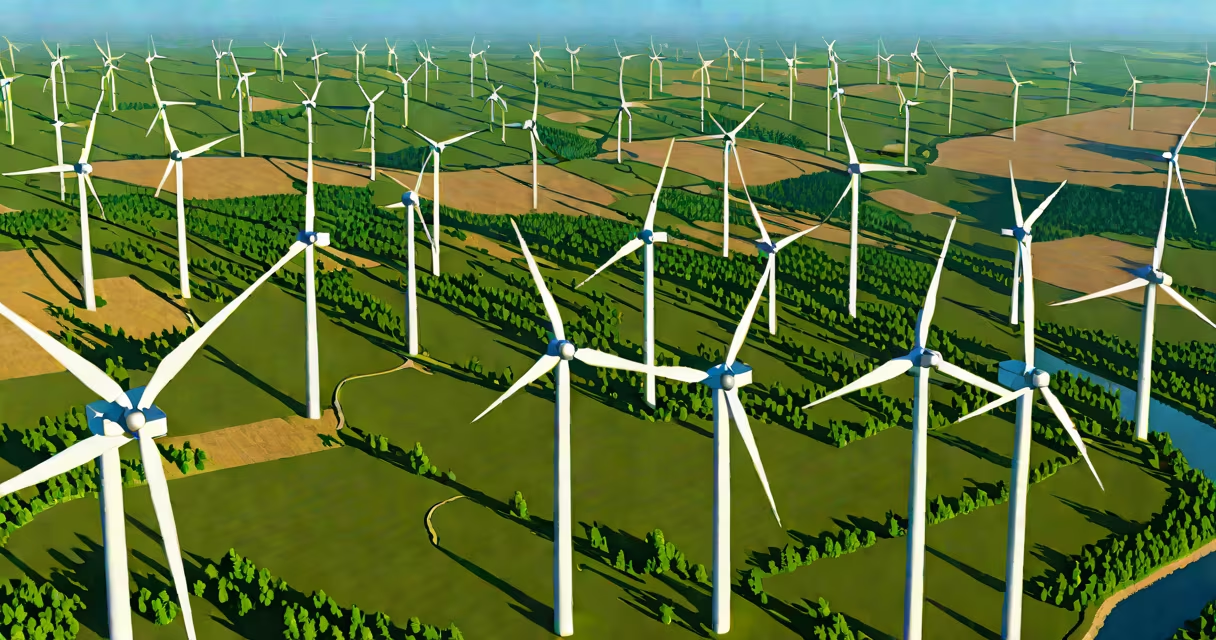
Wind energy is the process of converting the kinetic energy in moving air into electrical power through wind turbines. It relies on natural air currents generated by solar heating and Earth's rotation, making it a renewable resource with minimal emissions during operation.
Wind turbines capture airflow using large blades attached to a central hub. As wind pushes the blades, they rotate a shaft connected to a generator. The generator uses electromagnetic induction to convert mechanical motion into electricity. This electricity flows into a grid or powers local systems directly.
The global installed capacity of wind energy reached 906 gigawatts by the end of 2023, according to the Global Wind Energy Council. Countries like China, the United States, Germany, and India lead in deployment. Offshore installations now account for nearly 30% of new projects due to stronger, more consistent winds over oceans.
How Wind Energy Works
Wind forms when sunlight heats different parts of Earth unevenly. Warm air rises, cooler air rushes in to replace it, creating horizontal movement. Turbines positioned in high-wind zones-coastal areas, mountain passes, or open plains-capture this motion.
A typical utility-scale turbine has three blades, each 60 to 80 meters long. They rotate slowly-about 15 to 20 revolutions per minute-but generate significant torque. The rotor spins a low-speed shaft connected via a gearbox to a high-speed shaft driving the generator. Modern turbines use variable pitch control to adjust blade angles, maximizing output across changing wind speeds.
For example, a 2-megawatt turbine operating at 50% capacity factor (average efficiency) produces about 8,760 megawatt-hours annually. That's enough to power roughly 2,500 average U.S. homes for a year, based on national consumption averages from the U.S. Energy Information Administration.
Types of Wind Energy Systems
Wind energy systems fall into two primary categories: onshore and offshore. Onshore systems dominate current deployment due to lower installation costs and simpler maintenance. Offshore systems benefit from higher wind speeds and less turbulence but face greater engineering challenges and higher construction expenses.
| Type | Typical Location | Capacity Range | Cost per kWh (2023) | Key Limitation |
|---|---|---|---|---|
| Onshore | Plains, hills, rural zones | 1-5 MW | $0.03-$0.05 | Land use conflicts, visual impact |
| Offshore | Shallow coastal waters, deep sea | 8-15 MW | $0.05-$0.08 | Higher installation cost, complex cabling |
Hybrid systems combining wind with solar or battery storage are increasingly common. These integrate multiple inputs to stabilize supply. For instance, the Hornsea Project in the UK combines 1.2 GW of offshore wind with interconnectors to balance regional demand.
Common Misconceptions and Clarifications
Wind energy is often mistaken for being unreliable due to variable wind patterns. While output fluctuates, modern grids manage this through forecasting, demand response, and integration with other renewables. The National Renewable Energy Laboratory reports that wind can contribute up to 35% of U.S. electricity with proper grid coordination.
Another myth is that wind turbines harm birds in large numbers. Studies show bird fatalities from wind farms average 0.01 to 0.05 birds per megawatt-hour, far below rates from buildings, vehicles, or cats. The American Bird Conservancy notes that habitat loss and climate change pose far greater threats to avian populations.
A lesser-known fact: wind turbines don't require constant wind to operate. They start generating at around 3 meters per second (about 6.7 mph) and reach peak output between 12 and 25 m/s. Below cut-in speed, blades remain stationary. Above cut-out speed, safety mechanisms disengage the rotor to prevent damage.
Where and Why Wind Energy Is Used
Wind energy is deployed globally, especially in regions with consistent wind resources. Northern Europe, the U.S. Midwest, and parts of Latin America see high adoption. Denmark generates over 50% of its electricity from wind, while Uruguay meets nearly 45% through wind and solar combined.
Utility-scale wind farms typically connect to transmission lines feeding cities. Smaller turbines serve remote communities or individual farms. A single 100-kilowatt turbine can power a small village of 200 people, assuming average daily usage of 20 kilowatt-hours per capita.
I once visited a wind farm in West Texas where a cluster of 20 turbines powered a local school district. The system reduced reliance on diesel generators and cut annual fuel costs by $42,000. Maintenance was handled remotely using predictive analytics-data from sensors detected bearing wear before failure occurred.
Related Concepts and Distinctions
Wind energy is a subset of alternative energy, which includes solar, geothermal, hydroelectric, and biomass. Unlike fossil fuels, alternative energy sources do not deplete finite reserves or emit carbon dioxide during generation. According to the International Energy Agency, replacing coal with wind and solar could reduce global CO₂ emissions by 40% by 2050.
Understanding the difference between wind energy and wind power is essential. Wind power refers to the rate at which wind delivers energy-measured in watts. Wind energy is the total amount of work done over time-measured in watt-hours or kilowatt-hours. A turbine producing 2 megawatts for one hour delivers 2 megawatt-hours of energy.
Wind energy is not a single technology but a system of engineering, meteorology, and grid integration. Its scalability, low operational cost, and environmental benefits make it central to decarbonizing electricity systems worldwide.