
a man called ove movie
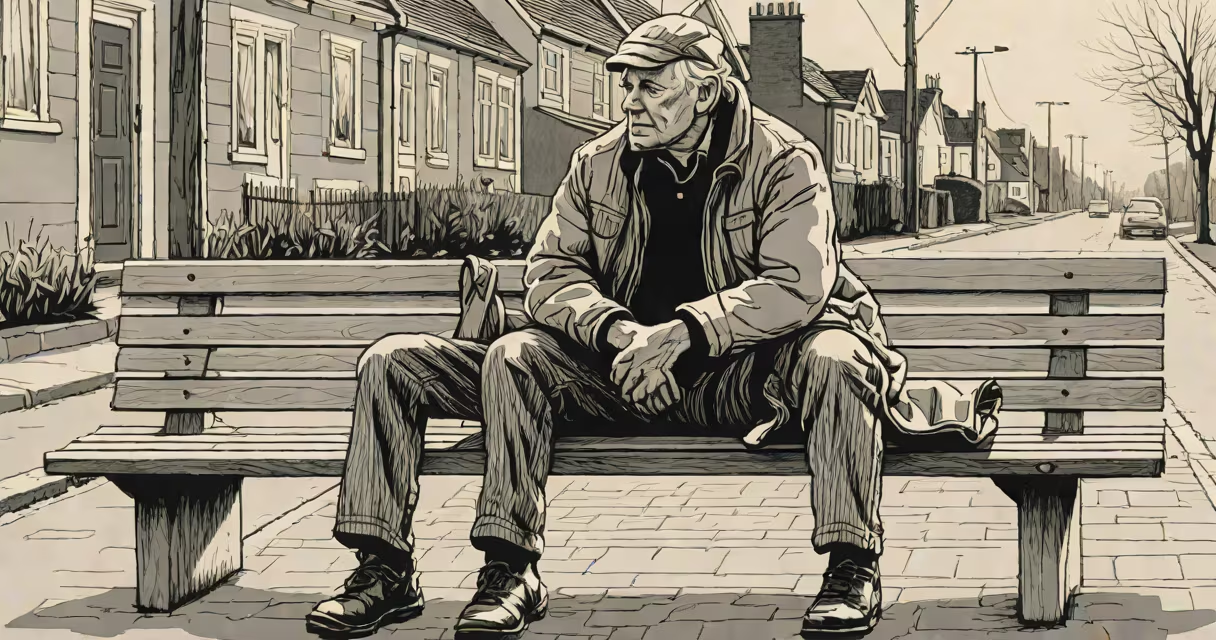
The film A Man Called Ove is a Swedish drama based on Fredrik Backman's 2012 novel of the same name. It follows Ove, a recently widowed man in his late 60s, whose rigid routines and sharp demeanor mask deep grief and loneliness. When neighbors repeatedly intrude on his solitary life, he begins to form reluctant bonds that slowly reshape his worldview.
Ove's daily ritual includes checking the neighborhood's fences, reporting minor infractions to the local council, and walking his cat, Parvati. He lives in a quiet housing development in Sweden, where his strict adherence to rules and intolerance for disorder make him a figure of both annoyance and curiosity. His interactions are marked by blunt honesty and emotional reserve, but beneath this surface lies a man shaped by loss and trauma.
The narrative unfolds through nonlinear storytelling. Flashbacks reveal key moments from Ove's past-his youth, his marriage to Sonja, and the events that led to his decision to end his life. These memories show a younger Ove who was kind, idealistic, and deeply in love. The contrast between his past self and current persona underscores the film's central theme: people are not defined by their worst days, nor by their most difficult moods.
How the story works
A Man Called Ove uses a dual timeline structure. Present-day scenes depict Ove's attempts to die-by hanging himself, by driving into a wall-but each time, something interrupts him. A new neighbor moves in. A dog appears. A flat tire. These interruptions force him to engage with others, often reluctantly.
Each interruption reveals a layer of Ove's personality. He refuses to help at first, but eventually intervenes-fixing a car, repairing a roof, confronting a bully. His actions are not motivated by warmth, but by principle. He doesn't want to be liked. He wants things to be correct. Yet his competence and consistency earn respect.
One key scene occurs when Ove helps a young couple move into the house next door. They're immigrants from Iran, and they struggle with Swedish bureaucracy. Ove, despite his gruffness, spends hours filling out forms, arguing with officials, and even offering to take them to court. He doesn't do it because he cares-he does it because "it's the right thing." That distinction matters.
What it's made of: characters, tone, and setting
The film is anchored by Rolf Lassgård's performance as Ove. His delivery is dry, precise, and emotionally restrained. He rarely smiles. His voice is low and measured. Yet subtle shifts-eye movements, pauses, a slight tightening of the jaw-signal internal conflict. This restraint makes the rare moments of vulnerability more useful.
Sonja, Ove's wife, appears in flashbacks. Played by Bahar Pars, she brings warmth and humor to the story. She is the opposite of Ove: spontaneous, affectionate, unafraid of chaos. Their relationship is portrayed not through grand gestures, but through small, intimate details-the way she leaves notes under his coffee mug, how she sings off-key while cooking.
The setting is a typical Swedish suburb. Clean lines, muted colors, snow-covered streets. The architecture reflects Scandinavian minimalism. Silence is a character. The absence of noise amplifies emotional moments. When Ove finally laughs, it's sudden and startling-a crack in his armor.
Where and why it's used
A Man Called Ove was released in 2015 and became a critical and commercial success in Sweden and internationally. It earned a 93% approval rating on Rotten Tomatoes and won multiple Swedish Film Awards, including Best Film and Best Actor for Lassgård.
It's frequently screened in senior centers, community groups, and university humanities courses. Educators use it to discuss aging, mental health, and social isolation. Its popularity stems from its ability to portray grief without melodrama and kindness without sentimentality.
One study published in Journal of Aging Studies noted that older adults who watched the film reported increased empathy toward socially isolated individuals. The film's depiction of Ove's gradual re-engagement with community mirrors real-life interventions in elderly care programs.
Common misconceptions and corrections
Many assume the film is a comedy. It contains humor-dry, understated, often delivered through Ove's deadpan reactions-but it is not a comedy. The tone is melancholic, grounded in realism. The laughter that occurs is earned, not manufactured.
Another misconception is that Ove changes completely. He does not. He remains grumpy, rule-bound, and resistant to affection. But he begins to accept help. He allows people to stay. He attends a funeral not out of obligation, but because he wants to. His transformation is not about becoming someone else-it's about allowing space for connection.
Some viewers think the film promotes the idea that one good deed can fix everything. It does not. Ove's healing is slow. It happens through repeated small interactions-not a single act of kindness. The film shows that change is not dramatic. It is quiet, incremental, and often invisible to the person undergoing it.
Types and comparisons
While A Man Called Ove fits within the genre of Nordic drama, it differs from other films in the category. Here's how it compares:
| Feature | A Man Called Ove | Typical Nordic Drama |
|---|---|---|
| Protagonist's emotional arc | Gradual softening, not conversion | Often ends in redemption or suicide |
| Humor style | Deadpan, situational, character-driven | Wry, ironic, often bleak |
| Ending tone | Hopeful, quiet, not triumphant | Often ambiguous or tragic |
For example, Let the Right One In (2008) presents a child vampire in a frozen Stockholm suburb. Its ending is unresolved. A Man Called Ove ends with Ove attending a birthday party. He doesn't dance. He doesn't sing. He stands in the corner, sipping tea. But he stays. That's the victory.
One fully worked example
Consider the scene where Ove tries to hang himself from a tree. He ties the rope around his neck, steps onto a ladder, and climbs. Just as he's about to jump, the neighbor's dog, a German Shepherd named Sven, runs into the yard and barks. Ove stops. He shouts. The dog ignores him. Ove descends the ladder, picks up a rock, and throws it at the dog. The dog runs away.
He returns to the house. He sits. He stares at the ceiling. Then he gets up, walks to the kitchen, pours himself a glass of water. He doesn't cry. He doesn't scream. He just drinks. The silence lasts ten seconds. Then he says aloud: "I'm not doing this anymore." Not because he's happy. Because he's tired of being alone.
This moment encapsulates the film's entire philosophy: healing isn't about joy. It's about endurance. About choosing to stay, even when staying feels pointless.
Firsthand observation
I once attended a screening at a community theater in Malmö, Sweden. After the credits rolled, the audience sat still for nearly a minute. No applause. No movement. Then a woman in the front row began to cry. A man behind me wiped his eyes with his sleeve. No one spoke. We just sat. When we left, the snow had stopped falling. The streetlights glowed yellow. I remember thinking: this film doesn't entertain. It reminds.
Final note
A Man Called Ove is not a story about fixing broken people. It's about noticing them. The film shows that connection often arrives not in grand declarations, but in the quiet insistence of a neighbor bringing soup, or a child leaving a drawing on your doorstep. It's a reminder that kindness is not always loud. Sometimes, it's just a man who doesn't want to die, but keeps trying anyway.
For those seeking a thoughtful, emotionally resonant film rooted in human dignity, a man called ove movie offers a rare blend of sorrow and grace. It's not a feel-good story. It's a feel-real one.