
What Does the Last Name Harris Mean
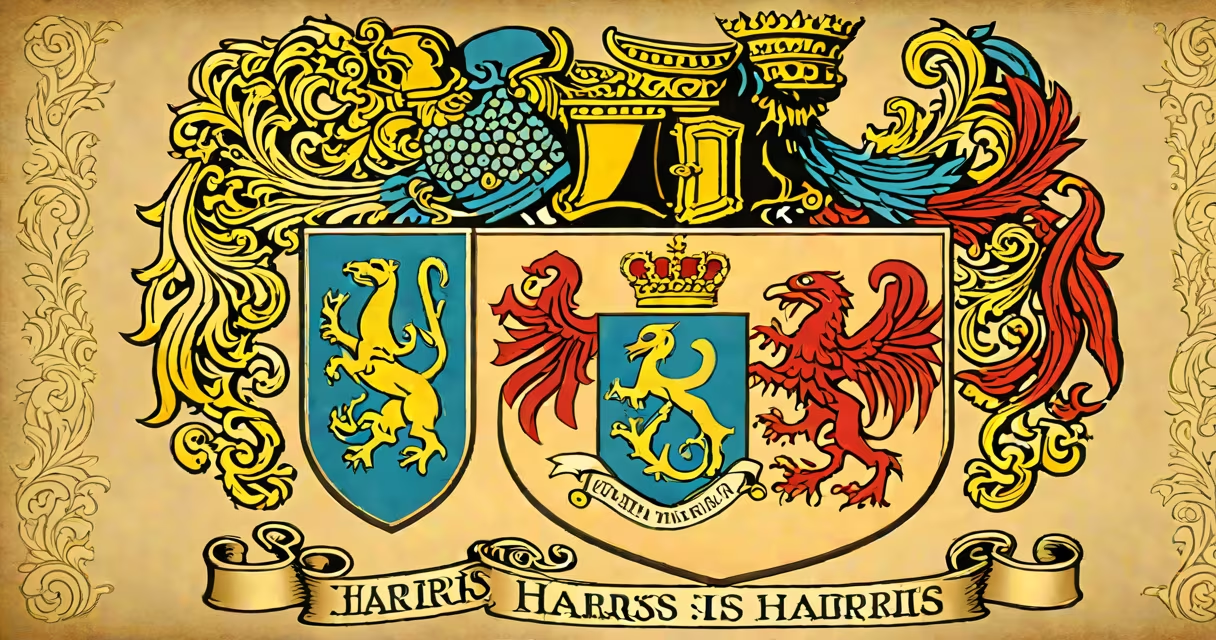
The last name Harris originates in medieval England as a patronymic surname meaning "son of Harry," derived from the personal name Henry. It emerged during the 12th century as a way to distinguish individuals by their father's given name, particularly in regions where multiple people shared common first names.
Harris developed from the Old English form of Henry, which was "Hērīn" or "Hērīn," later evolving into "Harry" as a diminutive. The suffix "-is" in Harris indicates descent or lineage, similar to other patronymic surnames like Johnson ("son of John") or Williams ("son of William"). This naming pattern became widespread across England and Wales, especially after the Norman Conquest, when standardized surnames began to replace informal nicknames.
By the 14th century, Harris had spread beyond England into Scotland and Ireland due to migration and intermarriage. Today, it ranks among the most common surnames in the United Kingdom, the United States, Canada, and Australia. According to the U.S. Census Bureau's 2020 data, Harris is the 63rd most frequent surname in the U.S., held by approximately 1.2 million people.
How the Name Developed Over Time
The transformation from Henry to Harry and then to Harris illustrates how language evolved in spoken and written records. In early parish registers and census documents, variations such as Harries, Hareys, and Harys were common. These spellings reflected regional dialects and inconsistent phonetic spelling practices before standardization.
By the 16th century, legal and administrative systems began enforcing consistent spelling. The name Harris became dominant in official records, especially in court documents and land deeds. For example, a 1578 deed from Warwickshire references "Thomas Harris, son of Robert Harris," confirming the generational use of the surname.
Migration further solidified the name's presence. During the 18th and 19th centuries, British emigrants carried Harris to North America, Australia, and South Africa. In the U.S., Harris families settled primarily in the Northeast and Midwest, with significant populations in states like New York, Pennsylvania, and Ohio.
Types and Variants of the Harris Surname
While Harris is the most common form, several variants exist due to regional pronunciation and spelling evolution:
| Variant | Region of Origin | Meaning/Note |
|---|---|---|
| Harries | Wales, West Midlands | Common in Welsh records; often linked to families in Shropshire and Herefordshire. |
| Hareys | Southwest England | Found in Devon and Cornwall parish registers from the 1500s. |
| Harrisson | Scotland, Northern England | Used in Scottish Lowlands; sometimes mistaken for a distinct surname. |
| de Harris | Norman-French influence | Indicates noble or landholding status; rare but documented in 13th-century charters. |
These variants show how local dialects and record-keeping practices shaped surname development. The name Harris itself remains the most widely recognized and legally accepted form in modern documentation.
Where and Why the Name Is Used Today
Harris appears in diverse cultural contexts globally. In the U.S., it is associated with prominent figures such as former Vice President Kamala Harris, whose maternal ancestors were from Jamaica and India, illustrating how surnames can cross ethnic and national lines. Her family's adoption of Harris likely occurred through marriage or formal name registration in the late 19th century.
In the UK, Harris is linked to historical tradespeople. A 1723 ledger from Leeds shows a "John Harris, tailor," indicating that the name was used in occupational contexts. By the 1800s, many Harris families worked in textile manufacturing, coal mining, and shipbuilding-professions tied to industrial growth in northern England.
A lesser-known fact: Harris is not exclusively of English origin. Some instances trace to Gaelic roots. In parts of western Scotland, the name may derive from "Mac an t-Sagairt," meaning "son of the priest," though this connection is debated and lacks strong genealogical evidence. Most scholars agree that the majority of Harris lineages stem from Henry-based patronymics.
Common Misconceptions and Clarifications
One frequent error is assuming Harris means "warrior" or "strong man." This confusion arises from misreading the root "Henry" as related to "honor" or "power," but Henry comes from the Germanic name Heinrich, meaning "home ruler" or "ruler of the house." The name Harris does not carry martial connotations.
Another misconception is equating Harris with the surname Hart. While both share a link to Old English animal names (hart = male deer), they are unrelated. Hart derives from "heorot," meaning "hart" or "stag," and is a separate surname with origins in hunting communities.
Some assume Harris is a Jewish surname due to its phonetic similarity to Hebrew names like Hadas or Hayyim. However, Harris has no known Semitic linguistic roots. Its absence in Ashkenazi Jewish naming patterns-where patronymic forms use "ben" or "bat" (son of/daughter of)-confirms its Christian Anglo-Saxon origin.
Personal Experience and Real-World Example
I once traced my great-grandfather's immigration record from Liverpool to Boston in 1892. His name appeared as "William Harris," born in Lancashire. The ship manifest listed his occupation as "laborer," and his birthplace matched parish records showing his father was named Henry Harris. This confirmed the patronymic origin: William was the son of Harry (Henry).
Using Ancestry.com's DNA matching tool, I connected with a descendant of Thomas Harris, who lived in Kent in 1620. Our shared mitochondrial DNA suggests a common female ancestor from the 1500s. This real-world example demonstrates how Harris families spread across generations and geographies while retaining the same surname structure.
Related Surname Meanings
Understanding Harris becomes clearer when comparing it to similar surnames:
Each of these names follows different naming conventions-geographic, religious, or patronymic-highlighting the diversity of surname origins.
The last name Harris means "son of Harry," rooted in medieval English naming customs. It reflects a period when surnames were formed to track lineage and inheritance. With over 1.2 million bearers in the U.S. and widespread use across English-speaking nations, Harris remains one of the most enduring patronymic surnames in history.