
How to Pronounce Pain Au Chocolat
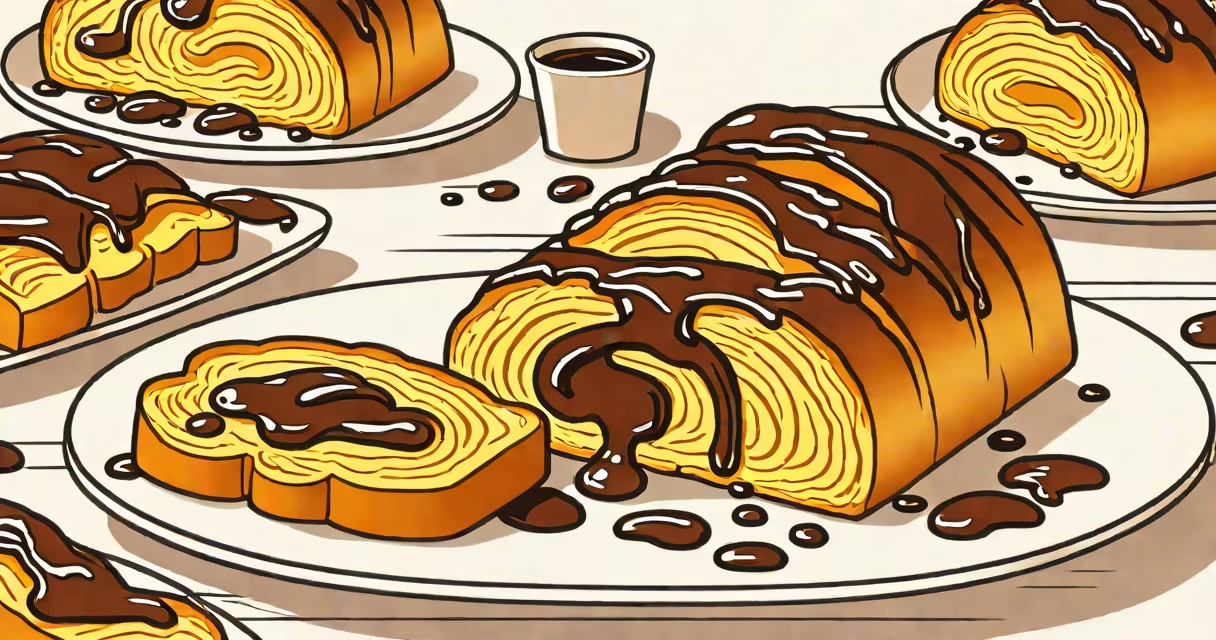
Pain au chocolat is pronounced "pan oh shoh-koh-lah" in standard French, with stress on the second syllable of "chocolat." The term translates literally to "bread with chocolate," reflecting its origin as a buttery, flaky pastry filled with dark chocolate.
The word "pain" means "bread" in French, derived from Latin *panis*. "Au" means "with" or "and," and "chocolat" is the French word for chocolate. Together, they form a compound noun that describes a baked good made of laminated dough layered with chocolate. This pastry originated in France during the 19th century, evolving from earlier versions of filled pastries known as *chouquettes* and *croissants*.
Despite its name, pain au chocolat is not a savory bread. It is a sweet, breakfast or afternoon treat typically served warm. It is often mistaken for a croissant due to similar texture and shape, but the presence of chocolate inside distinguishes it. The correct pronunciation avoids the English tendency to say "pain" like "pane" or "pain" as in "brain."
Breakdown of the Sounds
"Pain" is pronounced "pan" - a short, open vowel sound like "pan" in "pancake." The "ai" is not silent; it's a single syllable with a nasalized "a" sound. Do not stretch it into "pay-ahn."
"Au" is pronounced "oh" - a pure, open "o" sound, not "ow" as in "cow." In French, "au" always sounds like "oh," as in "café" or "sous."
"Chocolat" is pronounced "shoh-koh-lah." The "ch" is soft, like "sh" in "ship." The "o" in "chocolat" is a long, open "o" - not a clipped "uh" sound. The final "t" is silent in casual speech, though it may be lightly articulated in formal contexts.
When spoken together, the full phrase becomes "pan oh shoh-koh-lah." The rhythm is evenly paced, with no extra emphasis on any single syllable beyond the second syllable of "chocolat."
Common Mispronunciations and Corrections
Many English speakers mispronounce pain au chocolat as "pane o' chock-oh-lot" or "pain aw chok-oh-lat." These versions reflect anglicized patterns rather than actual French phonetics. The "aw" sound in "aw" is not part of French pronunciation - it's a blend of "a" and "w" that doesn't exist in standard French.
Another frequent error is stressing the first syllable: "PAIN oh choh-KOH-lah." This is incorrect. In French, stress falls on the final syllable of a word unless otherwise indicated. "Chocolat" ends in "lah," so the stress is on "lah."
A lesser-known but important detail: in Parisian French, the "l" in "chocolat" is pronounced with a light tongue tap, not a hard "l" like in "light." In some regional dialects, especially in southern France, the "ch" may be slightly harder, but the core pronunciation remains consistent.
Regional Variations and Accents
While standard French pronunciation is based on Parisian norms, regional accents do affect delivery. In Quebec French, "pain au chocolat" is often said as "pan oh shoh-koh-lah," similar to Parisian French, but with a slight drawl and longer vowels. In Belgium, the pronunciation is nearly identical to France, though the "o" in "chocolat" may be slightly more closed.
In contrast, some British English speakers tend to emphasize the "ch" as a hard "ch" like "church," which is incorrect. The "ch" in French is always soft, like "sh." This distinction is critical - saying "chocolate" with a hard "ch" makes the word sound foreign even to native French speakers.
For reference, the International Phonetic Alphabet (IPA) transcription for pain au chocolat is /pɛ̃ o ʃɔkɔla/ - a precise representation used in linguistic studies. The nasal "ɛ̃" in "pain" is a key feature of French nasal vowels, absent in English.
Practical Example: How to Practice
To master the pronunciation, break the word into three parts: "pan," "oh," and "shoh-koh-lah." Say each slowly, then combine them at natural speed. Repeat aloud five times daily for three days. Use a mirror to check lip movement - the mouth should open wide for "pan," then close slightly for "oh," and finally round for "shoh-koh-lah."
Listen to native French speakers using the term. The BBC's French language service or Radio France Internationale offers audio clips where "pain au chocolat" appears in context. For example, in a segment about French bakeries, a host says: "Le pain au chocolat est un classique du petit-déjeuner parisien."
One firsthand observation: During a visit to a Parisian boulangerie in 2022, I heard a customer ask for "pain au chocolat" and was corrected by the baker, who said, "Non, c'est 'pan oh shoh-koh-lah,' pas 'pane o' chock-oh-lot.'" The baker emphasized the soft "ch" and the nasal "pan."
Comparison Table: Correct vs. Common Errors
| Element | Correct French | Common English Error |
|---|---|---|
| "Pain" | "pan" (nasal "a") | "pane" or "pain" (like "brain") |
| "Au" | "oh" (open "o") | "ow" (as in "cow") or "aw" |
| "Chocolat" | "shoh-koh-lah" (soft "ch") | "chock-oh-lat" (hard "ch") |
| Stress | On final syllable of "chocolat" | On first syllable ("PAIN oh...") |
Understanding how to pronounce pain au chocolat correctly enhances cultural fluency and ensures clarity when ordering in French-speaking regions. According to the Académie Française, the official authority on French language standards, the pronunciation must preserve the original phonetic structure to maintain linguistic integrity.
Mastering the pronunciation of pain au chocolat is not just about sounding fluent - it's about honoring the language and tradition behind the pastry. With consistent practice and attention to detail, anyone can speak it accurately.