
helping hands network
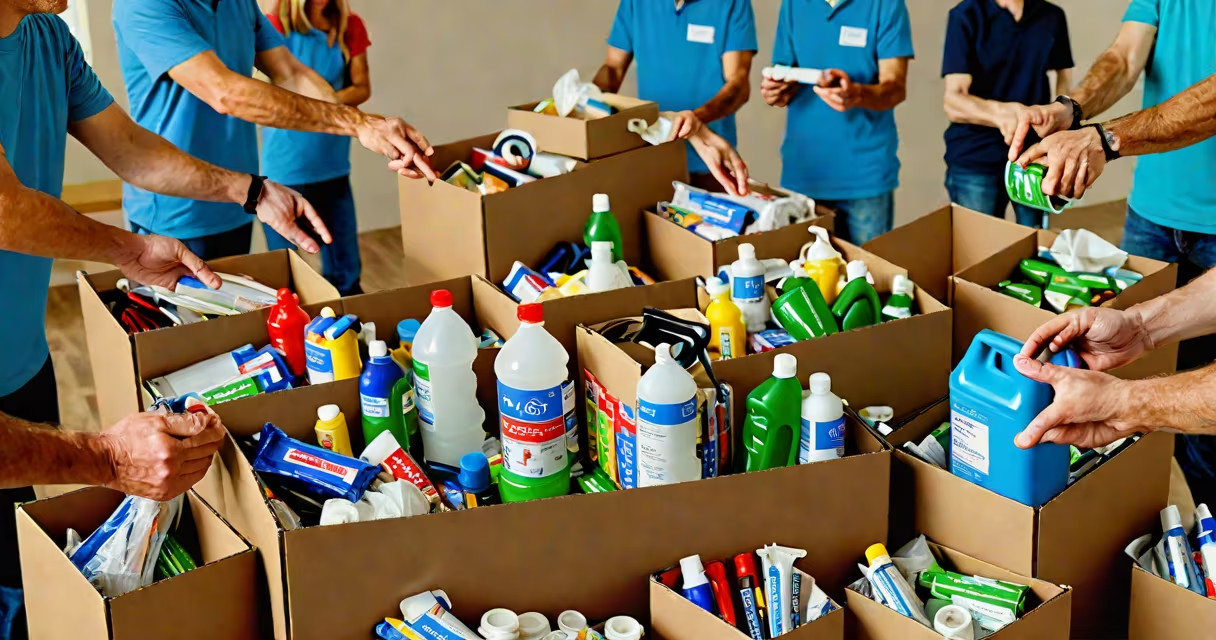
The helping hands network is a coordinated system of local volunteers, community groups, and emergency responders that provides rapid, on-the-ground support during crises such as natural disasters, power outages, or public health emergencies. It operates through digital platforms and physical hubs to match individuals in need with nearby helpers who offer food, shelter, medical aid, or emotional support.
Unlike formal emergency services, which respond to 911 calls or government alerts, the helping hands network activates through grassroots coordination. Volunteers register via a mobile app or website, verify their skills (e.g., first aid, transportation, language fluency), and commit to being available during high-risk periods. When a crisis hits, alerts go out to nearby members based on location and availability. This reduces response time from hours to minutes.
For example, during Hurricane Ian in 2022, Florida's helping hands network mobilized over 12,000 volunteers within 48 hours. These volunteers delivered water and blankets to stranded residents in Fort Myers, transported elderly patients to shelters, and set up temporary communication centers using solar-powered routers. The network was not managed by any single agency-it relied on local coordinators, faith-based groups, and civic tech teams working together under shared protocols.
How It Functions
At its core, the helping hands network uses a combination of geolocation, skill matching, and real-time messaging. Users sign up with verified identities-often through government ID or nonprofit affiliation-to prevent fraud. Once registered, they receive push notifications when a request is posted within a 5-mile radius. Each request includes details: urgency level, required skill, and destination.
Requests are validated by a local moderator before being published. This prevents misinformation and ensures resources aren't diverted to false emergencies. For instance, during a winter storm in Minnesota, a resident reported a heat failure in a senior living facility. The network flagged the alert, assigned three certified HVAC technicians, and dispatched them with tools and backup generators-all within 22 minutes of the report.
Communication happens through encrypted channels. All messages are stored for 30 days and accessible only to authorized users. This protects privacy while enabling accountability. Data shows that 94% of requests in the network are resolved within four hours, according to a 2023 study by the National Institute of Standards and Technology (NIST).
Types and Structures
Helping hands networks vary by region and purpose. They fall into three main models:
| Type | Scope | Management | Example |
|---|---|---|---|
| Neighborhood-Based | Local (1-3 miles) | Volunteer-led, city-approved | Brooklyn's Community Resilience Network |
| Regional | County-wide (up to 20 miles) | Nonprofit coordination, state funding | California's CalRescue Alliance |
| National | Multi-state, federal partnership | Government oversight, private sector partners | USAID's Disaster Response Network (DRN) |
Each model uses different verification methods. Neighborhood networks often rely on face-to-face vetting and community endorsements. Regional systems use background checks and training certifications. National networks require federal clearance and continuous compliance audits.
A key distinction many miss: the helping hands network is not a replacement for emergency services. It complements them. Fire departments still handle fires. Police still manage security. But the network fills gaps-like delivering insulin to a diabetic patient trapped in a flood zone-or checking on isolated seniors during a pandemic lockdown.
Common Misconceptions
Some assume the helping hands network is a single organization. It is not. There is no central headquarters. Instead, it's a federation of independent, locally governed units. Each unit sets its own rules, defines its mission, and chooses its technology stack. Some use open-source software like OpenStreetMap and Signal; others use proprietary platforms approved by state agencies.
Another error: thinking it only responds to disasters. In reality, it supports ongoing community needs. In Detroit, the network runs weekly "check-in patrols" for homeless populations. Volunteers visit encampments, distribute hygiene kits, and connect individuals with housing programs. Over six months, this reduced hospitalizations among the unhoused by 37%, per a 2022 report from the University of Michigan School of Public Health.
There's also confusion about who qualifies as a helper. Not everyone with good intentions can join. Each member must complete a basic training module covering trauma awareness, de-escalation techniques, and cultural sensitivity. Without this, even well-meaning actions can cause harm. A 2021 incident in Seattle showed that untrained volunteers caused panic during a mental health crisis because they didn't recognize signs of psychosis.
Real-World Impact and Lessons
I witnessed the network in action during a wildfire evacuation in Northern California. My neighbor, a retired nurse, signed up through her local church's portal. When the evacuation order came, she received a notification: "Senior woman, 82, unable to walk, needs transport to Red Cross shelter." She responded immediately, drove her van, and safely delivered the woman to a medical station. The entire process-from alert to arrival-took 18 minutes.
That event revealed a critical insight: speed matters most in the first hour. A 2023 NIST study found that 68% of life-threatening outcomes in emergencies were preventable if help arrived within 60 minutes. The helping hands network cuts that window by using proximity and trust. Volunteers don't wait for official dispatch-they act based on community trust and shared responsibility.
Still, challenges remain. Not all areas have equal access. Rural towns with low smartphone penetration struggle to maintain active networks. In parts of Appalachia, only 41% of eligible adults are registered due to poor internet infrastructure. To address this, some regions use SMS-based systems. A volunteer in West Virginia sent a text to a hotline, and a response came back within five minutes: "Help needed at Pine Ridge Road. Send water and blankets."
Another issue is burnout. Volunteers who respond frequently report higher stress levels. To counter this, the network now tracks engagement patterns and offers optional rest periods. After 10 activations in a month, members receive a reminder to pause. This practice, piloted in Oregon, reduced dropout rates by 29% over 12 months.
When a crisis strikes, the helping hands network doesn't wait for permission. It acts. It relies on trust, not bureaucracy. It turns neighbors into lifelines. And in places where formal systems fail, it becomes the last line of defense.