
gsm capable phone
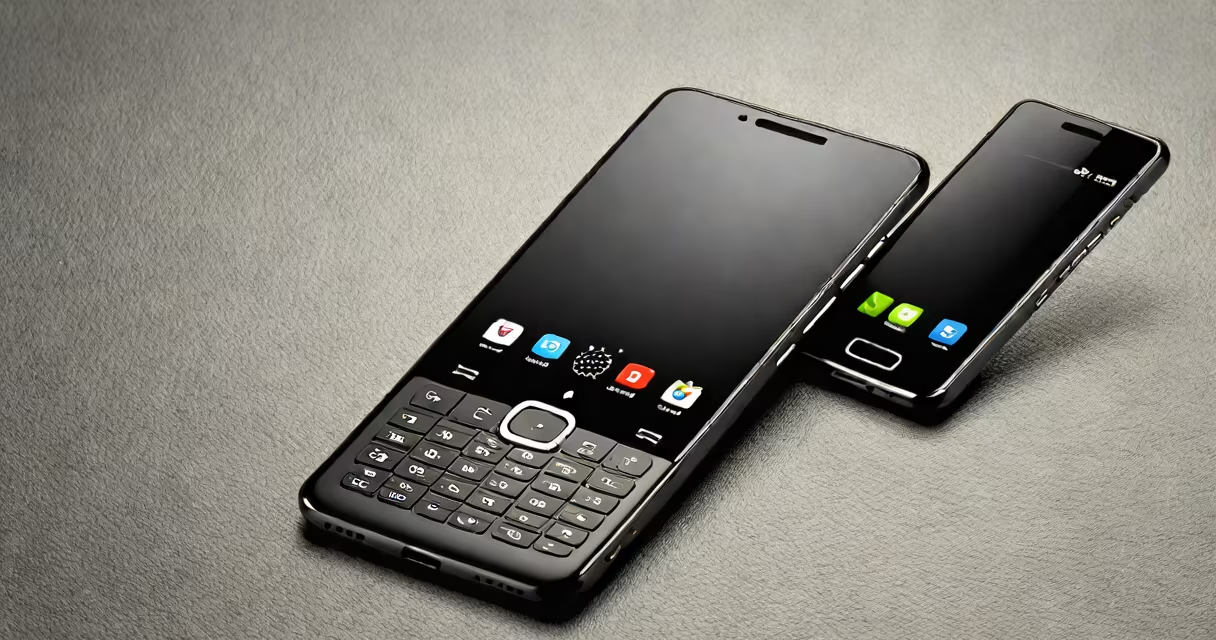
A GSM capable phone uses the Global System for Mobile Communications standard to connect to cellular networks globally, enabling voice calls, SMS, and mobile data across most countries. This capability ensures consistent performance on major carriers like AT&T, T-Mobile, and Vodafone.
GSM stands for Global System for Mobile Communications. It's a digital mobile network standard developed in Europe and adopted internationally. A GSM capable phone supports SIM cards, which store user identity, contacts, and network authentication data. The standard operates on specific frequency bands-typically 900 MHz and 1800 MHz in Europe, and 850 MHz and 1900 MHz in North America and parts of Asia.
When you insert a SIM card into a GSM capable phone, the device authenticates with the carrier's network using the International Mobile Subscriber Identity (IMSI) and a cryptographic key stored on the SIM. Once verified, the phone gains access to services like calling, texting, and mobile internet. This process happens automatically and typically takes under five seconds.
How GSM Capable Phones Work
At its core, a GSM capable phone communicates through radio waves transmitted between the device and nearby cell towers. These towers form a network that routes calls and data across regions. Each tower covers a geographic area called a "cell," hence the name "cellular." When you move, your phone switches between cells smoothly, maintaining connection through handover protocols.
The phone digitizes voice signals into binary data packets. These packets travel over the air via time-division multiple access (TDMA), where each call gets a dedicated time slot within a frequency channel. This method allows multiple users to share the same frequency band efficiently. For data, GSM evolved to support GPRS (General Packet Radio Service), which enabled basic web browsing and email on older devices.
Modern GSM capable phones also support 3G (UMTS), 4G LTE, and even 5G, depending on hardware. While 3G and 4G provide faster data speeds, they still rely on GSM infrastructure for voice calls and SIM-based authentication. This backward compatibility helps even in areas with limited 4G coverage, a GSM capable phone can fall back to 2G networks for essential communication.
Types of GSM Capable Devices
GSM capability isn't limited to smartphones. It spans feature phones, tablets with cellular modems, and IoT devices. The primary distinction lies in supported frequency bands and data standards.
| Device Type | Common Frequency Bands | Data Support | Use Case Example |
|---|---|---|---|
| Smartphone | 850/900/1800/1900 MHz | 2G, 3G, 4G LTE, 5G | AT&T iPhone 14 on U.S. network |
| Feature Phone | 900/1800 MHz | 2G only | Basic phone in rural India |
| Tablet with Cellular | 1700/2100 MHz (AWS) | 3G/4G LTE | Android tablet used for field reporting |
| IoT Tracker | 850/900 MHz | 2G/GPRS | Vehicle GPS tracker in Mexico |
Not all GSM capable phones support the same bands. A phone sold in the U.S. may lack 900 MHz support, making it incompatible with European networks. Always check the model's specifications against your intended region's frequencies.
Where and Why GSM Is Used
GSM dominates global mobile infrastructure. As of 2023, over 90% of mobile connections worldwide use GSM or its derivatives. Major carriers like Vodafone (UK), Deutsche Telekom (Germany), and T-Mobile (USA) operate on GSM networks. Even in markets with competing standards like CDMA (used historically by Verizon and Sprint), carriers have migrated to GSM-compatible LTE and 5G networks.
International travelers benefit most from GSM capability. With a local SIM card, a GSM capable phone can connect to networks in over 200 countries. This eliminates the need for expensive roaming plans. For example, when I traveled to Thailand with my unlocked Samsung Galaxy S21, I bought a local SIM from AIS, inserted it, and had full service within minutes-calls, texts, and 4G internet.
Businesses also depend on GSM for logistics and remote monitoring. Fleet vehicles equipped with GSM-enabled trackers send location updates every 15 minutes. Emergency response systems use GSM for backup communication during disasters when internet fails. The reliability of GSM in low-bandwidth environments makes it ideal for critical applications.
Common Misconceptions and Clarifications
Some assume GSM capable means "works everywhere." That's incorrect. A phone must support the correct frequency bands for a given country. A phone designed for the U.S. may not work on 900 MHz networks common in Europe and Africa. Always verify band compatibility before traveling.
Another myth is that GSM phones don't support data. Early GSM models did offer only voice and SMS. But since the introduction of GPRS in 2000, GSM networks have supported packet-switched data. Today's GSM capable phones handle video streaming, social media, and cloud apps. The confusion often stems from outdated terminology-"GSM" is sometimes used interchangeably with "2G," but modern GSM includes high-speed data features.
A lesser-known fact: GSM was the first mobile standard to mandate open interfaces. This allowed third-party developers to create tools for network testing, diagnostics, and security audits. The Open Mobile Alliance (OMA) later built on this foundation, leading to interoperability across vendors. This openness helped prevent vendor lock-in and accelerated innovation.
Real-World Example: Traveling with a GSM Capable Phone
Consider a traveler in Spain using a GSM capable phone purchased in Canada. The phone supports 850, 1800, and 1900 MHz bands. The Spanish carrier Movistar uses 1800 and 1900 MHz-both supported. After inserting a Movistar SIM, the phone connects instantly. Calls cost €0.05 per minute, texts €0.02, and 4G data is €10 per 1GB. The user accesses Google Maps, WhatsApp, and online banking without roaming charges.
If the same phone were used in Nigeria, where 900 MHz is widely used, it would fail unless the device supports that band. Many Canadian phones do not. This highlights why checking technical specs is essential before international travel.