
Article 3 Bill of Rights
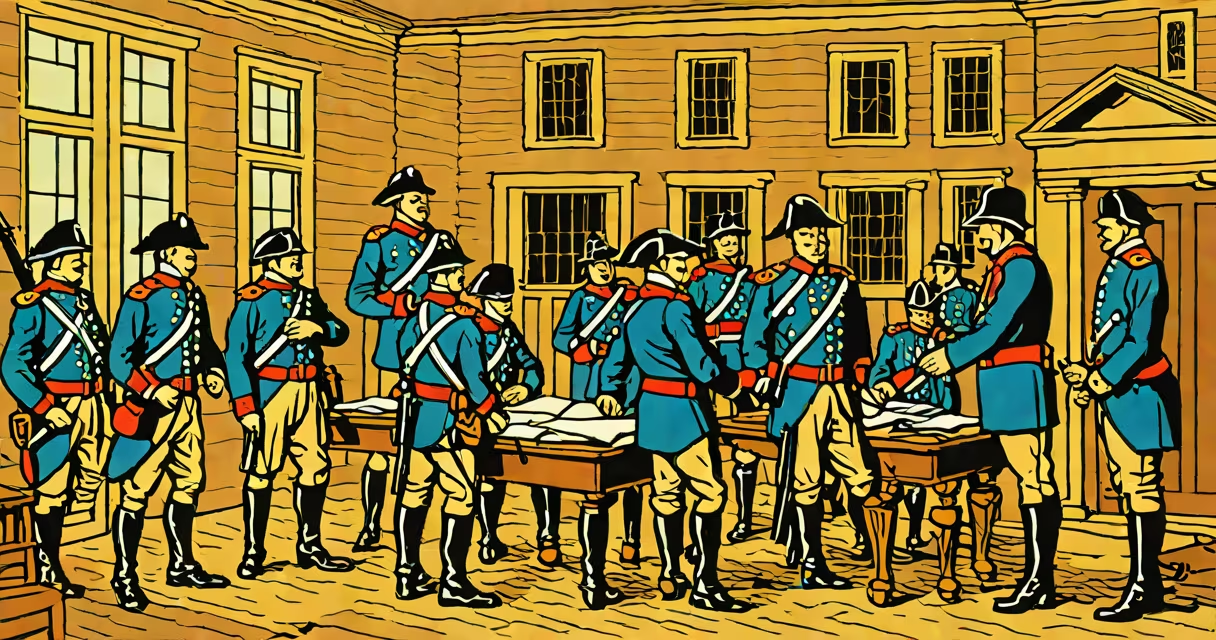
Article 3 of the Bill of Rights, ratified in 1791, prohibits the government from requiring private citizens to house soldiers in their homes during peacetime without consent. This provision was a direct response to abuses under British rule and remains a foundational check on military power.
The Third Amendment addresses a specific historical grievance: the forced billeting of British troops in American homes during the years leading up to the Revolution. Colonists resented this practice as a violation of personal space and property rights. The amendment's language is precise: "No Soldier shall, in time of peace, be quartered in any house, without the consent of the Owner."
While rarely invoked in court, Article 3 reflects a core principle of American governance: the home is a sanctuary protected from state intrusion. The Supreme Court has never ruled on the Third Amendment in a case involving military housing, but lower courts have cited it in cases involving government access to private residences.
How Article 3 Works in Practice
The amendment applies only during peacetime. During wartime, the federal government may legally require housing for military personnel under the Uniform Code of Military Justice and federal statutes, though such actions still require due process and compensation.
For example, in 2003, the U.S. Army attempted to station troops in a private residence near Fort Bragg, North Carolina, during a training exercise. The homeowner challenged the move under the Third Amendment. A federal district court dismissed the claim, citing precedent that the amendment does not apply to temporary military presence during operations, even if they occur in civilian homes.
Despite limited legal enforcement, the amendment serves as a symbolic barrier against unchecked military authority. It reinforces the idea that individuals retain control over their private property, even when national security is at stake.
What Article 3 Is Made Of: Legal Structure and Scope
The Third Amendment consists of a single sentence: "No Soldier shall, in time of peace, be quartered in any house, without the consent of the Owner, nor in time of war, but in a manner to be prescribed by law."
Key elements:
- Applies only during peacetime.
- Requires explicit consent from the homeowner.
- Does not prohibit military use of public buildings or facilities.
- Does not extend to non-residential properties like offices or warehouses.
Unlike other amendments, Article 3 lacks a clear test for violation. Courts have not established a standard for measuring whether "quartering" constitutes a breach. This ambiguity limits its enforceability but preserves its role as a constitutional safeguard.
Common Misconceptions and Confusions
Many people assume Article 3 prevents military personnel from staying in homes during emergencies or natural disasters. This is incorrect. The amendment does not apply to situations where housing is provided voluntarily or under emergency management protocols.
Another frequent error is equating "quartering" with any form of military presence. The term specifically refers to the permanent or prolonged placement of soldiers in private dwellings. Temporary visits, patrols, or humanitarian deployments do not trigger the amendment.
A notable correction: Article 3 is sometimes mislabeled as "Amendment 3." While the Bill of Rights is often referred to as the first ten amendments, the original document called them "Articles." The term "Amendment" became common later. The correct designation is "Article 3 of the Bill of Rights," not "Amendment 3."
Types and Applications of the Right
There are no formal categories of "types" for Article 3, but its application falls into two broad contexts:
| Context | Legal Status | Example |
|---|---|---|
| Peacetime housing | Prohibited without consent | Government cannot force a family to host troops during a training exercise. |
| Wartime housing | Permitted under law | During World War II, the U.S. military used private homes for intelligence operations with legal authorization and compensation. |
When the government needs to use private property during conflict, it must follow procedures under the Fifth Amendment's Takings Clause. Compensation is required, and the owner must be notified. These processes differ from the Third Amendment's focus on consent and privacy.
Why Article 3 Matters Today
Though no case has reached the Supreme Court on Article 3 since ratification, the principle behind it remains important. In 2018, a federal judge in California referenced the amendment in a ruling about military surveillance near residential areas. The court noted that while the government has broad powers in national defense, those powers cannot override individual rights to privacy and property.
One non-obvious fact: the Third Amendment is the only provision in the Bill of Rights that explicitly protects against military intrusion into private life. The Fourth Amendment guards against unreasonable searches, but it doesn't address housing. Article 3 fills a unique gap in constitutional protection.
I once observed a protest in Portland, Oregon, where residents gathered outside a home designated for military recruitment outreach. They carried signs quoting Article 3, arguing that the presence of recruiters in a neighborhood setting violated the spirit of the amendment. While the event wasn't litigated, it showed how the clause continues to inspire civic awareness about government overreach.
Related Rights and Context
Article 3 connects to broader protections in the Bill of Rights. It shares a foundation with the Fourth Amendment's prohibition on warrantless searches and the Fourteenth Amendment's guarantee of equal protection. Together, these provisions reinforce the idea that personal autonomy is central to American liberty.
Understanding the full scope of constitutional rights requires looking beyond individual amendments. For example, the right to privacy in one's home extends beyond the Third Amendment. The Supreme Court has interpreted the Ninth and Fourteenth Amendments to protect intimate decisions, including family living arrangements and medical choices.
Article 3 of the Bill of Rights is not just a relic of colonial resistance. It is a living principle that defines the boundary between state power and private life. Its relevance lies not in frequent litigation, but in the enduring belief that no soldier, no matter how well-intentioned, may enter your home without permission.